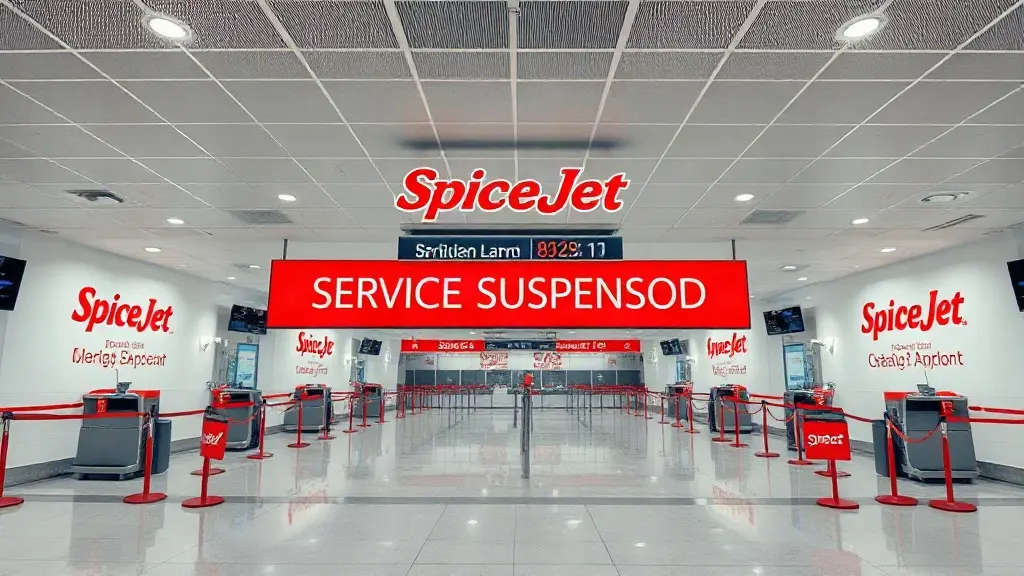
Dubai Airports has suspended check-in services for SpiceJet due to non-payment of approximately ₹35.85 crore (14 million UAE dirhams), marking a significant escalation in the airline's ongoing financial struggles. The suspension took effect on November 12, 2026, after the airport authority cited continued non-compliance with payment terms, which had not been met since October 13. This decision has immediate repercussions for SpiceJet, which has already been grappling with operational difficulties and a shrinking fleet.
SpiceJet's Financial Woes and Operational Impact
The suspension of check-in services comes at a time when SpiceJet is facing severe financial challenges. The airline's operational fleet has dwindled to around 12 aircraft, with only nine currently in service. This is a stark contrast to its previous operational capacity, reflecting a significant decline in its market presence. According to reports, SpiceJet's domestic market share plummeted to 0.6% in September 2026, down from 3.9% in January of the same year. The airline carried only 73,000 domestic passengers in September, compared to nearly 592,000 in January, highlighting a drastic reduction in customer trust and operational capability.
The Directorate General of Civil Aviation (DGCA) data reveals that SpiceJet cancelled 20.29% of its scheduled flights in September, with an on-time performance rate of just 16.6% at major airports. Such statistics underscore the airline's struggles to maintain reliable service amidst mounting debts and operational constraints.
Cancellation of Flights and Internal Communications
On the day the suspension was enacted, SpiceJet had to cancel four flights to Amritsar, Jaipur, Mumbai, and Delhi. Internal communications within the airline indicated that these cancellations were directly linked to non-payment issues with dnata, the ground-handling company. The airline's station manager instructed the flight operations team to halt further departures from Dubai until the financial issues were resolved. This situation not only affects the airline's revenue but also tarnishes its reputation among travelers.
Communication from Dubai Airports
According to sources familiar with the matter, Dubai Airports sent an email to SpiceJet on November 12, detailing the outstanding payment of AED 14 million. The airport authority expressed concerns about further financial exposure due to SpiceJet's inability to meet its payment obligations. This communication served as a formal notice of the suspension of check-in services, emphasizing the seriousness of the situation.
In response, a SpiceJet spokesperson stated that the airline is actively working to resolve the matter with the relevant authorities. The spokesperson emphasized that the airline has adequate bank guarantee cover in place and is committed to sorting out the issue as quickly as possible. However, the lack of specificity regarding the resolution timeline raises questions about the airline's financial stability and operational future.
Supplier Dues and Regulatory Concerns
SpiceJet's financial troubles extend beyond its dealings with Dubai Airports. Regulatory filings indicate that the airline owes ₹63.03 crore to various small businesses, with payments overdue beyond the stipulated 45-day period during the April-September 2026 timeframe. This pattern of delayed payments has raised alarms among suppliers and stakeholders, further complicating SpiceJet's operational landscape.
The airline's inability to clear these dues not only jeopardizes its relationships with suppliers but also poses a risk to its operational viability. The ongoing financial strain has led to a loss of confidence among investors and customers alike, as evidenced by the drastic drop in passenger numbers and market share.
Future Prospects and Industry Implications
The suspension of check-in services by Dubai Airports serves as a critical juncture for SpiceJet. As the airline navigates these turbulent waters, its ability to regain financial stability and restore operational reliability will be paramount. The aviation industry is closely watching how SpiceJet addresses these challenges, as its fate could have broader implications for the sector, especially in the context of increasing competition and evolving market dynamics.
Looking ahead,, the suspension of SpiceJet's check-in services at Dubai Airports highlights the airline's precarious financial situation and raises concerns about its future in the competitive aviation landscape. As SpiceJet works to resolve its outstanding debts and restore its operational capabilities, the coming weeks will be crucial in determining whether the airline can rebound from this crisis or if it will face further deterioration in its market position.
| Forensic Metric / Statutory Dimension | Mainstream Wire Benchmark | DotMR Corroborated Record & Direct Impact |
|---|---|---|
| Outstanding Payment to Dubai Airports | AED 14 million | ₹35.85 crore (as of November 12, 2026) |
| SpiceJet Operational Fleet Size | 12 aircraft | 9 operational (as of November 2026) |
| Domestic Market Share | 0.6% (September 2026) | Down from 3.9% (January 2026) |
| Flight Cancellation Rate | 20.29% (September 2026) | Significant operational impact |
| On-Time Performance Rate | 16.6% (September 2026) | Reflects operational struggles |