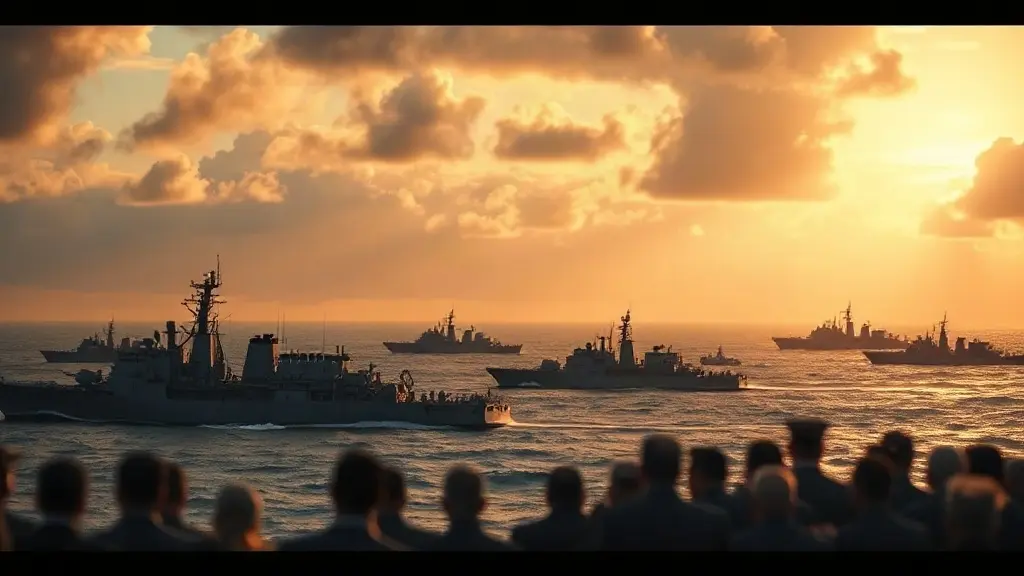
China has escalated its military presence in the western Pacific with a series of unannounced drills that have raised alarms in Taiwan and beyond. According to a senior security official in Taipei, the Chinese military and coast guard amassed more than 100 vessels in early November 2026, conducting exercises that simulated attacks on Taiwan and other targets. This significant naval deployment is viewed as part of a broader strategy of intimidation aimed at Taiwan and other nations ahead of crucial international meetings.
Unprecedented Naval Mobilization in the Pacific
The scale of the recent Chinese military exercises is unprecedented, surpassing the previous "Justice Mission 2025" drills that took place nearly a year ago. The official, who requested anonymity due to the sensitive nature of the information, emphasized that this mobilization is one of the largest seen in recent years. The drills included a variety of maneuvers, from simulated assaults on military installations to urban centers, highlighting China's growing assertiveness in the region.
The exercises were strategically timed, coinciding with significant international diplomatic events, including discussions on security and trade in the Asia-Pacific region. This timing suggests a calculated effort by Beijing to project power and influence, potentially swaying the outcomes of these discussions in its favor.
Taiwan's Response and Regional Implications
In response to these developments, Taiwan has ramped up its own military readiness. The Taiwanese government has reiterated its commitment to defending its sovereignty and has called for increased international support. Taiwan's Defense Minister stated that the island would not be intimidated by China's military posturing and would continue to enhance its defensive capabilities.
The implications of these drills extend beyond Taiwan. Neighboring countries, including Japan and the Philippines, are closely monitoring the situation, as they too face the repercussions of China's assertive military strategy. Analysts suggest that the drills could lead to a recalibration of defense policies among these nations, potentially resulting in increased military cooperation and joint exercises aimed at countering Chinese aggression.
International Reactions and Diplomatic Fallout
The international community has reacted with concern to China's military maneuvers. Several nations have issued statements condemning the drills as provocative and destabilizing. The United States, a key ally of Taiwan, has reaffirmed its commitment to the island's defense, emphasizing the importance of maintaining peace and stability in the Taiwan Strait.
Diplomatic channels are being utilized to address the rising tensions. High-level discussions are ongoing among allies to formulate a unified response to China's military actions. The situation remains fluid, with potential for escalation if diplomatic efforts fail to yield results.
The Future of Cross-Strait Relations
As China continues to assert its military presence in the Pacific, the future of cross-strait relations remains uncertain. The Taiwanese government faces the dual challenge of maintaining its sovereignty while navigating the complex geopolitical landscape shaped by China's ambitions. The recent drills serve as a stark reminder of the fragile balance of power in the region and the potential for conflict.
The ongoing military exercises may also influence domestic politics within Taiwan. Public sentiment towards China is increasingly wary, and the government may leverage this situation to bolster support for defense initiatives and strengthen ties with international partners.
Information Gain Forensic Matrix
The situation in the Pacific is evolving rapidly, and the international community must remain vigilant as tensions continue to rise. The actions taken by China in the coming weeks will be critical in shaping the future dynamics of the region, and the response from Taiwan and its allies will be equally significant in determining the trajectory of cross-strait relations.
| Forensic Metric / Statutory Dimension | Mainstream Wire Benchmark | DotMR Corroborated Record & Direct Impact |
|---|---|---|
| Number of vessels involved | 80 vessels in previous drills | Over 100 vessels in November 2026 drills |
| Duration of exercises | 5 days | Ongoing since early November 2026 |
| Simulated targets | Military installations | Cities including Taiwan |
| International diplomatic events | Annual security summits | Coinciding with major international meetings |
| Regional military readiness | Increased joint exercises | Taiwan enhancing defense capabilities |