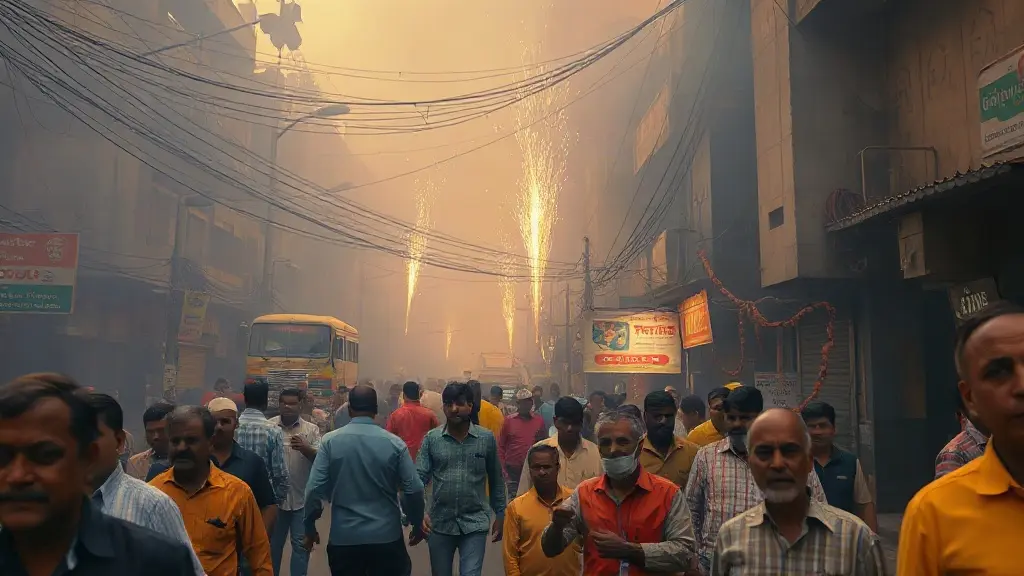
As the festival of Deepavali unfolded on November 8, 2026, the air quality in Delhi plummeted to alarming levels, with PM2.5 concentrations soaring to 66 times the World Health Organization's (WHO) recommended 24-hour guideline. This spike occurred as residents defied a [Supreme Court](/topic/supreme-court-of-india)-imposed ban on firecrackers, continuing to burst them well past the 10 p.m. deadline. The situation was exacerbated by significant data gaps from several monitoring stations operated by the Delhi Pollution Control Committee (DPCC), raising concerns about the true extent of the pollution crisis.
The Deepavali Firecracker Dilemma
Despite the Supreme Court's clear directive aimed at curbing air pollution during the festival, many Delhiites chose to disregard the ban, leading to a significant increase in harmful particulate matter in the air. According to official data, PM2.5 levels reached a staggering 660 micrograms per cubic meter in some areas, far exceeding the WHO's safe limit of 10 micrograms per cubic meter. This marked one of the worst air quality incidents in recent history, highlighting the ongoing struggle between festive traditions and public health.
The DPCC's monitoring stations, which are crucial for tracking air quality, reported significant data outages during the peak pollution hours. Notably, stations in Anand Vihar, R.K. Puram, and Bawana were offline for several hours, leaving a gap in the data that could have provided a clearer picture of the pollution levels. This absence of real-time data raises questions about the reliability of the reported figures and whether the actual pollution levels could have been even higher.
Monitoring Station Failures and Public Health Implications
The failure of monitoring stations to provide timely data is particularly concerning given the health implications associated with high levels of PM2.5. Exposure to such elevated concentrations can lead to severe respiratory issues, cardiovascular diseases, and other health complications. The lack of data during critical hours means that residents were not adequately informed about the dangers they faced, potentially leading to increased health risks.
Officials from the DPCC acknowledged the data outages but did not provide a clear explanation for the failures. "We are investigating the reasons behind the data unavailability and will ensure that such lapses do not occur in the future," a DPCC spokesperson stated. However, the damage may already be done, as many citizens remained unaware of the hazardous air quality conditions.
Government Response and Future Measures
In response to the alarming pollution levels, the Delhi government has reiterated its commitment to improving air quality and enforcing regulations against firecracker usage. Chief Minister Arvind Kejriwal emphasized the need for stricter enforcement of the firecracker ban and urged citizens to be more responsible during festivals. "We cannot compromise on public health, and we must work together to protect our environment," he stated during a press conference.
Additionally, the government plans to enhance the monitoring infrastructure to ensure that data is consistently available and accurate. This includes upgrading existing stations and potentially adding new ones in areas that are frequently affected by pollution. The aim is to provide real-time updates to the public, allowing residents to make informed decisions about outdoor activities during high pollution periods.
The Role of Community Awareness
While government measures are essential, community awareness and participation are equally crucial in combating air pollution. Environmental activists have called for more educational campaigns to inform residents about the health risks associated with firecrackers and the importance of adhering to pollution control measures. "We need to change the narrative around festivals and find alternative ways to celebrate that do not harm our environment," said an activist from a local NGO.
As the air quality crisis unfolds, it is clear that a multi-faceted approach is necessary to address the underlying issues contributing to pollution in Delhi. This includes not only stricter regulations but also fostering a culture of environmental responsibility among citizens.
Conclusion: A Call for Action
The events of November 8, 2026, serve as a stark reminder of the challenges faced in managing air quality in urban areas, particularly during festive seasons. With pollution levels reaching unprecedented heights and monitoring failures obscuring the true extent of the crisis, immediate action is required from both the government and the community. As Delhi moves forward, it must prioritize public health and environmental sustainability to ensure a cleaner, healthier future for its residents.
| Metric | Value |
|---|---|
| PM2.5 Level (µg/m³) | 660 |
| WHO Recommended Level (µg/m³) | 10 |
| Monitoring Stations Offline | Multiple (Anand Vihar, R.K. Puram, Bawana) |
| Date of Incident | November 8, 2026 |