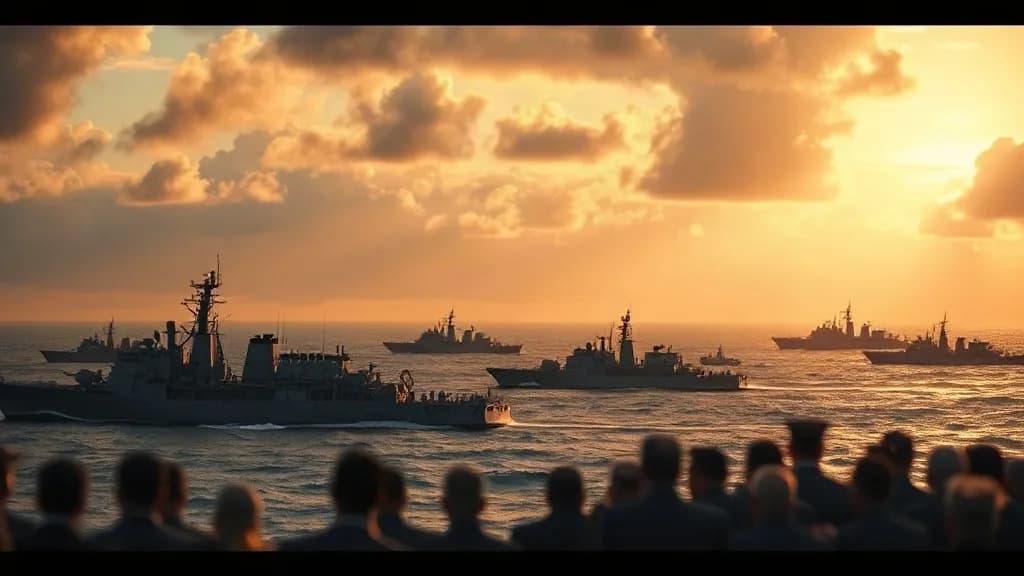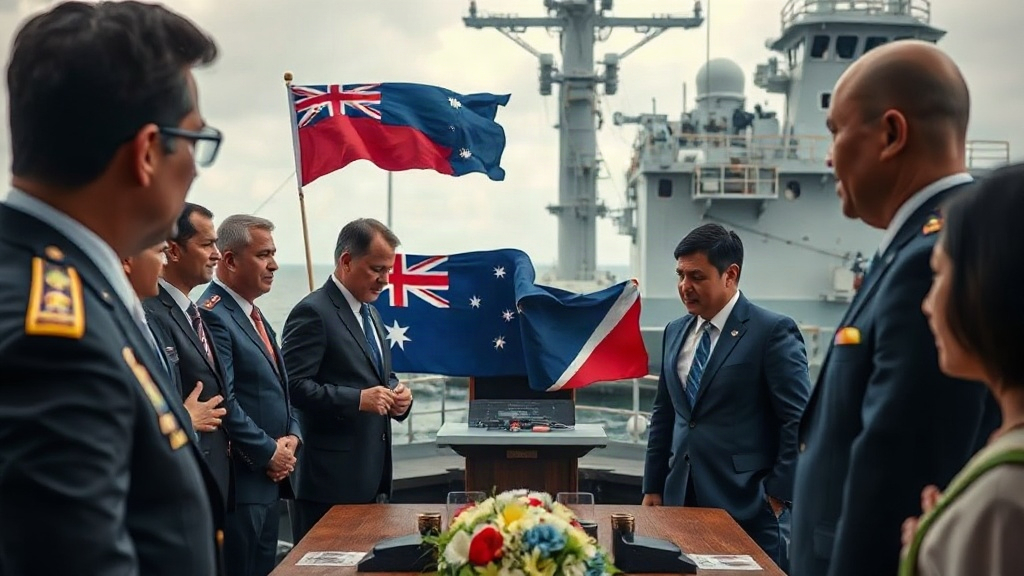
Australia and the Philippines have taken a significant step in bolstering their military cooperation by signing a new defense pact aimed at countering the increasing assertiveness of China in the Asia-Pacific region. The Defence Cooperation Agreement was formalized during a ceremony held on an Australian naval vessel docked in Manila, marking a critical juncture in the strategic partnership between the two nations.
Strengthening Military Infrastructure and Maritime Security
The newly inked agreement is designed to enhance military infrastructure development, maritime awareness, and information sharing between Australia and the Philippines. Prime Minister Anthony Albanese emphasized the importance of this collaboration, stating, "These activities will contribute to making our region more safe, more secure and more prosperous." He added that the partnership with the Philippines and other regional allies is crucial for strengthening maritime resilience and security, which are essential for maintaining peace and stability in the region.
Philippine Defense Secretary Gilberto Teodoro echoed these sentiments, noting that the agreement will facilitate faster coordination between the two nations across maritime, land, and air operations. This streamlined approach is expected to enhance the effectiveness of joint military exercises and operations, allowing both countries to respond more swiftly to emerging threats.
Context of Rising Tensions in the South China Sea
The backdrop of this defense pact is the ongoing tensions in the South China Sea, where the Philippines and China have clashed over territorial claims. The South China Sea is a vital maritime route, and both nations have competing interests in the region. The agreement comes at a time when the Philippines is seeking to bolster its defense capabilities against increasing pressure from China, which has been accused of aggressive tactics in the area.
Albanese clarified that the defense pact is not aimed at any specific nation, but it is evident that the collaboration between Australia, the US, and Japan is intended to support the Philippines in countering Chinese influence. The timing of the agreement coincides with the Philippines hosting the Association of Southeast Asian Nations (ASEAN) summit, where regional security issues are expected to be a focal point of discussions.
The Role of the Quad and Regional Security Initiatives
The recent meeting of defense ministers from Australia, the US, Japan, and the Philippines, informally known as the Quad, underscores the growing concern over security in the East China Sea and the South China Sea. The Quad members expressed serious concerns about unilateral actions that escalate tensions and undermine regional peace and stability. They agreed to establish a Combined Coordination Center in the Philippines to support the country in defending its territorial integrity.
Australia has been proactive in enhancing its defense infrastructure in the Philippines, investing in various military bases and providing support in the form of drones and other resources for the Philippine Coast Guard. This commitment reflects Australia's strategic interest in ensuring a stable and secure maritime environment in the region.
Diplomatic Engagements and Future Prospects
In the coming week, both Albanese and Philippine President Ferdinand Marcos Jr. are set to meet with Chinese officials, including a bilateral meeting between Albanese and Chinese leaders. This diplomatic engagement is crucial as it provides an opportunity to address regional security concerns directly with China. Albanese has expressed his intention to discuss a range of issues with Chinese President Xi Jinping and Premier Li Qiang during the upcoming Asia-Pacific Economic Cooperation (APEC) summit in Shenzhen.
Albanese reiterated Australia's commitment to freedom of navigation in the region, stating, "We have exercises that are important. We have no intention of changing that." This statement reflects Australia's clear stance on maintaining its strategic interests while addressing administrative challenges of its relationship with China.
Conclusion: A New Era of Defense Cooperation
The signing of the Defence Cooperation Agreement between Australia and the Philippines marks a significant milestone in their bilateral relations, particularly in the context of rising tensions with China. As both nations work to enhance their military capabilities and streamline coordination, the implications of this partnership extend beyond their borders, influencing the broader security dynamics in the Asia-Pacific region. The commitment to strengthening defense ties signals a new era of cooperation aimed at ensuring peace, stability, and prosperity in a region facing increasing challenges.
| Forensic Metric / Statutory Dimension | Mainstream Wire Benchmark | DotMR Corroborated Record & Direct Impact |
|---|---|---|
| Date of Agreement | November 15, 2026 | Defence Cooperation Agreement signed in Manila |
| Key Participants | Australia, Philippines | Prime Minister Albanese, Defense Secretary Teodoro |
| Focus Areas | Military cooperation | Infrastructure, maritime awareness, information sharing |
| Regional Context | Tensions with China | Ongoing territorial disputes in South China Sea |
| Future Engagements | APEC Summit 2026 | Bilateral meetings with Chinese officials |