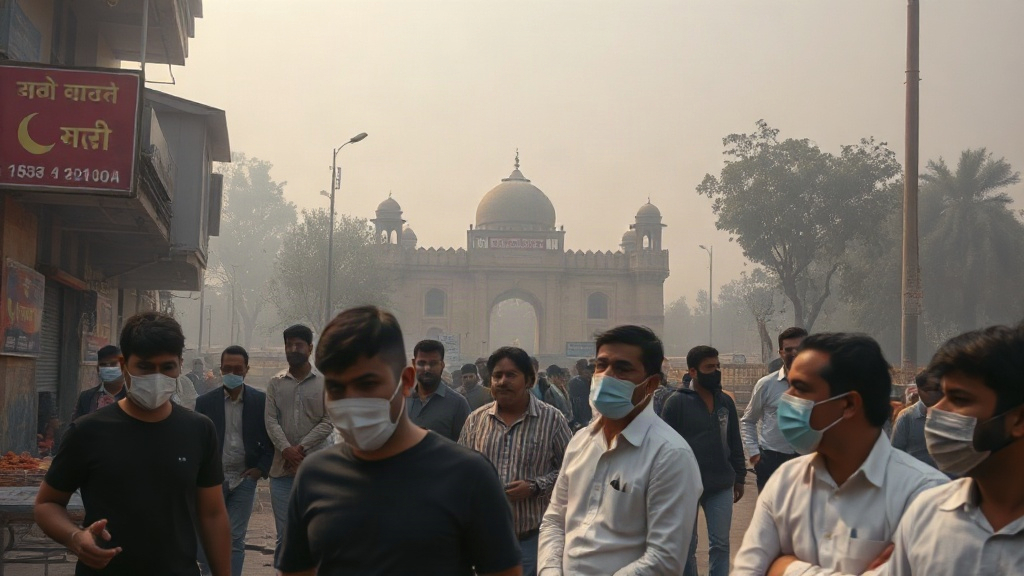
Delhi's air quality index (AQI) has plunged into the 'very poor' category, with the Siri Fort monitoring station recording an alarming AQI of 350 at 8 AM on November 16, 2026. This marks a significant deterioration from earlier readings, as the city grapples with persistent pollution exacerbated by local sources and meteorological conditions. The national capital is expected to face continued poor air quality for at least the next six days, according to forecasts from the Air Quality Early Warning System (AQEWS).
Current Air Quality Status and Monitoring Stations
As of the latest reports, the overall AQI for Delhi stood at 218 at 8 AM, categorized as 'poor'. However, the situation is dire at several monitoring stations. Following Siri Fort, the NSIT Dwarka station recorded an AQI of 327, also falling into the 'very poor' category. Out of the 59 monitoring stations across the city, 38 reported 'poor' air quality, while 18 were classified as 'moderate'. Only the Cantonment monitoring station managed to achieve a 'satisfactory' AQI of 98.
The Central Pollution Control Board (CPCB) defines air quality categories based on AQI readings: 0-50 is 'good', 51-100 is 'satisfactory', 101-200 is 'moderate', 201-300 is 'poor', 301-400 is 'very poor', and 401-500 is 'severe'. The current readings indicate a troubling trend, with the city experiencing a series of 'very poor' air quality days this month.
Meteorological Factors Contributing to Pollution
The India Meteorological Department (IMD) reported shallow fog across various parts of Delhi, with minimum temperatures ranging from 14°C to 16°C. The maximum temperature is expected to hover between 26°C and 28°C, with a gradual decline anticipated over the next few days. Meteorologist Navdeep Dahiya explained that the combination of temperature inversion and stagnant wind conditions during the night leads to a buildup of pollutants, resulting in deteriorating air quality.
"As soon as night sets in and wind speeds slow down, the temperature inversion effect, along with fresh emissions, starts taking effect. The temporary relief is over. Brace for smog during the night and morning hours over the next week," Dahiya stated. He emphasized that only the afternoons might provide some respite, thanks to stronger northwesterly winds expected to reach speeds of 10-20 km/h.
Local Sources of Pollution and Public Health Concerns
The ongoing pollution crisis in Delhi has been attributed to multiple factors, including the extensive use of firecrackers, particularly during the Chhath Puja celebrations, and the rise in stubble burning in neighboring states. Despite a temporary improvement in air quality due to increased wind speeds and a western disturbance, the return of banned firecrackers has once again contributed to the spike in pollution levels.
Experts warn that the health implications of prolonged exposure to 'very poor' air quality are severe. Vulnerable populations, including children, the elderly, and those with pre-existing health conditions, are at heightened risk of respiratory issues and other health complications. The government and health authorities are urged to take immediate action to mitigate the effects of pollution on public health.
Government Response and Future Projections
In light of the deteriorating air quality, the Delhi government has been urged to implement stricter measures to control pollution sources. This includes enforcing bans on firecrackers, regulating construction activities, and promoting cleaner alternatives for energy and transportation. The AQEWS has forecasted that the air quality will remain in the 'poor' category on November 16 before deteriorating further to 'very poor' levels between November 17 and 18.
The ongoing situation calls for urgent attention from policymakers and the public alike. Continuous monitoring and proactive measures are essential to combat the persistent air quality crisis in Delhi. The city has witnessed a troubling trend of worsening air quality, and without significant intervention, the health and well-being of its residents remain at risk.
The air quality crisis in Delhi is a complex issue that requires a multifaceted approach, involving government action, public awareness, and community engagement to foster a healthier environment for all residents.
| Forensic Metric / Statutory Dimension | Mainstream Wire Benchmark | DotMR Corroborated Record & Direct Impact |
|---|---|---|
| Siri Fort AQI at 8 AM | 350 | Very Poor Category |
| NSIT Dwarka AQI | 327 | Very Poor Category |
| Total Monitoring Stations | 59 | 38 Poor, 18 Moderate, 1 Satisfactory |
| Expected AQI on Nov 17-18 | Very Poor | Continued Deterioration |
| Minimum Temperature | 14°C - 16°C | Fog Reported Across City |