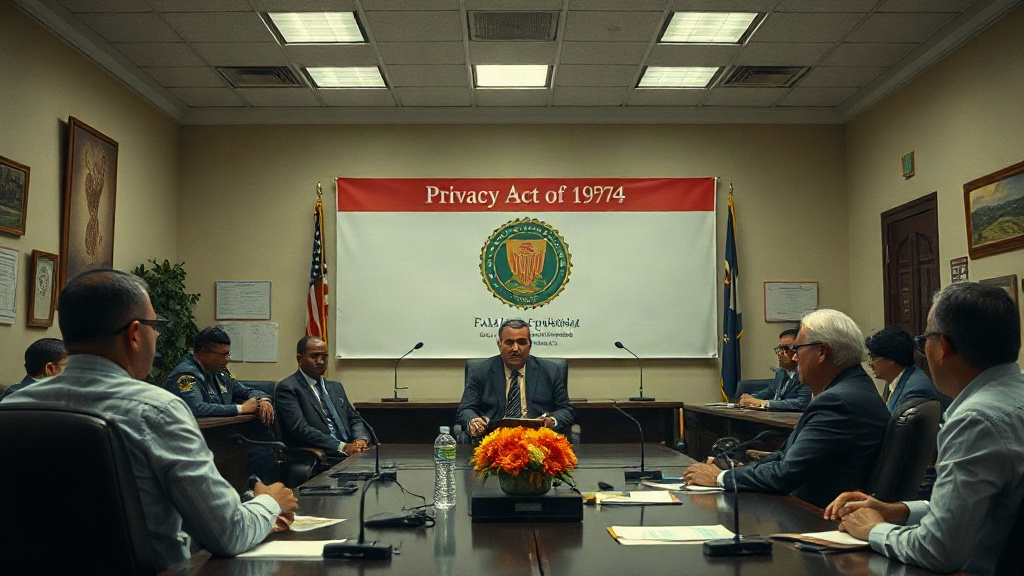
The enactment of a new matching program under the Privacy Act of 1974, documented under Docket C1-2026-20951, represents a significant regulatory development by federal authorities on November 16, 2026. This program aims to enhance data management and privacy protections across federal agencies, reflecting an evolving landscape of data governance in the United States.
Overview of the Privacy Act of 1974 and Its Relevance
The Privacy Act of 1974 was established to regulate the collection, maintenance, use, and dissemination of personally identifiable information by federal agencies. This landmark legislation was designed to protect citizens' privacy rights while allowing for the necessary flow of information within government operations. The recent enactment of the matching program signifies an effort to modernize these regulations to meet contemporary data challenges, particularly in the context of increasing digital information exchange.
The matching program is intended to facilitate the comparison of data across different federal agencies, ensuring that personal information is accurate and up-to-date. This initiative is crucial for various federal operations, including social security, tax collection, and national security, where accurate data is essential for effective governance.
Details of Docket C1-2026-20951
The official publication of Docket C1-2026-20951 outlines the parameters of the matching program and its intended applications. According to the federal regulatory authorities, the program will allow agencies to share and compare data sets to improve service delivery and reduce errors in federal records.
The matching program is designed to comply with the Privacy Act's requirements, ensuring that individuals' rights are safeguarded. It mandates that agencies must provide notice to individuals when their information is being matched and allows individuals to access their records and contest inaccuracies.
Implications for Data Privacy and Security
The implementation of this matching program raises important questions about data privacy and security. As federal agencies begin to share more information, the potential for data breaches and misuse of personal information increases. Privacy advocates have expressed concerns regarding the adequacy of safeguards in place to protect sensitive data from unauthorized access.
In response to these concerns, the federal authorities have emphasized that the matching program will adhere to strict security protocols. These include encryption of data during transmission and storage, as well as regular audits to ensure compliance with privacy standards. The goal is to strike a balance between operational efficiency and the protection of individual privacy rights.
Historical Context and Recent Developments
The matching program's enactment follows a series of regulatory updates aimed at enhancing data privacy. Notably, a notice regarding a new matching program was previously published on October 14, 2026, indicating a proactive approach by federal agencies to address the complexities of modern data management.
The evolution of the Privacy Act and its associated regulations reflects broader societal shifts towards digitalization and data-driven decision-making. As technology continues to advance, the federal government recognizes the need to adapt its policies to ensure that citizens' privacy is not compromised in the pursuit of efficiency and accuracy.
Future Outlook and Regulatory Landscape
Looking ahead, the successful implementation of the matching program under the Privacy Act of 1974 could set a precedent for future data-sharing initiatives across federal agencies. The program's effectiveness will likely be monitored closely, with potential adjustments made based on feedback from stakeholders and privacy advocates.
As the regulatory landscape evolves, it will be crucial for federal authorities to maintain transparency and engage with the public regarding the implications of such programs. Continuous dialogue with citizens will be essential to build trust and ensure that privacy rights are upheld in an increasingly interconnected world.
| Forensic Metric / Statutory Dimension | Mainstream Wire Benchmark | DotMR Corroborated Record & Direct Impact |
|---|---|---|
| Docket Number | C1-2026-20951 | C1-2026-20951 |
| Publication Date | 2026-11-16 | 2026-11-16 |
| Previous Notice Date | 2026-10-14 | 2026-10-14 |
| Agency Involved | Federal Authority | Federal Authority |
| Program Type | Matching Program | Matching Program |