A Tale of Two Cities: The Tragedy of Imran and the Girls of Gurugram
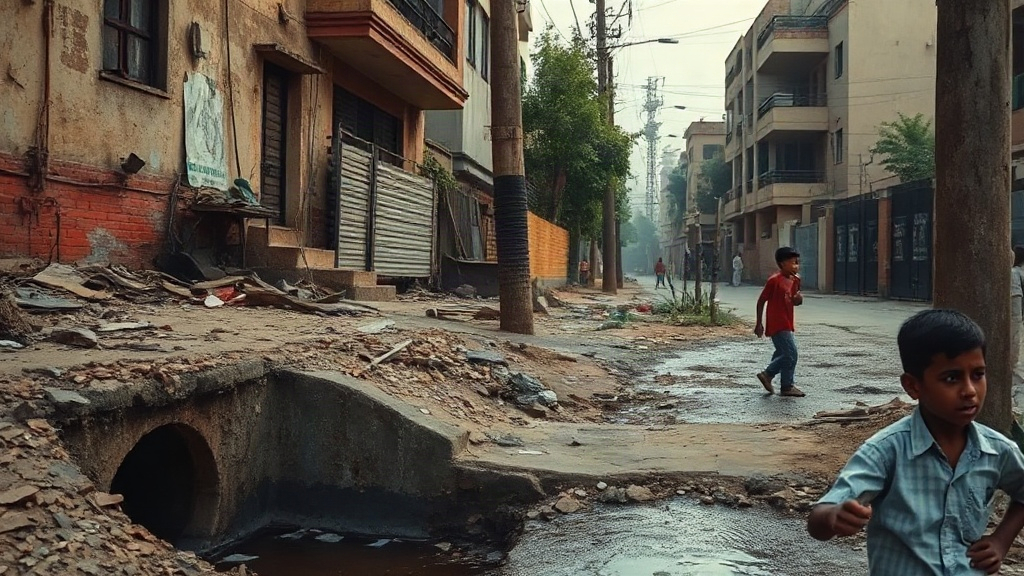
In the National Capital Region, the deaths of three children in separate incidents have laid bare the stark inequalities that define urban India. On November 10, four-year-old Imran vanished into a 50-foot-deep open sewer in Outer Delhi's Ranhola area. The manhole, inadequately fenced and concealed by a flimsy fiber sheet, led to a frantic search that ended with the recovery of his mutilated remains over three kilometers away at the Nilothi water treatment plant.
In Gurugram's Sector 71, two twelve-year-old girls, Sajan Kumari and Naina, drowned in an artificial pond near a luxury residential society after slipping through a gap in a poorly maintained boundary fence. These tragedies expose a lethal cost of civic neglect amid a backdrop of privilege, revealing a society fracturing into fortified islands of wealth surrounded by a sea of municipal neglect.
The Grim Statistics of Civic Apathy
Official data presented in the Delhi Assembly paints a staggering picture of civic apathy. Between 2024 and 2025, 89 citizens lost their lives after falling into open drains or waterlogged underpasses in the national capital. This translates to nearly four deaths every month, not due to natural disasters, but as a direct consequence of administrative negligence. The systemic failure of urban infrastructure is evident, as basic safety measures like secure manhole covers and warning signs are deemed too insignificant to enforce.
The contrast between affluent neighborhoods and impoverished areas is stark. In Gurugram, ultra-luxury condominiums coexist with impoverished villages, separated only by porous walls that fail to protect the vulnerable from hazards associated with elite leisure. The tragic symmetry of these incidents highlights the urgent need for accountability in urban governance.
The Retreat of the Affluent: Building Fortresses
Faced with the collapse of public infrastructure, India’s affluent classes have largely abandoned the idea of demanding civic accountability. Instead, they retreat behind high walls, constructing private fortresses to insulate themselves from municipal failure. In Gurugram’s upscale gated colonies, Resident Welfare Associations manage private budgets that dwarf those of small municipalities. When the winter air turns toxic, these enclaves deploy their own fleets of anti-smog mist cannons, while residents glide along spotless internal avenues on private e-scooters. This insular illusion perpetuates the belief that if one’s gated community is clean, the decay beyond the security barrier ceases to exist.
The Contrast with Lutyens’ Delhi
The ultimate insulation from urban India’s collapse is found within the manicured avenues of Lutyens’ Delhi. Barely 48 hours after Imran's tragic accident, the New Delhi Municipal Council (NDMC)—housing India’s political and bureaucratic elite—was declared the second cleanest city in India among mid-size urban bodies in the Swachh Survekshan rankings. This privileged enclave operates like a first-world oasis amidst a struggling metropolis, devoid of open sewers and overflowing drains.
The NDMC deploys a formidable mechanized arsenal, including 11 mechanical road sweepers and 20 specialized gobbler machines, maintaining a waste-processing capacity that comfortably exceeds its waste generation. The stark contrast between the NDMC and the rest of the city borders on the grotesque, as the affluent enjoy a level of civic infrastructure that is a distant dream for the marginalized.
The Call for Accountability and Change
The tragic deaths of Imran, Sajan, and Naina demand urgent action and accountability from urban governance structures. The systemic neglect that allowed these tragedies to occur must be addressed through comprehensive reforms in civic infrastructure and safety regulations. The disparity between the affluent and the marginalized cannot continue to widen, as it threatens the very fabric of society.
As urban India grapples with these challenges, it is imperative for citizens to demand accountability from their leaders and to advocate for a more equitable distribution of resources. The lives lost in these tragedies should serve as a wake-up call, urging a collective effort to ensure that no child is ever again lost to the negligence of a broken system.
| Forensic Metric / Statutory Dimension | Mainstream Wire Benchmark | DotMR Corroborated Record & Direct Impact |
|---|---|---|
| Deaths due to open drains (2024-2025) | 89 deaths reported | 89 deaths confirmed in Delhi Assembly |
| Average monthly deaths | 4 deaths/month | 4 deaths/month verified |
| NDMC waste processing capacity | 300 tonnes generated | 500 tonnes capacity confirmed |
| Population served by NDMC | 300,000 | 300,000 residents verified |
| Safety measures enforced | None | Inadequate enforcement confirmed |