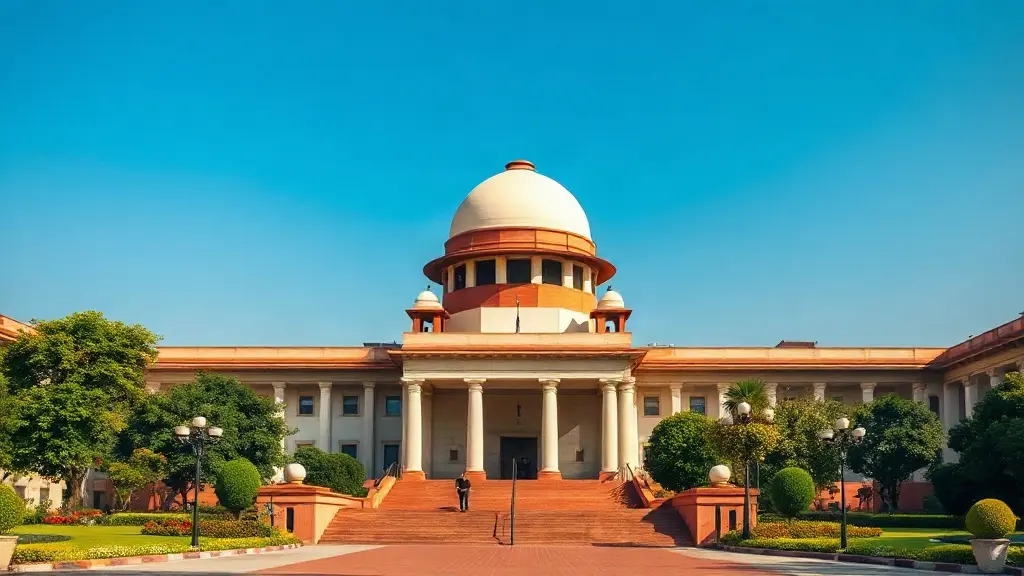
With vehicular emissions identified as a significant contributor to the deteriorating air quality in the National Capital Region (NCR), the Supreme Court has mandated urgent action from Delhi and three neighboring states. In a recent directive, the court called for comprehensive responses from the Municipal Corporation of Delhi (MCD), the Delhi government, and the traffic departments of Haryana, Rajasthan, and Uttar Pradesh regarding their strategies to regulate vehicle emissions. This intervention comes as the Commission for Air Quality Management (CAQM) reported that vehicular emissions account for 23% of pollution in winter and 19% in summer, highlighting the pressing need for immediate regulatory measures.
Supreme Court's Directive on Pollution Control Measures
The Supreme Court, led by Chief Justice Surya Kant, has emphasized the necessity for detailed explanations from the authorities on how they manage the entry and movement of vehicles in the NCR. The court's order specifically requests information on the enforcement of emission standards, the regulation of overage and polluting vehicles, and the mechanisms in place to ensure compliance with Pollution Under Control (PUC) certification requirements. The court's inquiry is particularly timely, given the recent decline in stubble burning incidents, which had previously been a major contributor to air pollution in the region.
The court's order also seeks data on the number of vehicles inspected, challaned, and denied entry for violations of emission standards. This information is crucial for understanding the effectiveness of current regulations and the need for enhanced enforcement measures. The Supreme Court has set a deadline of two weeks for the states to submit their responses, which will include both short-term and long-term strategies to mitigate vehicular emissions.
CAQM's Findings on Vehicular Emissions
The CAQM's report, which played a pivotal role in prompting the Supreme Court's intervention, underscores the alarming impact of vehicular emissions on air quality in the NCR. The report indicates that despite a notable reduction in stubble burning, the region is facing a sharp increase in pollution levels attributed to vehicular traffic. This shift in focus from agricultural practices to vehicular emissions highlights the need for a comprehensive approach to air quality management in the NCR.
According to the CAQM, the substantial volume of vehicles—both commercial and non-commercial—entering and operating within the NCR exacerbates the existing pollution load. The court noted that the interconnectedness of the NCR's geographical and economic landscape means that pollution control measures must extend beyond Delhi to include neighboring states.
Judicial Scrutiny of Pollution Sources
The Supreme Court's recent order signals a more rigorous judicial approach to tackling various sources of pollution in the NCR. The court has scheduled separate hearings for different pollution-related issues, including vehicular emissions, solid waste management, and pollution from construction activities. The vehicular emissions case is set to be heard on November 23, followed by hearings on solid waste management and crop-residue burning on November 25, and pollution from construction activities on November 26.
This structured approach allows the court to address the multifaceted nature of pollution in the NCR and ensure that comprehensive solutions are implemented. The court's emphasis on timely submissions from the states reflects its commitment to holding authorities accountable for their pollution control efforts.
The Road Ahead for Pollution Control in NCR
As the Supreme Court awaits responses from the Delhi government and neighboring states, the focus will be on developing a robust regulatory framework to combat vehicular emissions effectively. The court's directive for a time-bound roadmap for enforcement measures is crucial in ensuring that the necessary actions are taken promptly.
The upcoming hearings will provide a platform for discussing the effectiveness of current measures and exploring innovative solutions to curb vehicular emissions. Stakeholders, including environmental advocates and government officials, will have the opportunity to present their views and recommendations during these proceedings.
Looking ahead,, the Supreme Court's intervention marks a significant step towards addressing the pressing issue of vehicular emissions in the NCR. The court's insistence on accountability and transparency from the authorities is essential for fostering a collaborative approach to improving air quality in the region. As the deadline for submissions approaches, the focus will remain on how effectively the states can implement the necessary measures to protect public health and the environment.
| Metric | Winter (%) | Summer (%) |
|---|---|---|
| Contribution of Vehicular Emissions | 23 | 19 |
| Stubble Burning Incidents Decline | Significant | Significant |
| Number of Vehicles Inspected | TBD | TBD |
| Number of Vehicles Challaned | TBD | TBD |