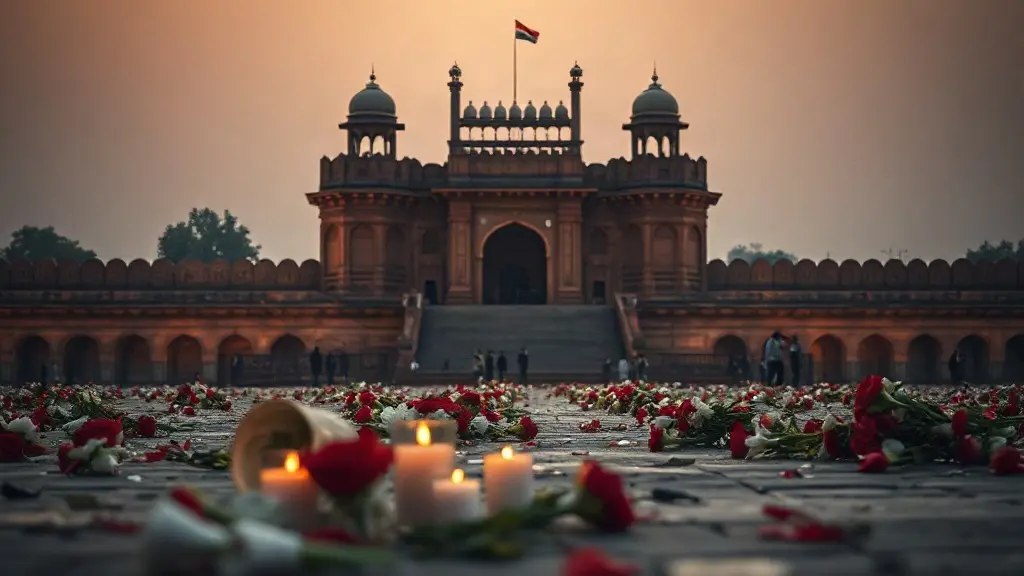
A year after the devastating blast near Delhi's Red Fort on November 10, 2025, which claimed 12 lives, the families of the victims continue to navigate a landscape of grief, financial instability, and unanswered questions. The National Investigation Agency (NIA) has made progress in its investigation, filing three charge sheets against 13 individuals linked to a conspiracy dubbed "Operation Heavenly Hind." However, for the families left behind, the quest for justice remains painfully slow.
The Tragic Incident and Immediate Aftermath
The explosion occurred at a busy junction in front of the historic Red Fort, a site that attracts thousands of visitors daily. The blast was attributed to a vehicle laden with explosives, allegedly driven by Umar-un-Nabi, a doctor from Jammu and Kashmir. Following the incident, the NIA registered a case the next day, marking the beginning of a complex investigation.
By December 2025, the NIA had arrested 11 individuals believed to have conspired with Nabi. Many of these suspects were reportedly affiliated with Al-Falah University in Faridabad, raising concerns about the radicalization of educated youth. The agency's findings suggested that the conspiracy had been in the works since 2022, highlighting the long-term planning behind the attack.
Families Left in Limbo
The emotional and financial toll on the families of the victims has been immense. For Sonam Devi, the wife of Ashok Kumar, a Delhi Transport Corporation conductor who was killed in the blast, the tragedy forced her to leave the capital and return to her parents' home in Amroha, Uttar Pradesh. "I could not manage alone in the city. I had no help from Ashok’s family either. They don’t even ask how my children and I are doing," she lamented.
Sonam received ₹10 lakh in compensation from the Delhi government, but half of it was taken by her late husband's family. She has managed to save the remaining amount for her children's future, but the emotional scars remain.
Similarly, Guddu, the brother of Dinesh Mishra, who worked at a wedding card shop, has taken on the responsibility of raising Dinesh's children after the tragedy. "I’ll ensure he studies well," Guddu said, referring to Dinesh's 13-year-old son, whom he has enrolled in a boarding school in Delhi. However, Guddu expressed frustration over the slow pace of justice, questioning why the state supports those accused of terrorism. "Why is the country spending money on them in jail and giving them food? They are terrorists," he stated.
The Quest for Justice
The NIA's investigation has been met with mixed reactions from the victims' families. While some appreciate the agency's efforts, others feel that justice is moving too slowly. The charge sheets filed against the accused have not yet resulted in convictions, leaving families in a state of uncertainty. The emotional burden of waiting for justice compounds their grief, as they struggle to rebuild their lives without their loved ones.
Imraan, a father from Shamli district, lost his 21-year-old son Noman in the blast. Noman had dropped out of school to support his family, working at a motor repair shop and later managing the family’s cosmetic shop. Imraan's grief is compounded by the fact that his elder son was undergoing a kidney transplant at the time of the tragedy. "We were already facing hardships, and losing Noman has shattered our family," he said.
Government Response and Support
In the wake of the blast, the Delhi government has provided financial compensation to the victims' families, but many argue that this is insufficient. The emotional and psychological support needed to cope with such a traumatic event is lacking. Families have expressed a desire for more comprehensive support systems, including counseling and long-term financial assistance.
The NIA's ongoing investigation into the blast is crucial, not only for the families seeking justice but also for the broader community that has been affected by this act of terror. The agency's findings and eventual prosecutions will play a significant role in restoring a sense of security and trust among the public.
Conclusion: A Call for Action
As the one-year anniversary of the Red Fort blast approaches, the families of the victims continue to seek justice and closure. The NIA's investigation remains a focal point, but the emotional and financial struggles faced by these families highlight the need for a more robust support system. The scars of that fateful day will linger, but with continued advocacy and support, there is hope for healing and justice.
| Victim Name | Age | Occupation | Compensation Received | Family Status |
|---|---|---|---|---|
| Amar Kataria | N/A | N/A | N/A | N/A |
| Vinay Pathak | N/A | N/A | N/A | N/A |
| Ashok Kumar | 35 | DTC Conductor | ₹10 lakh | Wife and children relocated |
| Mohammad Lukman | N/A | N/A | N/A | N/A |
| Lokesh Kumar | N/A | N/A | N/A | N/A |
| Jumman Mohammed | N/A | N/A | N/A | N/A |
| Dinesh Kumar Mishra | N/A | Wedding Card Shop Employee | N/A | Children under Guddu's care |
| Numan Ansari | N/A | N/A | N/A | N/A |
| Mohsin Malik | N/A | N/A | N/A | N/A |
| Pankaj Saini | N/A | N/A | N/A | N/A |
| Bilal Ahmad Sangoo | N/A | N/A | N/A | N/A |