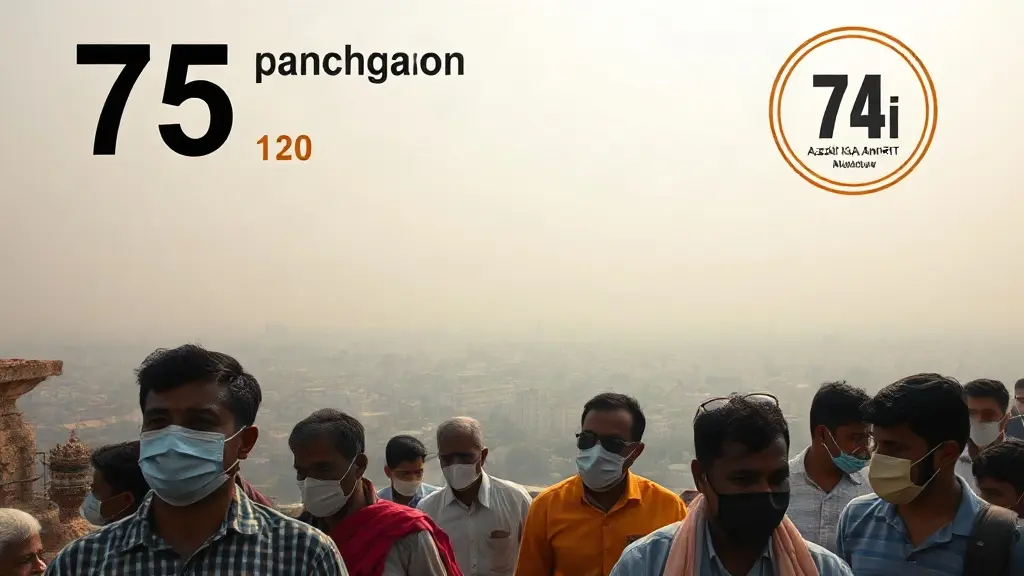
Panchgaon, a town in Haryana, has recorded the highest Air Quality Index (AQI) in India, reaching a staggering 365 on November 10, 2026. This alarming figure places Panchgaon firmly in the 'very poor' category, as classified by the Central Pollution Control Board (CPCB) through its SAMEER app. Following closely is Kaithal, also in Haryana, with an AQI of 355. The situation in Delhi is equally concerning, with several neighborhoods reporting AQI levels exceeding 350, prompting the continuation of GRAP Stage 3 restrictions across the National Capital Region (NCR).
Panchgaon and Kaithal: The Most Polluted Cities
The AQI readings from Panchgaon and Kaithal highlight the severe air quality crisis affecting northern India. At 7:05 am on Tuesday, Panchgaon’s AQI of 365 was the highest among all monitored cities, while Kaithal's 355 placed it second. Other cities in the region, such as Anpara and Baraut in Uttar Pradesh, recorded AQIs of 336 and 330, respectively. The pollution levels are indicative of a broader environmental issue that has been escalating in recent years, particularly during the winter months when air quality typically deteriorates.
| City | AQI | Category |
|---|---|---|
| Panchgaon | 365 | Very Poor |
| Kaithal | 355 | Very Poor |
| Anpara | 336 | Very Poor |
| Baraut | 330 | Very Poor |
| Khora | 329 | Very Poor |
| Ujjain | 327 | Very Poor |
| Gurugram | 321 | Poor |
| Noida | 313 | Poor |
| Faridabad | 313 | Poor |
| New Delhi | 307 | Poor |
Delhi's Struggle with Air Quality
In Delhi, the air quality remains a pressing concern, with numerous localities reporting AQI levels above 350. Notable areas such as Chandni Chowk (395), Commonwealth Sports Complex (380), and JNU (369) are experiencing severe pollution, which poses significant health risks to residents. The ongoing GRAP Stage 3 restrictions, which include a ban on certain vehicles and construction activities, aim to mitigate the worsening air quality, but the effectiveness of these measures is under scrutiny.
Dr. Bobby Bhalotra, a senior consultant pulmonologist at Apollo Hospitals in Gurugram, expressed grave concerns about the health implications of the current pollution levels. "The situation across the NCR is grim. Pollution levels have surged, leading to a sharp rise in patients coming to the OPD and emergency rooms with severe respiratory distress, incessant coughing, watery eyes, and bronchospasm-induced chest pain. It is not just vulnerable groups—even individuals with no prior history of breathing ailments are suffering," he stated.
Graded Response Action Plan (GRAP) Stage 3
The Graded Response Action Plan (GRAP) Stage 3, which has been in effect since November 1, 2026, includes stringent measures aimed at controlling pollution levels. Under this plan, the use of BS-III petrol and BS-IV diesel vehicles is prohibited in Delhi and surrounding districts, including Gurugram and Faridabad. Additionally, construction and demolition activities that generate dust are banned throughout the NCR.
These measures are part of a broader strategy to combat air pollution, which has reached alarming levels in recent years. The CPCB categorizes AQI levels to inform the public about health risks associated with air quality. An AQI of 301-400 is classified as 'very poor', indicating that prolonged exposure can lead to respiratory issues even among healthy individuals.
The Broader Environmental Impact
The concentration of highly polluted cities across Haryana, Uttar Pradesh, Punjab, and Delhi underscores the urgent need for comprehensive environmental policies. The rise in pollution levels has not only affected public health but has also raised questions about the effectiveness of existing regulations and enforcement mechanisms. The situation calls for a multi-faceted approach that includes stricter emission standards, better urban planning, and increased public awareness about pollution control.
As the winter months approach, the likelihood of worsening air quality increases, making it imperative for authorities to take decisive action. The current measures under GRAP Stage 3 are a step in the right direction, but their long-term effectiveness remains to be seen. The health of millions of residents in the NCR hangs in the balance as the region grapples with this environmental crisis.
Looking ahead,, the alarming AQI levels in Panchgaon and Delhi serve as a wake-up call for policymakers and citizens alike. The need for immediate and sustained action to address air quality issues is more critical than ever, as the health of the population continues to be jeopardized by rising pollution levels.