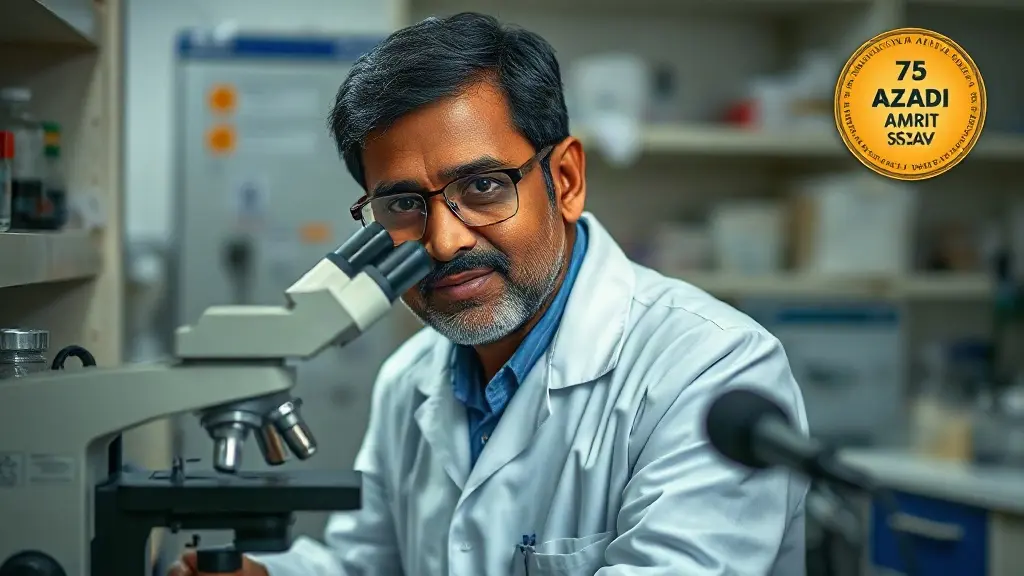
notable Research on Tuberculosis
A team of scientists at the CSIR-Centre for Cellular and Molecular Biology (CCMB) has made a significant breakthrough in the fight against Tuberculosis (TB), identifying critical weaknesses in the Mycobacterium tuberculosis (Mtb) bacterium. This discovery could lead to the development of new treatments for one of the world’s deadliest infectious diseases, which remains a major public health challenge, particularly in India.
According to the World Health Organisation’s Global TB Report 2025, India accounts for nearly 25% of the world’s TB cases and about a third of drug-resistant infections. The emergence of resistant strains has made treatment increasingly difficult, requiring patients to undergo a lengthy regimen of multiple antibiotics over several months. The research conducted by the CCMB team is a strategic milestone in this ongoing battle.
Mapping the Protein Export Machinery
Led by CCMB Director Vinay Kumar Nandicoori, the research team focused on mapping the protein export machinery of Mtb. This process is crucial for the bacterium's growth, survival, and pathogenicity. The study reveals how Mtb transports proteins within and outside its cells, which is essential for its ability to cause disease. By understanding this mechanism, researchers can identify potential new targets for drug development.
Nandicoori emphasized the importance of this research, stating, "By understanding the protein export system of Mtb, we can pinpoint vulnerabilities that can be exploited for therapeutic interventions. This could lead to the development of more effective treatments, particularly for drug-resistant TB."
The Public Health Challenge of Drug-Resistant TB
Drug-resistant TB poses a significant threat to public health, complicating treatment protocols and increasing mortality rates. The traditional treatment regimen involves a combination of antibiotics, which must be taken for six months or longer. However, with the rise of drug-resistant strains, this approach is becoming less effective.
The WHO reported that in 2025, India had approximately 1.5 million new TB cases, with around 200,000 classified as drug-resistant. This alarming statistic highlights the urgent need for innovative treatment strategies. The CCMB's findings could be pivotal in addressing this crisis, offering a new avenue for research and development.
Implications for Future TB Treatments
The identification of new targets within the protein export machinery of Mtb opens up several possibilities for future TB treatments. Researchers can now explore the development of novel drugs that specifically inhibit these processes, potentially leading to shorter and more effective treatment regimens.
According to ministerial filings,, this research aligns with global health initiatives aimed at eradicating TB by 2030. The Indian government has set ambitious targets to reduce TB incidence and mortality, and breakthroughs like those from the CCMB are essential to achieving these goals.
Collaborative Efforts and Next Steps
The CCMB team is not working in isolation; they are collaborating with various national and international research institutions to further explore the implications of their findings. This collaborative approach is crucial for accelerating the translation of research into clinical applications.
As the team continues its work, they are also focusing on the development of diagnostic tools that can quickly identify drug-resistant strains of TB. Early detection is critical in managing the disease effectively and preventing its spread.
The research conducted by the CCMB is an official marker of the importance of scientific inquiry in addressing public health challenges. With continued support and investment in research, there is hope for a future where TB can be effectively managed and potentially eradicated.
The CCMB's research is a significant step forward in the fight against TB, particularly in a country that bears a substantial burden of the disease. As the scientific community continues to unravel the complexities of Mtb, the hope is that new, effective treatments will emerge, ultimately saving lives and improving public health outcomes across India and beyond.
| Metric | Value |
|---|---|
| Global TB cases (2025) | 10 million |
| India’s share of global cases | 25% |
| Drug-resistant TB cases in India | 200,000 |
| Duration of traditional treatment | 6 months or longer |
| New TB cases in India (2025) | 1.5 million |