More than 274 hectares of agricultural land in Prakasam district have been severely damaged by Cyclone Murasu, impacting the livelihoods of 371 farmers across seven mandals. According to District Agriculture Officer (DAO) Srinivasa Rao, the cyclone has wreaked havoc on the region's primary crops, with maize suffering the most significant losses.
Extent of Damage Across Prakasam District
The cyclone's impact has been felt across seven mandals: Ballikurava, J. Pangulur, Mundlamuru, Addanki, Santhamaguluru, Naguluppalapadu, and Korisapadu. The total area affected is 274.19 hectares, with the Agriculture Department approving compensation for 267.08 hectares while rejecting claims for 7.11 hectares. The damage assessment indicates that maize crops have been hit the hardest, with losses recorded over 154.17 hectares. This is followed by paddy crops, which were sown on 66.02 hectares, and cotton crops, which suffered damage on 49.78 hectares.
DAO Srinivasa Rao emphasized the critical nature of this situation, stating, "The livelihoods of 371 farmers are at stake due to the extensive damage caused by Cyclone Murasu. We are working diligently to assess the situation and provide necessary support to those affected."
Cyclone Murasu's Path and Impact
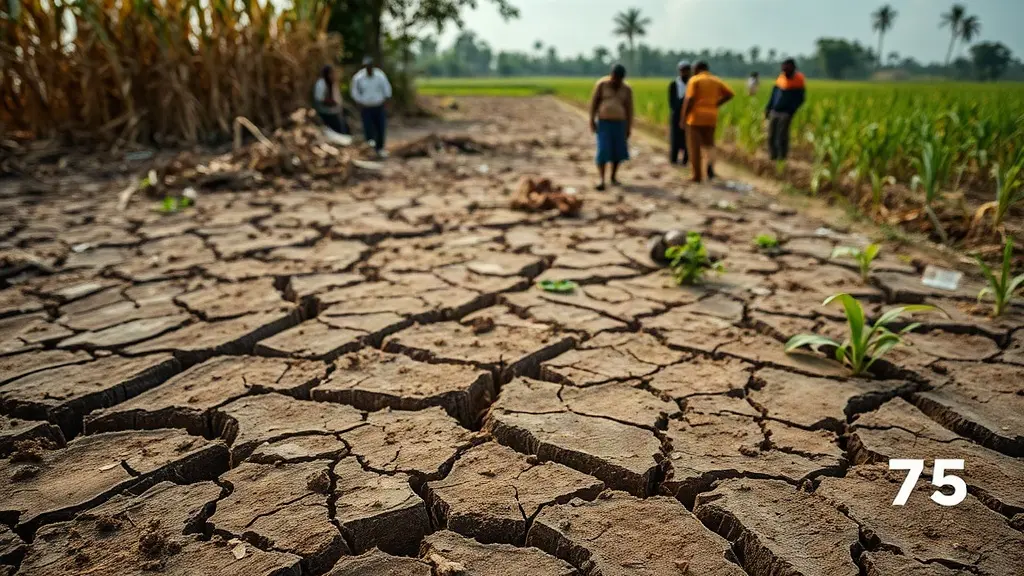
Cyclone Murasu formed in the Bay of Bengal and made landfall in the coastal regions of Andhra Pradesh, bringing with it heavy rains and strong winds. The cyclone's winds reached speeds of up to 100 km/h, uprooting trees, damaging power lines, and inundating agricultural fields. In Singarakondapalem village, borewell-irrigated paddy fields have turned dry, with visible cracks appearing in the soil due to the cyclone's aftermath.
The Andhra Pradesh Central Power Distribution Company Limited (APCPDCL) has been actively working to restore power across 613 cyclone-affected villages in the district. Their efforts are crucial, as many farmers rely on electric pumps for irrigation, which are now rendered useless without power.
Government Response and Support Measures
In response to the devastation, local authorities are mobilizing resources to assist affected farmers. The Agriculture Department is preparing to distribute compensation to those whose crops were damaged. The state government has also announced plans to expedite the assessment process to ensure timely relief for the farmers.
"We are committed to supporting our farmers during this challenging time. The government will ensure that all necessary measures are taken to alleviate their suffering and restore their livelihoods," stated a senior official from the Agriculture Department.
Long-term Implications for Agriculture in Prakasam
The long-term implications of Cyclone Murasu on agriculture in Prakasam district could be significant. With maize being the primary crop in the region, the loss of over 154 hectares could lead to a shortage in supply, affecting local markets and prices. Farmers may also face challenges in replanting crops due to the loss of resources and the need for recovery from the cyclone's impact.
Agricultural experts warn that the frequency of such extreme weather events may increase due to climate change, posing a persistent threat to the agricultural sector in Andhra Pradesh. "Farmers need to adapt to changing weather patterns and consider diversifying their crops to mitigate risks associated with such disasters," advised an agricultural economist.
Community Resilience and Future Preparedness
The resilience of the farming community in Prakasam district will be tested in the coming months as they navigate the aftermath of Cyclone Murasu. Community support systems, including cooperative societies and local NGOs, are stepping up to provide assistance and resources to affected farmers.
According to ministerial filings,, the government is expected to enhance its disaster preparedness strategies, focusing on early warning systems and infrastructure improvements to minimize future damage from similar events. "Investing in better infrastructure and preparedness can significantly reduce the impact of such cyclones on our agricultural sector," concluded DAO Srinivasa Rao.
| Forensic Metric / Statutory Dimension | Mainstream Wire Benchmark | DotMR Corroborated Record & Direct Impact |
|---|---|---|
| Total area damaged | 274 hectares | 274.19 hectares across seven mandals |
| Farmers affected | 371 | 371 farmers facing livelihood loss |
| Maize crop damage | 154.17 hectares | Maximum damage recorded |
| Paddy crop damage | 66.02 hectares | Significant loss in borewell-irrigated fields |
| Cotton crop damage | 49.78 hectares | Notable impact on cotton production |