Bhai Dooj, also known as Yama Dwitiya, is a cherished Hindu festival that celebrates the bond between siblings. This year, the festival will be observed on Wednesday, November 11, 2026, marking the conclusion of the five-day Diwali festival. The significance of Bhai Dooj is deeply rooted in Hindu mythology, emphasizing the love and protection shared between brothers and sisters.
Historical Significance of Bhai Dooj
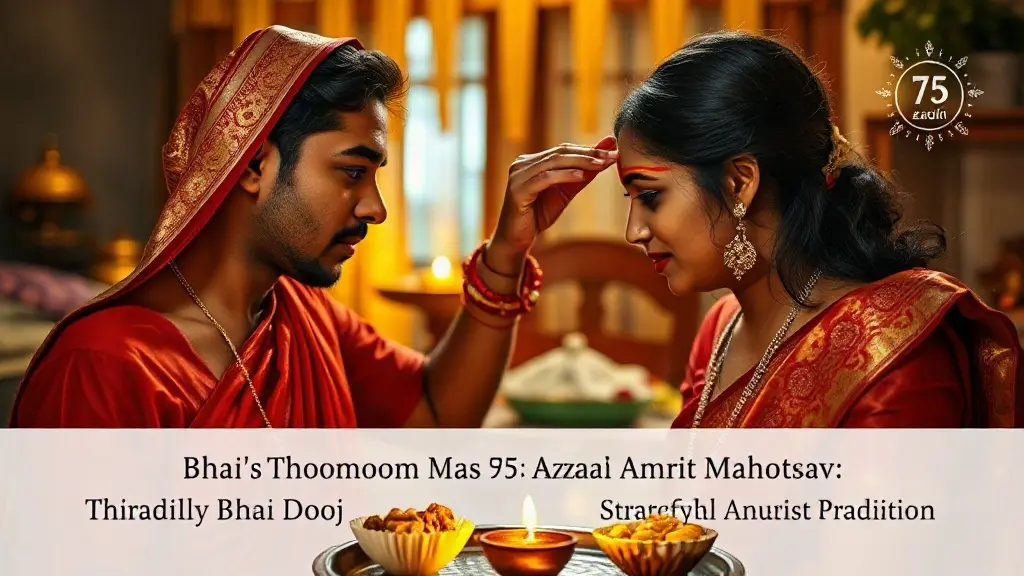
The origins of Bhai Dooj can be traced back to ancient Hindu mythology. According to legend, Lord Yama, the god of death, visited his sister, Goddess Yamuna, after a long separation. To welcome him, Yamuna applied a tilak on his forehead, performed an aarti, and prepared a grand feast. Touched by her hospitality, Yama granted a boon that any brother who receives a tilak from his sister on this day would be blessed with a long life and protection from untimely death.
Another popular tale involves Lord Krishna, who, after defeating the demon Narakasura, visited his sister Subhadra. She welcomed him with traditional rituals, including applying a tilak and performing an aarti, establishing a custom that continues to this day. These stories highlight the festival's emphasis on familial love, protection, and the celebration of sibling relationships.
Rituals and Customs of Bhai Dooj
The rituals of Bhai Dooj are rich in symbolism and tradition. Sisters play a central role in the celebrations, preparing a puja thali that includes essential items such as:
On the day of the festival, the Dwitiya Tithi begins at 2:00 PM on November 10, but the main celebrations occur on November 11. The auspicious tilak shubh muhurat is from 1:10 PM to 3:20 PM on November 11, with the Dwitiya Tithi concluding at 3:53 PM that day. Sisters apply the tilak to their brothers' foreheads during this time, symbolizing their love and prayers for their brothers' health and prosperity.
During the rituals, brothers are typically seated on a wooden pedestal facing east or north. Sisters perform a circular aarti with the diya to ward off negative energies and offer sweets to their brothers. This act of devotion reinforces the bond between siblings and serves as a reminder of their mutual responsibilities and care.
- A lit ghee diya (lamp)
- Traditional sweets
- Fresh fruits
- Tilak paste made from vermilion (roli), sandalwood, and unbroken rice grains (akshat)
Regional Variations in Bhai Dooj Celebrations
Bhai Dooj is celebrated across India and the subcontinent, with each region adding its unique flavor to the festivities. While the core rituals remain consistent, regional variations in customs, food, and names can be observed. For instance:
These regional differences highlight the diversity of Indian culture while maintaining the festival's central theme of sibling love and protection.
- In some parts of North India, the festival is known as Bhau Beej, while in Maharashtra, it is referred to as Bhau Beej or Bhai Dooj.
- In Gujarat, sisters may also perform a ritual called 'Bhai Beej,' which includes the application of a tilak and the offering of sweets.
Gifts and Modern Practices
In contemporary times, Bhai Dooj has evolved to include the exchange of gifts between siblings. While traditional sweets and blessings are still exchanged, many families now opt for practical gifts that reflect their siblings' needs and aspirations. Suggestions for gifts include:
These modern practices not only enhance the significance of the festival but also promote financial awareness and responsibility among siblings.
- Contributions to an emergency fund
- Support for a mutual fund SIP
- Assistance with a Public Provident Fund (PPF) account
- Payment for suitable health insurance
Conclusion: The Enduring Legacy of Bhai Dooj
As Bhai Dooj approaches on November 11, 2026, families across India will come together to celebrate the enduring bond between siblings. The festival serves as a reminder of the love, protection, and support that siblings provide each other throughout their lives. By honoring these relationships through rituals, stories, and modern practices, Bhai Dooj continues to be a vital part of Indian culture, fostering unity and affection among families.
| Event Date | Event Description | Timing |
|---|---|---|
| November 10, 2026 | Dwitiya Tithi Begins | 2:00 PM |
| November 11, 2026 | Tilak Shubh Muhurat | 1:10 PM - 3:20 PM |
| November 11, 2026 | Dwitiya Tithi Ends | 3:53 PM |