TRAI's Independent Drive Test Overview
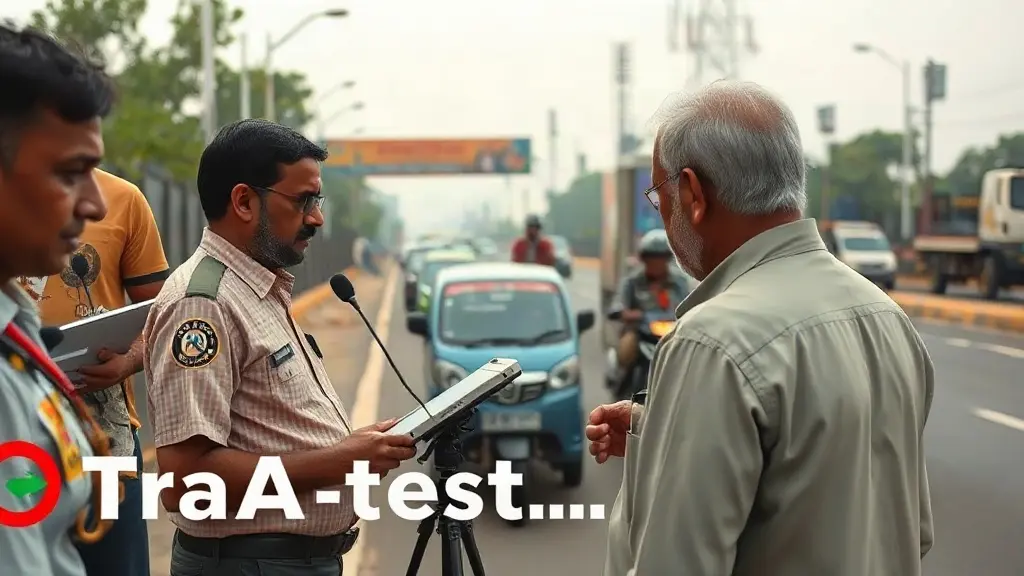
In September 2026, the Telecom Regulatory Authority of India (TRAI) conducted an Independent Drive Test (IDT) across Ratnagiri District, Maharashtra, to assess the quality of mobile network services provided by various Telecom Service Providers (TSPs). This initiative, aimed at informing consumers and encouraging TSPs to enhance their services, involved extensive testing across diverse environments, including urban areas, hotspots, and public transport hubs. The drive test spanned a total of 346.1 kilometers of city driving, 131.8 kilometers on highways, and included 11 hotspot locations and a 7.6-kilometer walk test.
The IDT was executed under the supervision of TRAI's Regional Office in Bengaluru, utilizing advanced software systems to monitor and analyze live data and voice sessions established with SIM cards from all TSPs across 2G, 3G, 4G, and 5G networks. The findings provide critical insights into key Quality of Service (QoS) parameters such as coverage, call drop rates, call setup success rates, and data throughput.
Key Findings on Coverage Gaps and Call Performance
The results of the drive test revealed significant disparities in mobile network performance among the major TSPs operating in Ratnagiri District. Coverage gaps were particularly pronounced, with the following metrics recorded:
These figures indicate that Airtel faced the most significant coverage issues, while BSNL and RJIL also exhibited notable gaps in service quality. The data highlights the urgent need for TSPs to address these deficiencies to meet consumer expectations.
In terms of call performance, the drive test recorded the following dropped call rates:
These statistics underscore the challenges faced by consumers, particularly with BSNL, which had the highest rate of dropped calls during the testing period.
- Airtel: 5,692 poor signal strength samples out of 33,673 total samples.
- BSNL: 1,484 poor signal strength samples out of 40,900 total samples.
- RJIL: 1,184 poor signal strength samples out of 42,801 total samples.
- VIL: 4,823 poor signal strength samples out of 38,305 total samples.
- Airtel: 15 dropped calls out of 301 established calls.
- BSNL: 32 dropped calls out of 338 established calls.
- RJIL: 10 dropped calls out of 387 established calls.
- VIL: 12 dropped calls out of 339 established calls.
Data Throughput Performance Across TSPs
The drive test also evaluated the data download and upload speeds for each TSP, revealing stark contrasts in performance:
RJIL emerged as the leader in both download and upload speeds, significantly outperforming its competitors. In contrast, BSNL's performance was notably poor, with average download speeds of just 4.42 Mbps, raising concerns about its ability to meet the demands of modern mobile users.
| TSP | Average Download Speed (Mbps) | Average Upload Speed (Mbps) |
|---|---|---|
| Airtel | 113.81 | 17.46 |
| BSNL | 4.42 | 2.62 |
| RJIL | 134.77 | 134.77 |
| VIL | 38.93 | 38.93 |
Implications for Consumers and TSPs
The findings from TRAI's drive test in Ratnagiri District serve as a wake-up call for TSPs to enhance their service quality. With increasing reliance on mobile networks for both personal and professional communication, the discrepancies highlighted in the report could lead to consumer dissatisfaction and potential loss of subscribers.
Consumers in Ratnagiri are encouraged to consider these findings when selecting their mobile service providers. The data underscores the importance of reliable connectivity, especially in an era where digital communication is paramount.
TRAI's ongoing efforts to monitor and assess [[mobile network quality](/trai-evaluates-mobile-network-quality-in-arunachal-pradeshs-lohit-district-2)](/trai-evaluates-mobile-network-quality-in-nuh-and-palwal-haryana-2) are crucial in holding TSPs accountable for their service standards. By publishing these findings, TRAI not only informs consumers but also incentivizes TSPs to invest in infrastructure improvements to enhance network reliability and performance.
Conclusion: A Call for Action
As the mobile landscape continues to evolve with the rollout of advanced technologies like 5G, it is imperative for TSPs to address the challenges identified in the Ratnagiri drive test. The results serve as a critical benchmark for assessing service quality and consumer satisfaction. Moving forward, continuous monitoring and transparent reporting will be essential in fostering a competitive environment that ultimately benefits consumers across Maharashtra and beyond.
The drive test results are a reminder that while technological advancements are rapidly changing the telecommunications landscape, the fundamental need for reliable service remains unchanged. TSPs must prioritize network quality to meet the expectations of a growing digital society.