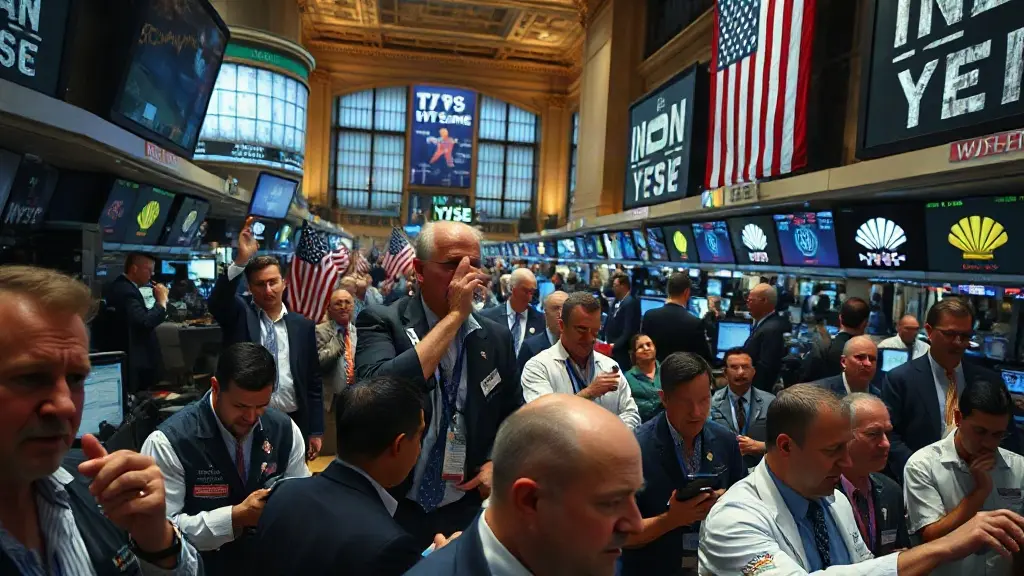
The aftermath of the US midterm elections has sent shockwaves through the global tech sector, resulting in a staggering $2.5 trillion loss in market value across major firms in the US, Europe, and Asia. The Democratic victories, which promise increased scrutiny on data center construction and [artificial intelligence](/topic/artificial-intelligence) (AI) development, have left investors rattled and prompted a significant sell-off in tech stocks. The Nasdaq composite index, heavily weighted with technology shares, closed down by more than 5.5%, marking one of its worst days since 2025. This decline reflects growing concerns about the sustainability of the massive investments being funneled into AI technologies.
Market Reaction to Midterm Elections
The immediate aftermath of the midterm elections saw a dramatic shift in investor sentiment. The Democratic Party's control of both the Senate and the House of Representatives has raised alarms about potential regulatory changes that could slow down the rapid expansion of AI and data centers. Analysts have pointed out that the campaign rhetoric focused on curbing the growth of data centers, which are essential for AI infrastructure, has now materialized into tangible market consequences. According to Dow Jones data, the Nasdaq's loss translates to an estimated $2.5 trillion reduction in market capitalization for tech firms, a stark indicator of investor anxiety.
Global Impact on Tech Stocks
The repercussions of the US elections were felt globally, particularly in Asia, where tech-heavy indexes experienced sharp declines. The Nikkei 225 index in Japan fell by 6.3%, with significant losses reported by key players in the [semiconductor](/topic/semiconductors) industry. Kioxia, a major memory chip manufacturer, saw its shares plummet by nearly 11.5%, while Tokyo Electron's stock dropped by 5.8%. In South Korea, SK Hynix's shares fell by over 8.8%, and Samsung's stock decreased by approximately 6%. The Kospi index in Seoul plunged more than 8% in morning trading, triggering a circuit breaker to halt trading temporarily. This marked a significant moment in the market, reflecting the widespread panic among investors regarding the future of tech investments.
Concerns Over AI Spending
Market analysts are increasingly voicing concerns about the viability of the substantial capital being invested in AI infrastructure. Britney Nguyen, a chips analyst at MarketWatch, noted that the recent sell-off is a continuation of worries surrounding the high levels of spending on AI. The Democratic campaign platform included numerous measures aimed at restricting the development of data centers, which are crucial for the operation of AI technologies. With the Democrats now in control of Congress, the potential for regulatory changes looms large, further exacerbating investor fears.
Political Landscape and Future Implications
The political landscape has shifted dramatically following the midterms, with Democrats like Texas' governor-elect Gina Hinojosa pledging to impose a moratorium on new data center constructions. This commitment to slowing down the growth of data centers aligns with broader concerns about the environmental impact and economic implications of AI technology. As the new Congress convenes, the focus will likely shift to how these policies will be implemented and their potential effects on the tech industry.
The implications of these political changes extend beyond immediate market reactions. Investors are now tasked with reassessing their strategies in light of potential regulatory hurdles that could reshape the AI landscape. The uncertainty surrounding future investments in AI technologies may lead to a more cautious approach among investors, particularly in sectors heavily reliant on data centers.
As the dust settles from the midterm elections, the tech sector faces a period of uncertainty. Investors will be closely monitoring the actions of the new Congress and the potential regulatory landscape that could emerge in the coming months. The future of AI development and data center construction hangs in the balance, and the market's reaction will likely continue to reflect these evolving dynamics.
| Index | Change (%) | Market Value Loss ($ Trillion) |
|---|---|---|
| Nasdaq Composite | -5.5 | 2.5 |
| Nikkei 225 | -6.3 | N/A |
| Kospi | -8.0 | N/A |
| Taiex | -4.5 | N/A |