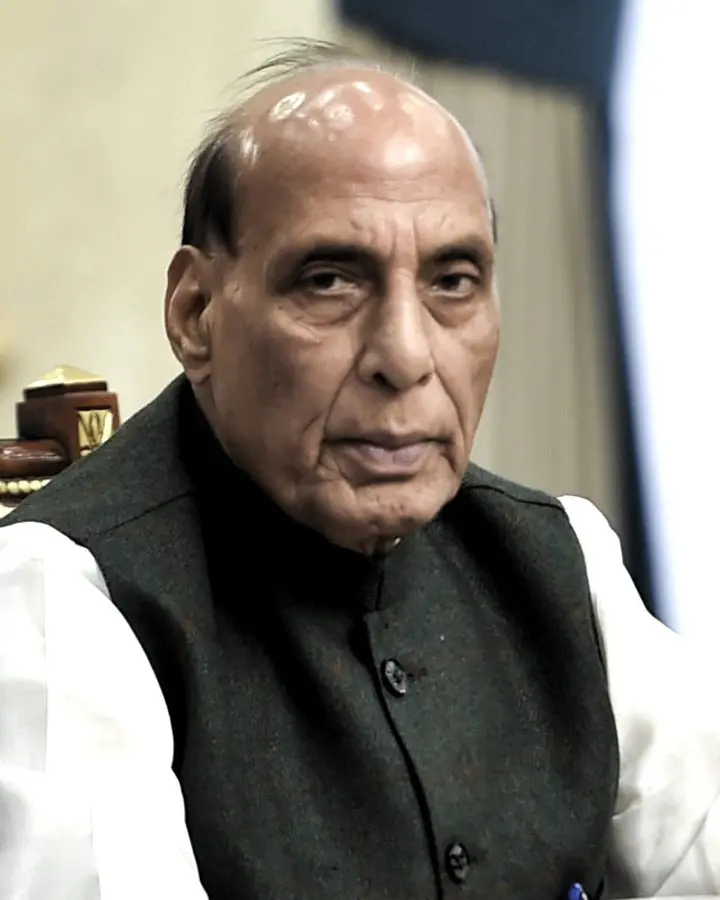
In a significant address at the Air Force Commanders’ Conference, Defence Minister Rajnath Singh underscored the pivotal role of technological superiority and surprise in enhancing the operational readiness of India's armed forces. As security threats evolve, Singh emphasized that future warfare will hinge on technological sophistication, speed of response, and precision rather than sheer numbers of military assets.
Technological Superiority as a Strategic Imperative
Singh articulated that the Indian military must adapt to the changing landscape of warfare, which increasingly relies on advanced technologies. "Victory in future conflicts will depend not merely on the number of aircraft, but also on technological sophistication, speed of response, and precision in planning," he stated. This shift in focus is crucial as the armed forces prepare for emerging security challenges, particularly in light of recent global conflicts that have highlighted the importance of drones and advanced weapon systems.
The Defence Minister pointed out that the ability to identify potential threats before they materialize is essential for maintaining an edge over adversaries. He remarked, "Our defence forces must develop capabilities and methods that leave the adversary with no time to react or recover, while simultaneously ensuring that we are never caught off guard."
The Role of Surprise in Modern Warfare
Surprise, as Singh explained, can manifest in various forms, including both conventional and electronic warfare. He stressed the need for enhanced intelligence and surveillance mechanisms to effectively respond to any emerging challenges. The emphasis on surprise is not merely a tactical consideration but a strategic necessity in a rapidly changing global security environment.
Singh's comments reflect a broader understanding of contemporary conflicts, which extend beyond traditional battlefields. He cited the ongoing conflicts in Ukraine and the Middle East as examples where non-contact warfare, including the use of kamikaze drones and counter-UAS operations, has become increasingly prevalent. This recognition of evolving threats underscores the need for the Indian military to remain agile and prepared for unconventional warfare scenarios.
Revamping the Agnipath Scheme for Enhanced Military Capability
A key component of Singh's address was the revamped Agnipath scheme, which aims to strengthen the three services by incorporating feedback from the armed forces. The scheme, approved by the Centre on November 4, allows Agniveers—those who serve under the scheme—to extend their service for an additional two years with improved salaries. This initiative not only retains skilled personnel but also provides a pathway for them to transition into regular military roles, complete with benefits such as pensions and medical facilities.
Singh emphasized that the revamped model guarantees full-term military service to all existing Agniveers, addressing concerns raised during the initial implementation of the scheme. The changes come at a critical time, as the three services prepare to release 75% of Agniveers from the first batch, retaining only the top 25% based on merit for an extended service period.
Lessons from Recent Conflicts and Operational Reforms
The Defence Minister also highlighted the lessons learned from recent military operations, particularly Operation Sindoor, which have influenced the Indian Air Force's evolving operational procedures. The increased emphasis on drones and air defense systems is a direct response to the changing nature of warfare, where technological advancements dictate the pace and outcome of conflicts.
Singh's remarks at the conference were supported by Air Chief Marshal Ashutosh Dixit and Defence Secretary Rajesh Kumar Singh, who were present to discuss the future trajectory of India's military preparedness. The collaborative approach among the leadership reflects a commitment to integrating technological advancements into military strategy and operations.
Conclusion: A Forward-Looking Military Strategy
As India navigates a complex security landscape, the emphasis on technological superiority, surprise, and jointness will be critical in shaping the future of its armed forces. The Defence Minister's address serves as a clarion call for a transformative approach to military readiness, one that prioritizes innovation and adaptability in the face of emerging threats. The commitment to revamping the Agnipath scheme and enhancing operational capabilities underscores the government's resolve to build a modern, responsive military force capable of meeting the challenges of the 21st century.
| Forensic Metric / Statutory Dimension | Mainstream Wire Benchmark | DotMR Corroborated Record & Direct Impact |
|---|---|---|
| Revamped Agnipath scheme approved | November 4, 2026 | Guarantees full-term service for Agniveers, enhancing military retention |
| Emphasis on technological superiority | N/A | Focus on drones and advanced systems in military strategy |
| Operational reforms post-Sindoor | N/A | Increased integration of drones and air defense in IAF procedures |
| Jointness and integration in forces | N/A | Commitment to collaborative military operations and preparedness |
| Future warfare focus | N/A | Shift towards speed, precision, and technological sophistication |