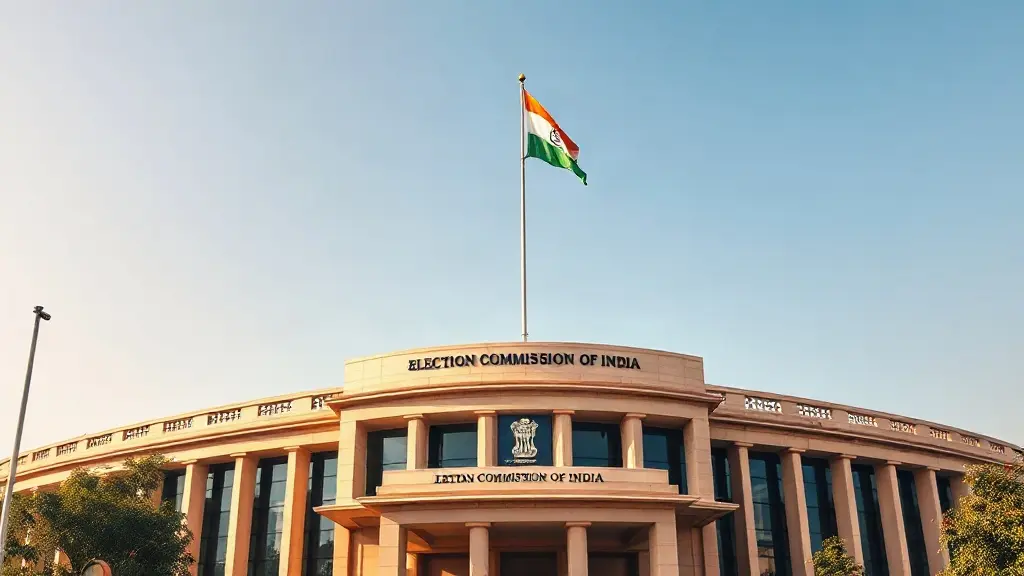
The Election Commission of India (ECI) has taken a significant step to ensure fair electoral practices by extending the Model Code of Conduct (MCC) restrictions to retired government officials. This decision, announced on November 10, 2026, comes as five states—Goa, Manipur, Punjab, Uttar Pradesh, and Uttarakhand—prepare for elections early next year. The ECI's directive emphasizes the importance of political neutrality among all individuals associated with state governments, including those who have retired from service.
ECI's Directive and Its Implications
In a letter addressed to the Chief Secretaries and Chief Electoral Officers of the aforementioned states, the ECI outlined that retired officials must adhere to the same restrictions that apply to serving government employees under the MCC. This includes a prohibition on participating in election campaigns, canvassing, or any activities that could be perceived as politically biased. The ECI's move aims to uphold the integrity of the electoral process and prevent any undue influence that retired officials might exert due to their previous positions.
The MCC is a set of guidelines issued by the ECI to regulate the conduct of political parties and candidates during elections. By extending these guidelines to retired officials, the ECI seeks to eliminate any potential conflicts of interest that could arise from their past affiliations with government roles. This proactive measure is crucial in maintaining a level playing field for all candidates and parties involved in the electoral process.
Background on the Model Code of Conduct
The Model Code of Conduct has been a cornerstone of Indian electoral politics since its inception. It serves as a framework to ensure that elections are conducted in a free and fair manner. The MCC outlines the responsibilities of political parties, candidates, and government officials during the election period, aiming to prevent any misuse of power or resources.
Historically, the ECI has enforced the MCC rigorously, especially in the lead-up to elections. The decision to include retired officials under its purview reflects a growing recognition of the need for comprehensive measures to safeguard the electoral process. This extension of the MCC is particularly relevant as the political landscape in India continues to evolve, with increasing scrutiny on the conduct of public officials.
Political Reactions and Stakeholder Perspectives
The ECI's announcement has garnered mixed reactions from various political stakeholders. Some political leaders have praised the move as a necessary step towards ensuring electoral integrity. They argue that retired officials, given their experience and connections, could unduly influence the electoral process if not held to the same standards as their active counterparts.
Conversely, some critics have raised concerns about the implications of this directive on the rights of retired officials. They argue that such restrictions may infringe upon their freedom of expression and participation in democratic processes. However, the ECI maintains that the overarching goal is to protect the sanctity of elections and uphold the principles of democracy.
Upcoming Elections and Their Significance
The elections in Goa, Manipur, Punjab, Uttar Pradesh, and Uttarakhand are set to take place in early 2027, making the ECI's timely intervention crucial. These states have historically been battlegrounds for various political parties, and the upcoming elections are expected to be highly competitive.
With the ECI's new directive in place, all eyes will be on how political parties and candidates adapt to these regulations. The enforcement of the MCC on retired officials will likely influence campaign strategies and voter engagement efforts. As the election date approaches, the ECI's commitment to ensuring a fair electoral process will be put to the test.
Conclusion: A Step Towards Electoral Integrity
The Election Commission of India's decision to extend the Model Code of Conduct to retired officials marks a significant development in the landscape of Indian elections. By reinforcing the principles of political neutrality and fairness, the ECI aims to foster an environment where democratic processes can thrive without the shadow of undue influence. As the nation gears up for the upcoming elections, the effectiveness of this directive will be closely monitored, setting a precedent for future electoral practices.
| State | Election Date | Retired Officials Affected | ECI Directive Issued Date | Political Parties Involved |
|---|---|---|---|---|
| Goa | Early 2027 | Yes | November 10, 2026 | Multiple |
| Manipur | Early 2027 | Yes | November 10, 2026 | Multiple |
| Punjab | Early 2027 | Yes | November 10, 2026 | Multiple |
| Uttar Pradesh | Early 2027 | Yes | November 10, 2026 | Multiple |
| Uttarakhand | Early 2027 | Yes | November 10, 2026 | Multiple |