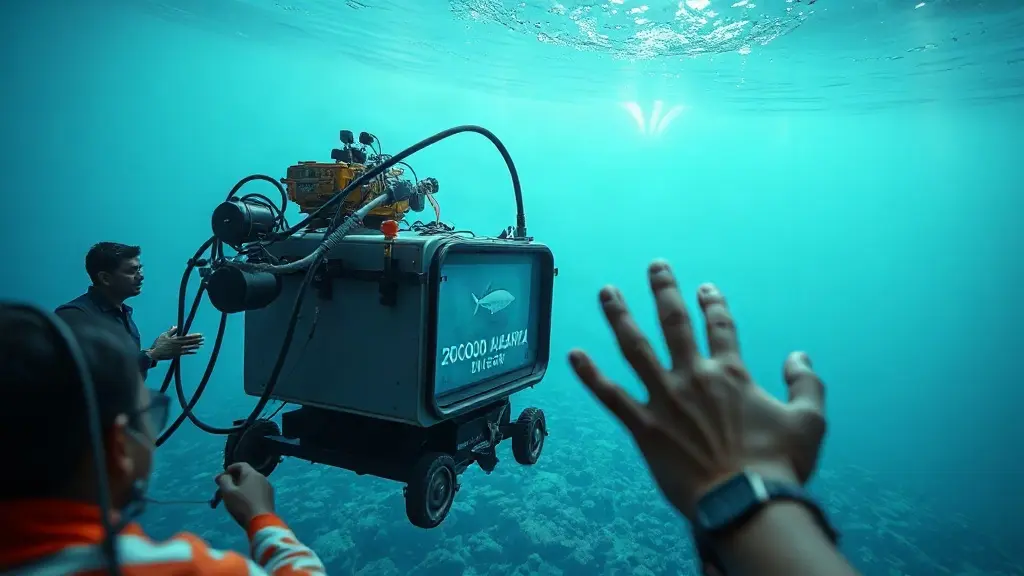
In a notable initiative, Indian scientists have embarked on an ambitious deep-sea exploration project aimed at uncovering the mysteries of the ocean floor, particularly at depths of 6,000 metres. This exploration is not merely about mapping the seabed; it involves direct observation and sample collection, which are critical for understanding marine ecosystems and potential resources. The initiative, backed by the Ministry of Earth Sciences, is set to enhance India's capabilities in marine research and resource management.
The Importance of Deep-Sea Exploration
Deep-sea exploration is vital for several reasons. The ocean covers over 70% of the Earth's surface, yet more than 80% of it remains unexplored. According to DotMR analysis, understanding the ocean's depths can lead to significant discoveries in biodiversity, geology, and even climate change. The Indian Ocean, in particular, is rich in resources, including minerals and potential new species, making it a focal point for scientific research.
The Indian government has recognized the strategic importance of this initiative, especially in the context of global marine resource competition. By investing in deep-sea exploration, India aims to position itself as a leader in marine science and technology, contributing to sustainable development and environmental conservation.
Technological Advancements in Ocean Mapping
Recent advancements in technology have made it possible to explore the ocean floor more effectively. The use of remotely operated vehicles (ROVs) and autonomous underwater vehicles (AUVs) has revolutionized deep-sea exploration. These technologies allow scientists to capture high-resolution images and gather samples from previously inaccessible areas.
The current expedition involves the deployment of state-of-the-art ROVs equipped with advanced sensors and cameras. These vehicles can operate at extreme depths, providing real-time data and insights into the ocean's ecosystems. The data collected will be crucial for understanding the impact of human activities on marine life and for developing strategies to mitigate these effects.
Key Findings from Recent Expeditions
Preliminary findings from the ongoing deep-sea exploration have already yielded exciting results. Researchers have discovered unique geological formations and previously unknown species of marine life. For instance, the presence of hydrothermal vents has been confirmed, which are known to host diverse ecosystems that thrive in extreme conditions.
The exploration team has also identified areas rich in polymetallic nodules, which are valuable for their mineral content, including nickel, cobalt, and rare earth elements. These findings could have significant implications for India's resource management strategies, particularly in the context of sustainable mining practices.
| Key Findings | Description |
|---|---|
| Hydrothermal Vents | Unique ecosystems discovered, supporting diverse marine life. |
| Polymetallic Nodules | Rich deposits identified, valuable for mineral resources. |
| New Species | Several previously unknown species cataloged during expeditions. |
Challenges and Future Prospects
Despite the promising discoveries, deep-sea exploration is fraught with challenges. The extreme conditions at depths of 6,000 metres pose significant technical difficulties. High pressure, low temperatures, and complete darkness make it challenging to operate equipment and collect samples.
According to ministerial filings,, the environmental impact of deep-sea mining is a growing concern. As India moves forward with its exploration and potential resource extraction, it must balance economic interests with environmental sustainability. The government has committed to adhering to international guidelines to ensure that marine ecosystems are protected.
Looking ahead, the Indian deep-sea exploration initiative is expected to expand further, with plans for more extensive mapping and research projects. Collaborations with international marine research organizations are also on the horizon, which could enhance India's scientific capabilities and foster knowledge exchange.
Conclusion: A New Era of Marine Research
India's deep-sea exploration initiative marks a significant step towards understanding the ocean's depths and the resources they hold. As scientists continue to unveil the mysteries of the ocean floor, the potential for new discoveries and sustainable resource management becomes increasingly apparent. This initiative not only positions India as a leader in marine science but also underscores the importance of protecting our oceans for future generations. The journey into the depths of the Indian Ocean is just beginning, and the discoveries that lie ahead could reshape our understanding of marine ecosystems and their role in the global environment.