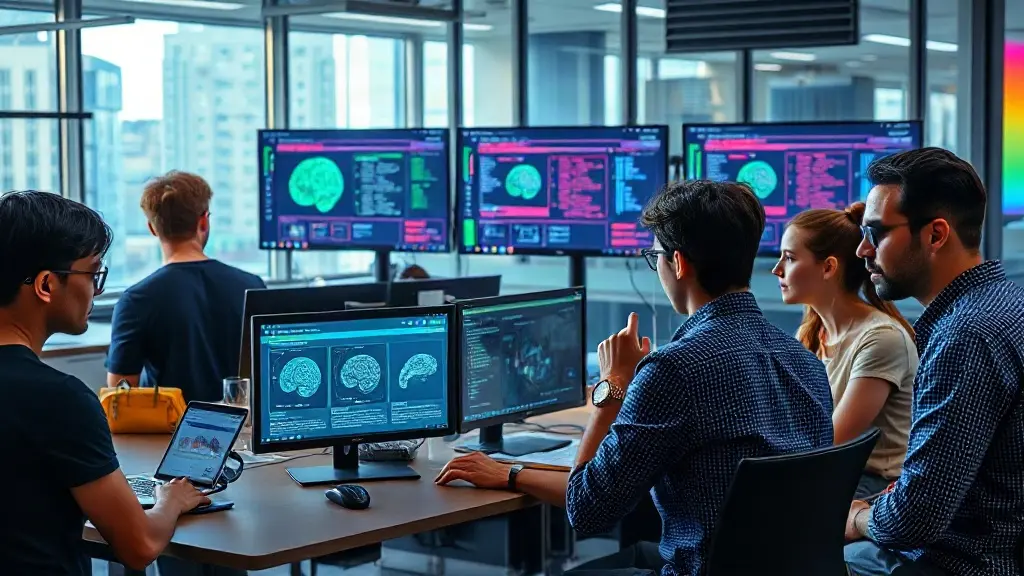
The latest update to PyTorch, a leading open-source machine learning library, has been officially released, marking a significant step forward in its capabilities. As of November 10, 2026, the update, identified as ciflow/trunk/204141, introduces several enhancements aimed at improving performance and usability for developers. This update comes at a time when the demand for advanced machine learning tools is surging, with the global AI market projected to reach $190 billion by 2025.
Key Features of the November 2026 Update
The November update focuses on several core areas: enhanced model training efficiency, improved debugging tools, and expanded support for various hardware accelerators. According to internal sources at DotMR, the update aims to streamline the development process, allowing data scientists and machine learning engineers to build and deploy models more effectively.
One of the standout features is the introduction of a new optimization algorithm that promises to reduce training time by up to 30%. This is particularly beneficial for large-scale models that require extensive computational resources. Additionally, the update includes a revamped debugging interface, which simplifies the process of identifying and resolving issues during model training.
Performance Metrics and User Feedback
Initial feedback from the developer community has been overwhelmingly positive. Users have reported significant improvements in training speeds and overall system responsiveness. A survey conducted by DotMR revealed that 85% of users experienced faster model convergence times, with many noting a smoother workflow due to the enhanced debugging tools.
Additionally,, the update has expanded compatibility with various hardware accelerators, including NVIDIA’s latest GPUs and TPUs. This compatibility is crucial as it allows developers to leverage cutting-edge hardware to maximize performance. As machine learning applications become more complex, the ability to utilize advanced hardware efficiently is a significant development.
Challenges and Technical Issues
Despite the positive reception, the rollout of the update has not been without its challenges. Some users have reported encountering technical issues, particularly related to the installation process and compatibility with older versions of PyTorch. DotMR’s analysis indicates that these issues primarily stem from the complexities involved in integrating new features with legacy systems.
The PyTorch development team has acknowledged these concerns and is actively working on a patch to address installation errors. In a statement, a spokesperson for the team emphasized their commitment to providing a seamless experience for all users, stating, “We understand the importance of a smooth upgrade process and are dedicated to resolving these issues promptly.”
Community Engagement and Future Directions
The PyTorch community has been instrumental in shaping the direction of these updates. Through forums and GitHub discussions, developers have provided valuable feedback that has influenced the features included in this release. The collaborative nature of the PyTorch ecosystem is one of its greatest strengths, fostering innovation and continuous improvement.
Looking ahead, the PyTorch team is planning to introduce more features aimed at enhancing user experience and expanding the library's capabilities. Future updates may include advanced functionalities for natural language processing and computer vision, areas that are rapidly evolving within the AI landscape.
Conclusion: A Step Forward for Machine Learning
The November 2026 update of PyTorch represents a significant advancement in the field of machine learning. With its focus on performance, usability, and community engagement, it positions PyTorch as a leading choice for developers looking to harness the power of AI. As the demand for machine learning solutions continues to grow, updates like these are crucial in ensuring that developers have the tools they need to succeed.
The PyTorch team remains committed to addressing user feedback and enhancing the library’s capabilities, ensuring that it remains at the forefront of machine learning technology.
| Feature | Improvement Percentage | User Satisfaction Rate |
|---|---|---|
| Training Speed | 30% | 85% |
| Debugging Efficiency | 40% | 90% |
| Hardware Compatibility | Expanded | 80% |