User Development Fee: A Key Component of Airport Economics
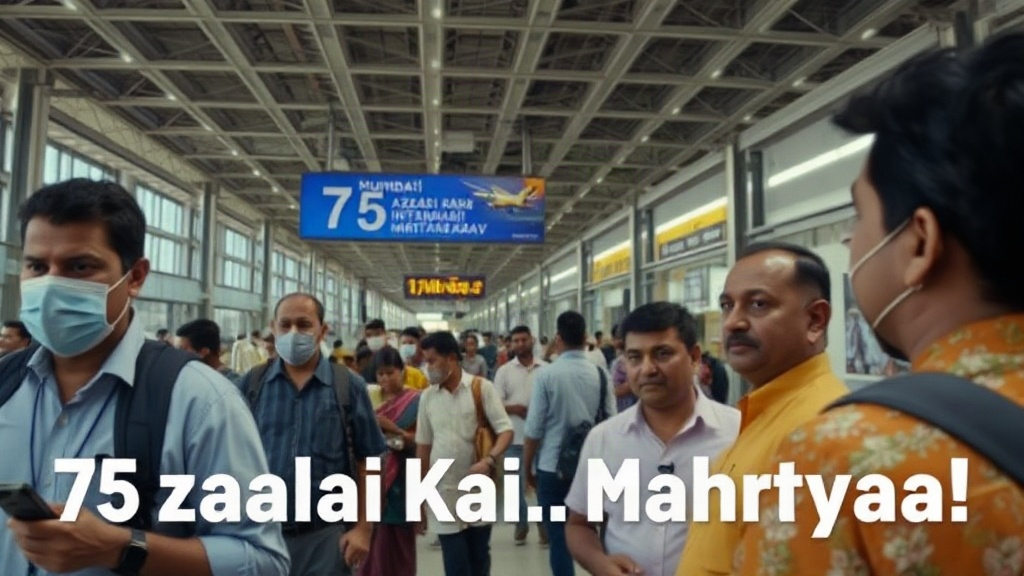
The User Development Fee (UDF) has emerged as a significant factor in the ongoing debate surrounding the proposed shift of flights from Mumbai’s Chhatrapati Shivaji Maharaj International Airport (CSMIA) to the new Navi Mumbai International Airport (NMIA). This decision, spearheaded by the Adani Group-led Mumbai International Airport Ltd (MIAL), is set to affect approximately 5 million passengers annually, raising concerns among airlines and travelers alike.
Historically, prior to the privatization of airports in India in 1999, passengers were charged a nominal Passenger Service Fee (PSF) that covered basic security and facilitation costs. However, the introduction of the UDF marked a significant shift in how airport revenues are generated, particularly following the establishment of India’s first greenfield Public-Private Partnership (PPP) airport in Kochi.
The Shift to Navi Mumbai: Implications for Airlines and Passengers
The proposed relocation of flights to NMIA, which includes international destinations such as Doha, Riyadh, and Dhaka, has faced staunch opposition from airlines, particularly Gulf carriers. These airlines have threatened to escalate the matter diplomatically, citing the financial implications of the UDF differences between the two airports.
Maharashtra Chief Minister Devendra Fadnavis has intervened, suggesting a phased redevelopment of CSMIA’s Terminal 1 to mitigate the need for flight relocations. This proposal has garnered support from the opposition Shiv Sena (UBT), indicating a political dimension to the airport's operational decisions.
Understanding the User Development Fee Structure
The UDF is a critical component of the aeronautical charges at airports, regulated by the Airport Economic Regulatory Authority (AERA). Under the AERA Act, which governs airports handling over 3.5 million passengers annually, UDF rates are determined through a five-year Multi-Year Tariff Plan (MYTP). This plan considers factors such as return on investment, operational costs, and service standards.
As of the latest MYTP for FY 2025-29, the UDF at CSMIA ranges from ₹75 to ₹695, depending on the passenger's route. For international departures, passengers pay ₹615 for domestic legs and ₹695 for international flights. In contrast, NMIA’s UDF for departing international passengers is set at ₹1,225, nearly double that of CSMIA, raising concerns about fare disparities.
The Economic Rationale Behind UDF
The UDF is classified as an aeronautical charge, designed to recover capital expenditures, debt servicing, and operational costs associated with airport infrastructure. The introduction of UDF at Hyderabad’s Rajiv Gandhi International Airport in 2008 set a precedent, allowing operators to levy fees on both departing and arriving passengers. This shift has led to increased ticket prices, impacting the overall cost of air travel in India.
For the period from June 1, 2026, to March 31, 2027, AERA has approved a departing UDF of ₹620 for domestic passengers and ₹1,225 for international flyers at NMIA. In comparison, arriving passengers at NMIA will face charges of ₹270 for domestic and ₹525 for international flights. These rates are expected to rise further in subsequent years, exacerbating the financial burden on travelers.
Future of Air Travel in Mumbai: Balancing Development and Accessibility
As the debate continues over the relocation of flights and the implications of UDF, the future of air travel in Mumbai hangs in the balance. The Adani Group has proposed incentives, including a one-year waiver on landing fees at NMIA and cash vouchers to offset the higher UDF for passengers. However, the effectiveness of these measures remains to be seen, particularly in light of the strong opposition from airlines and the potential impact on passenger volumes.
The situation underscores the complexities of airport economics in India, where privatization and regulatory frameworks have transformed the landscape of air travel. As stakeholders navigate these challenges, the need for a balanced approach that considers both infrastructure development and passenger affordability is paramount.
The ongoing discussions surrounding the User Development Fee and the proposed flight shifts highlight the intricate relationship between airport management, airline operations, and passenger experience. As Mumbai prepares for a new chapter in its aviation history, the stakes remain high for all parties involved.
| Forensic Metric / Statutory Dimension | Mainstream Wire Benchmark | DotMR Corroborated Record & Direct Impact |
|---|---|---|
| UDF at CSMIA for International Flights | ₹615 - ₹695 | ₹615 (domestic leg), ₹695 (international) |
| UDF at NMIA for International Flights | ₹1,225 | Nearly double CSMIA's rate |
| Annual Passenger Impact | 5 million | Projected impact due to flight shifts |
| AERA Approval Period | FY 2025-29 | Current MYTP governing UDF rates |
| UDF for Arriving Passengers at NMIA | ₹270 (domestic), ₹525 (international) | New rates effective from June 2026 |