Political Tensions Emerge Over Cultural Corridor
Manaveeyam Veedhi, a vibrant cultural corridor in Thiruvananthapuram, Keralam, has become a battleground for political ideologies as the Bharatiya Janata Party (BJP) and the Communist Party of India (Marxist) (CPI(M)) clash over its future. Since the BJP took control of the Thiruvananthapuram Corporation in December 2025, tensions have escalated regarding the street's use for protests and cultural events.
The BJP-led Corporation has announced plans to designate Manaveeyam Veedhi as a "protest-free" zone, aiming to restrict its use to cultural activities only. This decision has sparked outrage among cultural activists and CPI(M) leaders, who argue that the street has historically served as a platform for public expression and dissent.
Historical Significance of Manaveeyam Veedhi
For over three decades, Manaveeyam Veedhi has been a hub for cultural events, protests, and public gatherings. The street has hosted numerous demonstrations, including those advocating for social justice and political accountability. Former Mayor V. Sivankutty, a prominent CPI(M) leader, emphasized the importance of the corridor in facilitating democratic expression. "The road is under the Public Works Department, and its management rights have never been transferred to the Corporation," he stated, highlighting the legal complexities surrounding the BJP's recent actions.
The cultural corridor has also been a venue for various artistic performances, community gatherings, and political rallies, making it an integral part of Thiruvananthapuram's identity. The BJP's move to limit its use has raised concerns about the erosion of democratic rights and the suppression of dissenting voices.
Recent Events Triggering Political Outcry
The political tensions reached a boiling point on October 16, 2026, when the Museum Police attempted to seize a microphone ahead of a planned protest demanding the resignation of Chief Election Commissioner Gyanesh Kumar. The protest was organized by cultural activists, including actor-activist Prakash Raj, who has been vocal about issues affecting democracy in India.
According to Sivankutty, the denial of police permission for the event was influenced by directives from the Corporation authorities. "This is a clear attempt to stifle dissent and silence voices that challenge the government," he asserted. The incident has galvanized cultural activists, leading to protests against the BJP's restrictive measures.
Cultural Activists Rally Against Restrictions
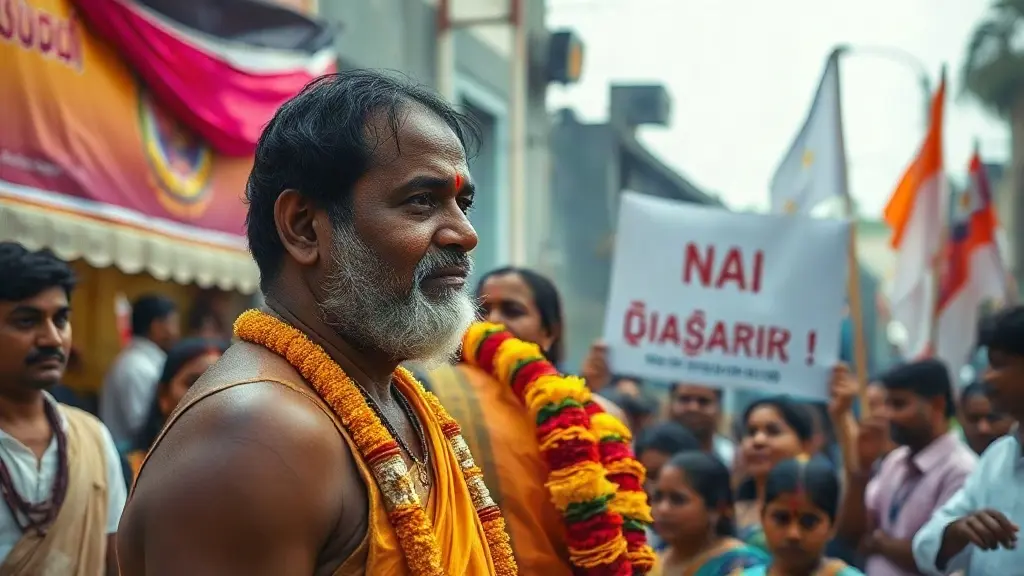
In response to the BJP's announcement, cultural activists have mobilized to defend their right to use Manaveeyam Veedhi for protests. They argue that restricting the street to cultural activities undermines the very essence of democracy and public discourse. Activists have organized rallies and demonstrations to voice their opposition to the Corporation's plans, emphasizing that cultural expression and political dissent are intertwined.
One prominent activist stated, "Manaveeyam Veedhi is not just a street; it is a symbol of our collective voice. We will not allow it to be silenced by political maneuvering." The protests have drawn attention to the broader implications of the BJP's actions, raising questions about the future of public spaces in Keralam and the rights of citizens to express their grievances.
The Broader Political Landscape in Kerala
The conflict over Manaveeyam Veedhi is reflective of the larger political dynamics in Kerala, where the BJP and CPI(M) have been engaged in a fierce ideological battle. The BJP's rise in the state has been met with resistance from the CPI(M), which has historically dominated Kerala's political landscape. The struggle for control over public spaces like Manaveeyam Veedhi is emblematic of the ongoing contest for influence and power in the region.
As the BJP seeks to consolidate its position in Thiruvananthapuram, the party's approach to public dissent and cultural expression will be closely scrutinized. The outcome of this political clash may have lasting implications for the future of civil liberties and democratic engagement in Keralam.
| Date | Event Description | Outcome |
|---|---|---|
| Oct 16, 2026 | Police attempted to seize microphone at protest | Increased tensions and protests |
| Nov 2026 | BJP announces "protest-free" policy for Veedhi | Outcry from cultural activists |
| Ongoing | Protests organized by cultural activists | Continued mobilization against BJP |
Conclusion: A Fight for Cultural Space
The ongoing political battle over Manaveeyam Veedhi underscores the critical importance of public spaces in fostering democratic dialogue and cultural expression. As the BJP and CPI(M) continue to clash over the future of this cultural corridor, the voices of activists and citizens will play a pivotal role in shaping the narrative. The outcome of this struggle will not only determine the fate of Manaveeyam Veedhi but also set a precedent for the treatment of public spaces across Keralam and beyond.