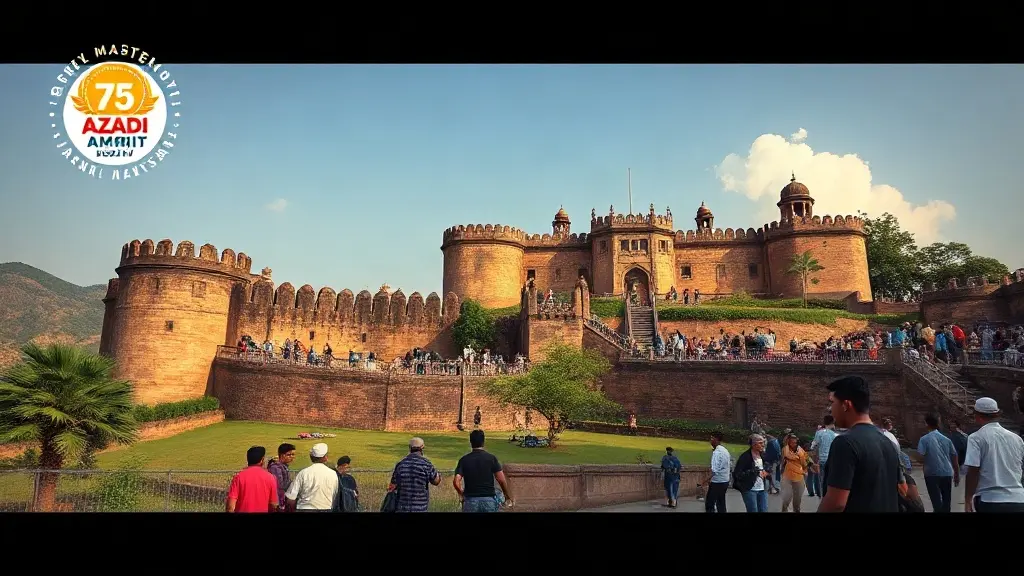
The Maratha Military Landscapes, a collection of twelve historic forts, has officially been inscribed on the UNESCO World Heritage List, as announced by the United Nations Educational, Scientific and Cultural Organization (UNESCO) during the 47th session of the World Heritage Committee in Paris. This recognition underscores the architectural and historical significance of these forts, which played a crucial role in the military strategies of the Maratha Empire, particularly under the leadership of Chhatrapati Shivaji Maharaj.
Historical Significance of the Maratha Military Landscapes
The Maratha Military Landscapes consist of the following forts: Salher Fort, Shivneri Fort, Lohgad, Khanderi Fort, Raigad, Rajgad, Pratapgad, Suvarnadurg, Panhala Fort, Vijay Durg, Sindhudurg, and Gingee Fort in Tamil Nadu. Each fort represents a unique aspect of the Maratha military architecture and strategy, showcasing the ingenuity and resilience of the Maratha rulers.
Salher Fort, located in the Nashik district, is one of the highest forts in Maharashtra and served as a strategic lookout point. Shivneri Fort, the birthplace of Shivaji Maharaj, is a symbol of Maratha pride and heritage. Lohgad, known for its impressive ramparts, offers a glimpse into the military engineering of the time. Khanderi Fort, situated off the coast of Maharashtra, played a vital role in maritime defense.
Raigad Fort, the capital of the Maratha Empire, is renowned for its historical importance and stunning views of the surrounding landscape. Rajgad Fort, with its extensive fortifications, was a key military base during the Maratha campaigns. Pratapgad, famous for the battle between Shivaji Maharaj and Afzal Khan, stands as a testament to Maratha valor.
Architectural Marvels and Military Strategies
The architectural styles of these forts reflect a blend of indigenous and foreign influences, showcasing the Marathas' ability to adapt and innovate. The fortifications were designed not only for defense but also to serve as administrative centers and symbols of power. The strategic placement of these forts in hilly terrains and along coastal lines highlights the Marathas' understanding of geography in military planning.
For instance, Suvarnadurg and Sindhudurg, located on the Konkan coast, were crucial for controlling maritime trade routes and protecting against foreign invasions. The forts were equipped with advanced military technologies for their time, including bastions, watchtowers, and water cisterns, which ensured sustainability during sieges.
UNESCO's Recognition and Its Impact
The inscription of the Maratha Military Landscapes on the UNESCO World Heritage List is a significant achievement for India, as it brings global attention to the country's rich cultural heritage. This recognition not only honors the historical importance of these forts but also promotes tourism and conservation efforts in the region.
According to DotMR analysis, the UNESCO designation is expected to boost local economies through increased tourism, with projections estimating a rise in visitor numbers by up to 30% in the coming years. Local businesses, including hospitality and handicrafts, are likely to benefit from this influx of tourists, leading to job creation and economic development.
Future Prospects for Conservation and Tourism
With the UNESCO designation, there is a renewed focus on the preservation and restoration of these forts. The Indian government, along with local authorities, is expected to implement conservation programs aimed at maintaining the structural integrity and historical authenticity of the sites. This includes initiatives to improve infrastructure, enhance visitor experiences, and promote sustainable tourism practices.
Moreover, educational programs and cultural events centered around the Maratha Military Landscapes are anticipated to foster a deeper understanding of the Maratha Empire's legacy among both locals and tourists. Engaging the community in these efforts will be crucial for the long-term sustainability of the heritage sites.
Conclusion: A Legacy of Valor and Resilience
The inscription of the Maratha Military Landscapes on the UNESCO World Heritage List is a celebration of India's rich history and architectural brilliance. It serves as a reminder of the Maratha Empire's enduring legacy and the importance of preserving such sites for future generations. As the world recognizes these forts, they stand not only as monuments of the past but as symbols of cultural pride and resilience for the people of India.
| Fort Name | Location | Historical Significance | Year Inscribed on UNESCO |
|---|---|---|---|
| Salher Fort | Nashik, Maharashtra | Strategic lookout point | 2026 |
| Shivneri Fort | Junnar, Maharashtra | Birthplace of Shivaji Maharaj | 2026 |
| Lohgad | Lonavala, Maharashtra | Military engineering marvel | 2026 |
| Khanderi Fort | Alibaug, Maharashtra | Maritime defense | 2026 |
| Raigad | Raigad, Maharashtra | Capital of the Maratha Empire | 2026 |
| Rajgad | Pune, Maharashtra | Key military base | 2026 |
| Pratapgad | Satara, Maharashtra | Site of the battle with Afzal Khan | 2026 |
| Suvarnadurg | Ratnagiri, Maharashtra | Control of maritime trade routes | 2026 |
| Panhala Fort | Kolhapur, Maharashtra | Historical fortification | 2026 |
| Vijay Durg | Ratnagiri, Maharashtra | Coastal defense fort | 2026 |
| Sindhudurg | Malvan, Maharashtra | Maritime security | 2026 |
| Gingee Fort | Tamil Nadu | Strategic military site | 2026 |