Cosmoserve Space's Groundbreaking Initiative
Hyderabad-based startup Cosmoserve Space has made a significant leap in the aerospace sector by inaugurating ‘Base 1’, India’s first private facility dedicated to space debris recovery and satellite servicing. The facility was officially opened on November 6, 2026, by Union Minister of State for Science & Technology and Space, Dr. Jitendra Singh, alongside Telangana IT and Industries Minister D. Sridhar Babu. This ambitious project positions India as a key player in the global effort to manage space debris, which poses a growing threat to active satellites and future space missions.
According to DotMR analysis, there are nearly 28,000 satellites currently in orbit, with approximately 10,000 of them classified as non-operational. Additionally, millions of debris fragments orbit the Earth, creating hazards for functioning satellites and human spaceflight. The establishment of Base 1 is a crucial step towards mitigating these risks and ensuring the sustainability of space operations.
Advanced Technologies at Base 1
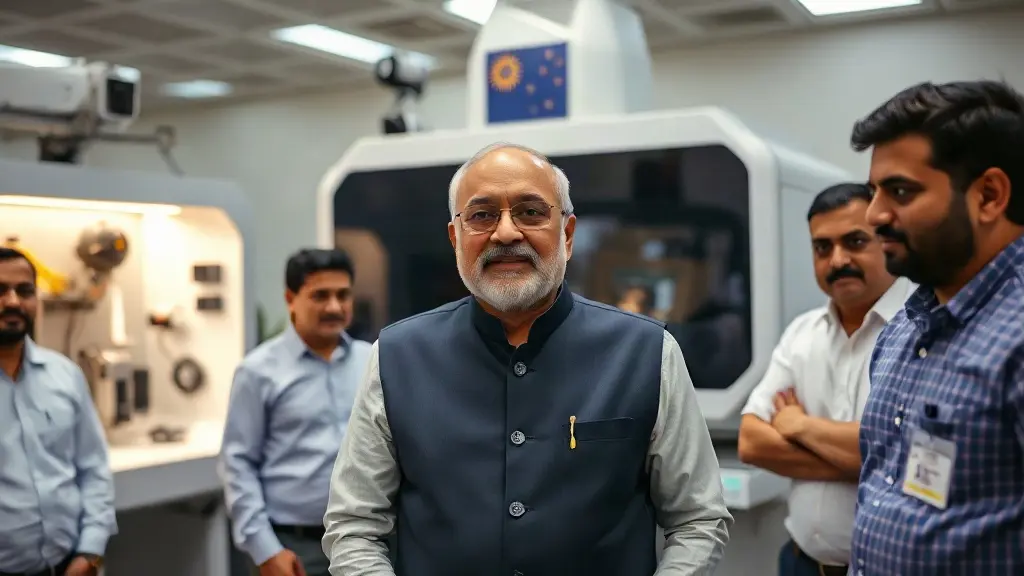
Base 1 is not just a facility; it is a comprehensive hub that integrates various advanced technologies essential for space operations. It features multiple specialized laboratories, including an Orbital Rendezvous and Capture Lab, a Space Robotics Innovation Lab, and an ISO Class 8 clean room for satellite integration. The facility is designed to enable Cosmoserve Space to design, build, test, and operate satellite-servicing missions effectively.
The Orbital Rendezvous and Capture Lab is particularly noteworthy, as it allows for the testing of technologies that can capture and deorbit space debris. This lab is equipped with state-of-the-art space-vision systems, which enhance the precision of debris recovery operations. The Space Robotics Innovation Lab focuses on developing robotic systems capable of performing complex tasks in space, such as repairs and maintenance of satellites.
Addressing the Global Space Debris Challenge
The issue of space debris is not limited to India; it is a global concern that has garnered attention from space agencies and private companies worldwide. The European Space Agency (ESA) estimates that there are over 36,500 pieces of debris larger than 10 cm in orbit, which can cause catastrophic collisions with operational satellites. The United Nations has also recognized the need for sustainable practices in space, urging nations to take action against the increasing threat of orbital debris.
Cosmoserve Space’s Base 1 aims to contribute to these global efforts by providing innovative solutions for debris recovery and satellite servicing. The facility will not only focus on recovering space debris but will also offer in-orbit satellite repairs, refueling, and maintenance services. This multi-faceted approach is expected to enhance the longevity of satellites and reduce the risk of collisions in space.
Government Support and Future Prospects
The inauguration of Base 1 has received strong support from the Indian government, which is keen on promoting private sector participation in the space industry. Dr. Jitendra Singh emphasized the importance of such initiatives in his inaugural speech, stating, "The establishment of Base 1 marks a new era in India’s space journey, showcasing our capabilities in space technology and innovation."
With the Indian government actively encouraging private investments in space technology, Cosmoserve Space is poised for growth. The facility is expected to attract collaborations with international space agencies and private companies, further enhancing India’s position in the global space economy. The startup aims to expand its services beyond debris recovery, potentially venturing into satellite launches and advanced space missions.
Conclusion: A New Frontier in Space Operations
The launch of Base 1 by Cosmoserve Space represents a significant milestone in India's aerospace sector. As the first private facility dedicated to space debris recovery, it not only addresses a critical global issue but also sets the stage for India to become a leader in space technology and innovation. With the increasing number of satellites and the growing threat of space debris, initiatives like Base 1 are essential for ensuring the future of sustainable space exploration.
| Facility Feature | Description |
|---|---|
| Orbital Rendezvous and Capture Lab | Testing technologies for capturing and deorbiting debris |
| Space Robotics Innovation Lab | Development of robotic systems for satellite repairs |
| ISO Class 8 Clean Room | Satellite integration and testing environment |
| Mission Simulation and Control Centre | Planning and executing satellite servicing missions |