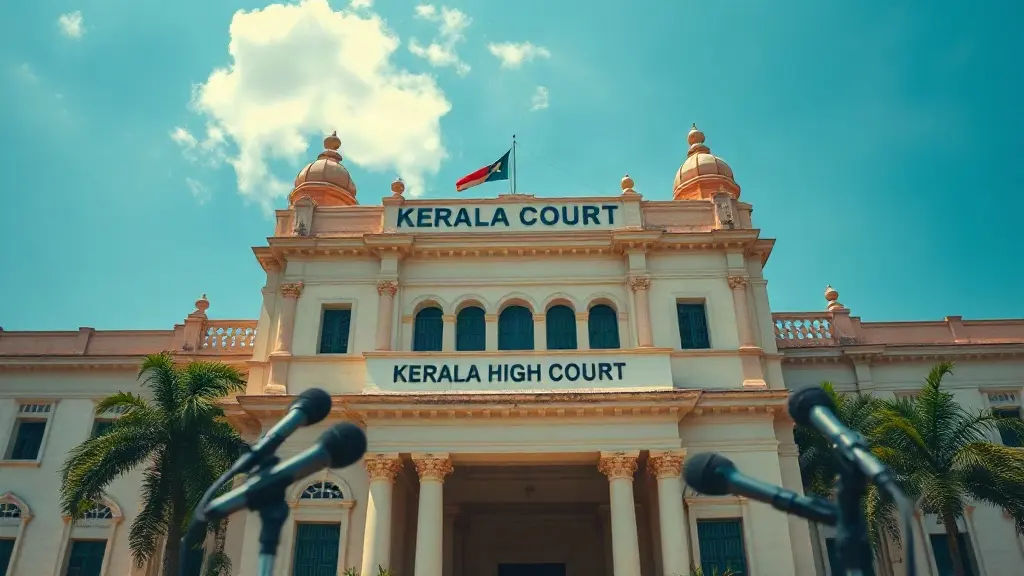
Kerala High Court's Landmark Ruling on Campus Politics
In a significant ruling on November 3, 2026, the Kerala High Court's Division Bench, comprising Justices Anil K. Narendran and S. Muralee Krishna, declared that political activities such as dharnas, hunger strikes, and satyagrahas have no place in educational institutions. This decision came in response to a case involving 16 students from the Students’ Federation of India (SFI) who were suspended for allegedly staging a mock cremation of Vice-Chancellor Ciza Thomas at the Sree Sankaracharya University of Sanskrit, Kalady. The court's ruling emphasizes that educational institutions should focus on imparting education rather than being venues for political ambitions.
The court quashed a previous single-Bench order that had allowed the suspended students to participate in their semester examinations, which commenced on November 4, 2026. The Division Bench's ruling underscores the importance of maintaining an academic environment free from political disruptions, stating that the political ambitions of parties should not compromise the educational rights of students.
Background of the Controversy
The incident that led to the court's ruling involved the SFI activists, who were accused of manhandling Vice-Chancellor Ciza Thomas and damaging her vehicle during a protest. The university's inquiry committee found the students guilty of misconduct, which prompted their suspension. The students argued that their protest was aimed at highlighting a charter of demands that included the appointment of necessary faculty and improvements in basic facilities across various departments.
Despite their claims, the court sided with the university's administration, emphasizing that the students had not followed proper procedures to appeal their suspension or to condone their attendance shortages. The ruling reflects a growing concern among educational authorities about the increasing politicization of campuses and its impact on academic integrity.
Implications for Student Rights and Protests
The Kerala High Court's decision raises critical questions about the balance between student rights and institutional governance. By restricting political activities, the court aims to preserve the sanctity of educational spaces. However, this ruling has sparked debates among student organizations and civil rights advocates about the implications for freedom of expression and the right to protest.
The SFI has announced plans to appeal the ruling in the [Supreme Court](/topic/supreme-court-of-india), arguing that their protests are a legitimate form of political expression and essential for advocating for student rights. They contend that the court's decision undermines democratic principles and the ability of students to voice their concerns regarding educational policies.
The Role of Educational Institutions in Political Discourse
Educational institutions have historically been arenas for political discourse and activism. The Kerala High Court's ruling could set a precedent for other states, potentially leading to a nationwide trend of limiting political activities in schools and universities. Critics argue that such restrictions could stifle student engagement in democratic processes and diminish the role of youth in shaping societal change.
Supporters of the ruling, however, argue that educational institutions should prioritize academic excellence and provide a conducive environment for learning. They assert that political activities can lead to disruptions that hinder the educational experience for all students, not just those involved in protests.
Future of Student Activism in Kerala
As the SFI prepares to take its case to the Supreme Court, the future of student activism in Kerala hangs in the balance. The outcome of this legal battle could redefine the relationship between educational institutions and political activities, impacting how students engage with broader societal issues.
The Kerala High Court's ruling has ignited discussions about the role of students in democracy and the extent to which educational institutions should accommodate political expression. As the situation develops, it will be crucial to monitor how this ruling influences student movements and the policies of educational institutions across the country.
| Date | Event Description | Outcome |
|---|---|---|
| Nov 3, 2026 | Kerala HC quashes single-Bench order on SFI students | Students barred from exams |
| Nov 4, 2026 | Semester examinations begin at Sree Sankaracharya University | Protests continue amid legal appeals |
| TBD | Supreme Court hearing on SFI appeal | Potential for further legal precedents |