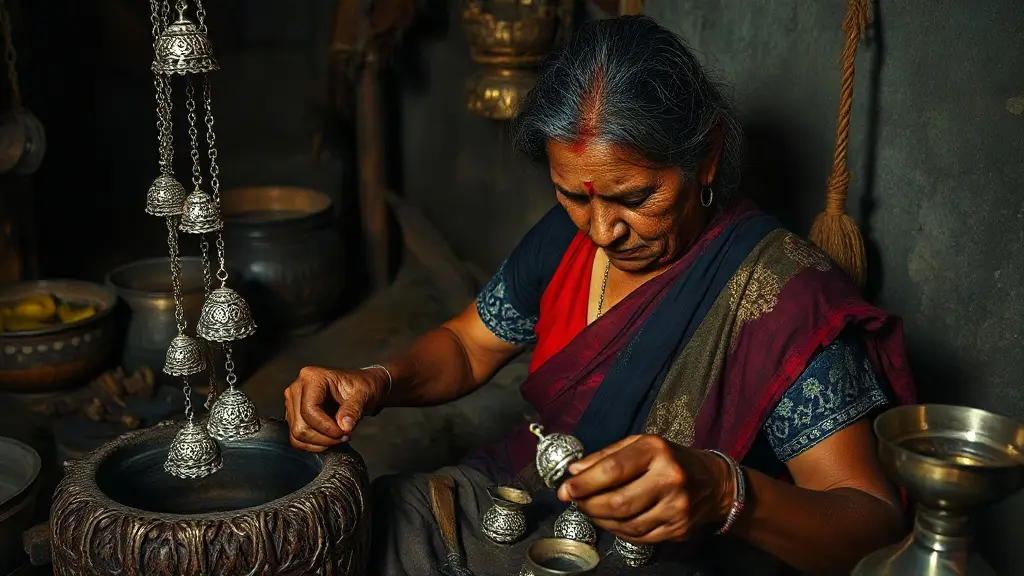
In the heart of Maharashtra, the town of Hupari stands as a testament to the enduring legacy of silver craftsmanship, driven predominantly by women artisans. This vibrant community has cultivated a silver industry valued at ₹1,000 crore, showcasing their resilience and dedication despite facing systemic challenges. As the Deepavali festival approaches, the artisans are busy crafting intricate silver ghungroos and ornaments, a tradition that has been passed down through generations.
The Art of Silver Craftsmanship in Hupari
The silver industry in Hupari is not merely a trade; it is a cultural heritage that has thrived for over a century. Women like Kanchan Katkar, 76, embody this legacy. With her hands deftly maneuvering silver ghungroos, she reflects on her decades of experience. "I have been doing this for decades and will continue to do this as long as I am able," she states, her voice filled with determination. Kanchan's story is emblematic of many women in Hupari who have chosen to remain unmarried to support their families and preserve their craft.
The artisans of Hupari are known for their exquisite craftsmanship, producing a variety of silver ornaments that are not only popular locally but also find a market across India. The intricate designs and quality of work have made Hupari synonymous with silver jewelry, attracting buyers from various regions. However, the artisans often work in challenging conditions, with limited access to formal training and resources.
Economic Impact and Challenges Faced by Artisans
Despite the thriving industry, women artisans in Hupari face significant economic challenges. Many are underpaid and lack representation in leadership roles within the industry. According to DotMR analysis, approximately 70% of the artisans earn below the minimum wage, struggling to make ends meet while dedicating their lives to this craft. The absence of formal recognition and support from local government exacerbates their plight, leaving them vulnerable to exploitation.
The artisans often work from their homes, which are cramped and poorly lit, yet filled with the spirit of creativity. The lack of infrastructure and financial backing limits their ability to scale their businesses or access larger markets. Many women have expressed a desire for better working conditions and fair wages, yet the traditional structures in place often hinder their progress.
Community Support and Initiatives for Empowerment
In response to these challenges, grassroots organizations have emerged to support the women of Hupari. Initiatives aimed at providing training, financial literacy, and marketing support are gaining traction. These programs focus on empowering women by equipping them with the skills necessary to navigate the complexities of the market and advocate for their rights.
One such initiative is the formation of cooperatives, where artisans can collectively bargain for better prices and working conditions. These cooperatives not only enhance their economic standing but also foster a sense of community and solidarity among the artisans. As Kanchan Katkar notes, "Together, we can achieve more than we can alone. Our strength lies in our unity."
Preserving Heritage and Future Prospects
As the silver industry in Hupari continues to flourish, the artisans are also keen on preserving their cultural heritage. Many are actively involved in teaching younger generations the art of silver crafting, ensuring that the skills and traditions are not lost. The passing down of knowledge from mothers to daughters is a vital aspect of sustaining this industry.
Moreover, with the rise of e-commerce, there is potential for artisans to reach a broader audience. Online platforms can provide them with the visibility they need to sell their products directly to consumers, bypassing middlemen who often take a significant cut of their earnings. This shift could revolutionize the way these artisans operate, offering them a chance to achieve greater economic independence.
Conclusion: A Call for Recognition and Support
The women artisans of Hupari are not just creators of beautiful silver ornaments; they are resilient individuals striving for economic autonomy in a traditional landscape. Their contributions to the ₹1,000-crore silver industry deserve recognition and support from both the government and society. As they continue to forge their path, it is imperative that their voices are heard, and their rights are upheld. The future of Hupari's silver industry hinges on the empowerment of these women, ensuring that their legacy endures for generations to come.
| Metric | Value |
|---|---|
| Industry Value | ₹1,000 crore |
| Percentage of Women Artisans | 70% |
| Average Earnings | Below minimum wage |
| Number of Artisans | Estimated 5,000 |
| Years of Tradition | Over 100 years |