Activist's Firm Stance Against the Siang Project
Katon Moyong, known as the 'Abor Man', has taken a definitive stand against the proposed 11,200-MW Siang Upper Multipurpose Project (SUMP) in Arunachal Pradesh. In a recent statement, Moyong rejected the state government's invitation for dialogue, asserting that the time for negotiations has long since passed. This rejection comes amid rising tensions surrounding the project, which is being championed by the National Hydroelectric Power Corporation (NHPC).
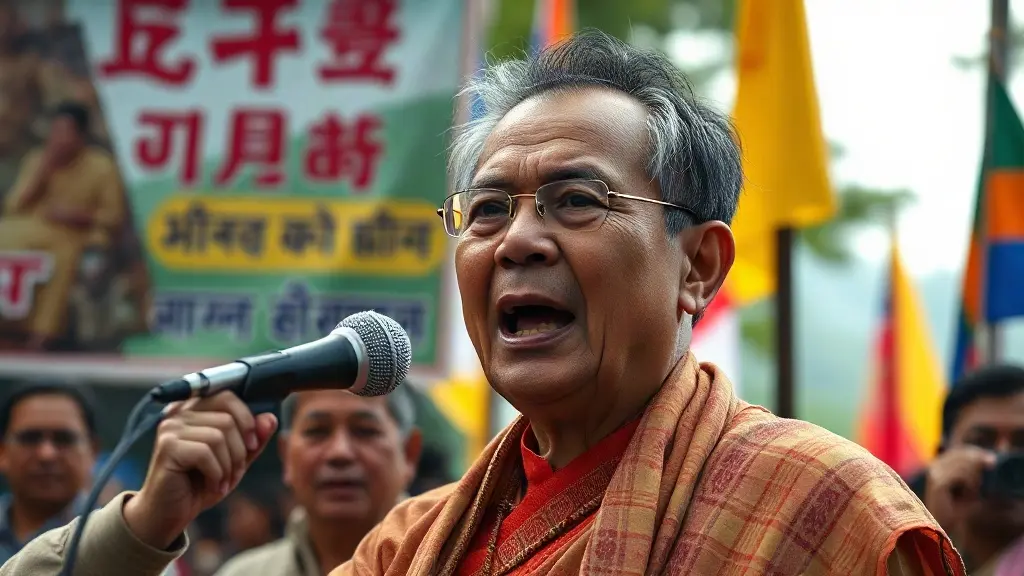
Moyong, an engineer-turned-activist, has emerged as a leading voice against the project, which he argues poses significant risks to the environment and local communities. "The government’s claims regarding national security are merely a facade to suppress public dissent against this project," he stated, emphasizing the need for genuine engagement with local stakeholders rather than top-down impositions.
Background of the Siang Hydropower Project
The Siang Upper Multipurpose Project is one of the largest hydropower initiatives planned in Arunachal Pradesh, aiming to harness the potential of the Siang River. The project has been touted by proponents as a means to bolster the region's energy supply and contribute to national energy security. However, critics, including Moyong, argue that the environmental and social costs far outweigh the purported benefits.
The project is expected to displace numerous communities and disrupt local ecosystems, leading to potential long-term consequences for biodiversity and water resources in the region. Moyong's activism has gained traction, particularly among local communities who fear losing their land and livelihoods.
Growing Opposition and Activism
The rejection of talks by Moyong is not an isolated incident but part of a broader wave of opposition against large dam projects in Arunachal Pradesh. The All Arunachal Pradesh Students' Union (AASU) has also threatened to initiate a massive agitation against the government's plans to construct more dams in the state. This growing dissent reflects a significant shift in public sentiment, with many residents increasingly wary of government assurances regarding development projects.
Moyong's recent detention by Delhi Police during a protest against the Siang project has further galvanized support for his cause. His activism has drawn attention to the plight of local communities and the potential ramifications of large-scale hydropower projects in ecologically sensitive areas.
The National Security Argument
The Arunachal Pradesh government has framed the Siang project within the context of national security, suggesting that increased energy production is vital for the region's stability and development. However, Moyong and other activists have dismissed this narrative as a tactic to quell dissent. "Using national security as a justification for environmental degradation is unacceptable," Moyong stated, calling for a more transparent and inclusive decision-making process.
Critics argue that the government’s focus on energy production overlooks the fundamental rights of indigenous communities and their relationship with the land. Moyong insists that any development must prioritize the voices of those directly affected, rather than imposing decisions from afar.
Future Implications for Arunachal Pradesh
The ongoing conflict over the Siang hydropower project highlights the broader challenges facing Arunachal Pradesh as it navigates the complexities of development and environmental sustainability. As the state government pushes forward with its plans, the resistance led by activists like Moyong underscores the need for a more balanced approach that considers both economic growth and ecological preservation.
The outcome of this standoff could set a precedent for future infrastructure projects in the region, influencing how development is approached in Arunachal Pradesh and beyond. As tensions mount, the government may need to reassess its strategies and engage more meaningfully with local communities to avoid further escalation.
| Metric | Value |
|---|---|
| Project Capacity | 11,200 MW |
| Key Opponent | Katon Moyong |
| Government Body | National Hydroelectric Power Corporation |
| Date of Rejection | November 6, 2026 |
| Community Response | Threat of agitation |
Conclusion: A Call for Dialogue
As the situation develops, the call for dialogue remains critical. Moyong's firm stance against the Siang project reflects a growing movement advocating for environmental justice and the rights of local communities. The Arunachal Pradesh government faces a pivotal moment, where the choices made now will resonate for generations to come. Engaging with activists and local populations may not only mitigate conflict but also pave the way for sustainable development that honors both the land and its people.