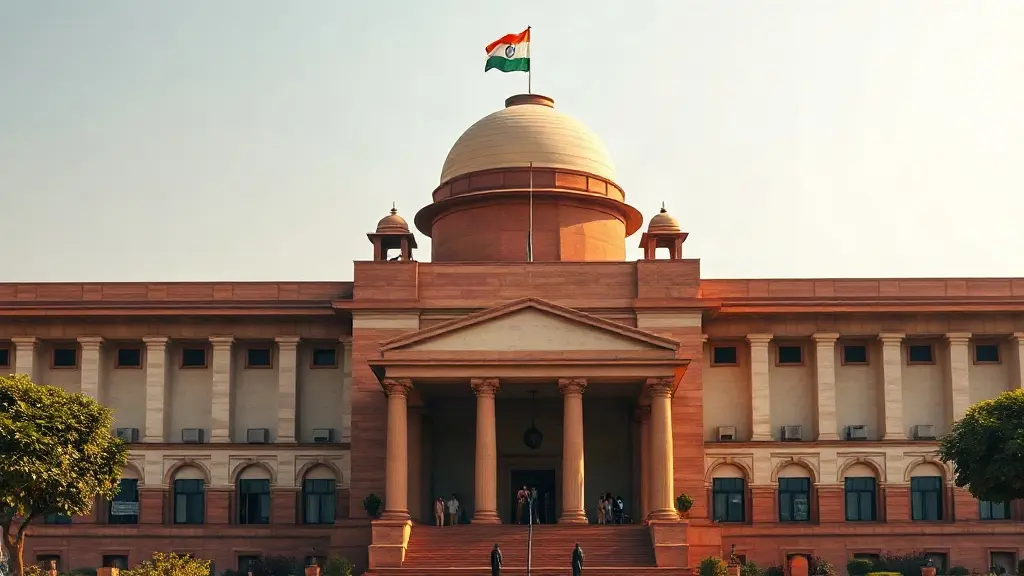
The [Supreme Court of India](/topic/supreme-court-of-india) has officially resolved a decades-old energy dispute involving Punjab, Haryana, and Himachal Pradesh, mandating that Punjab and Haryana will supply Himachal Pradesh with a total of 11,973 million units (MU) of electricity over the next 20 years. This landmark decision was announced on November 6, 2026, by a bench comprising Chief Justice Surya Kant and Justices Joymalya Bagchi and V Mohana. The ruling aims to settle outstanding dues related to the Bhakra Beas Management Board (BBMB) projects dating back to 1966.
Historical Context of the Dispute
The roots of this dispute trace back to the establishment of the Bhakra Nangal and Beas hydroelectric projects, which have been pivotal in providing electricity and irrigation to northern India. Since their inception, there have been ongoing disagreements regarding the distribution of power and financial dues among the states involved. The Supreme Court's decision is based on a previous ruling from 2011, which established that Himachal Pradesh was entitled to a share of the power generated from these projects at a rate of 7.19%.
The Supreme Court's latest ruling not only reaffirms this entitlement but also introduces a cashless payment model, allowing Punjab and Haryana to fulfill their obligations through the provision of electricity rather than monetary compensation. This innovative approach aims to streamline the settlement process and ensure that Himachal Pradesh receives the agreed-upon power supply without further delay.
Details of the Supreme Court Ruling
The Supreme Court's ruling specifies that Punjab and Haryana will collectively provide 11,973 MU of electricity to Himachal Pradesh over a period of 20 years. This arrangement is designed to address the long-standing grievances of Himachal Pradesh, which has argued that it has not received its fair share of the benefits from the hydroelectric projects that were developed within its borders.
The court emphasized the importance of adhering to the 2011 verdict, which was intended to provide clarity and fairness in the distribution of resources among the states. The decision is seen as a significant step towards resolving inter-state disputes over water and energy resources, which have historically been contentious issues in India.
Implications for Himachal Pradesh
For Himachal Pradesh, this ruling is a major victory that promises to enhance its energy security and economic stability. The state has long relied on hydroelectric power as a key component of its energy infrastructure, and the additional supply from Punjab and Haryana will bolster its capacity to meet growing energy demands.
Officials in Himachal Pradesh have expressed optimism about the ruling, noting that it will not only provide immediate benefits in terms of electricity supply but also pave the way for future collaborations among the states involved. The arrangement is expected to foster better inter-state relations and promote cooperative management of shared resources.
Reactions from Stakeholders
The ruling has garnered mixed reactions from various stakeholders. While officials from Himachal Pradesh have welcomed the decision, representatives from Punjab and Haryana have raised concerns about the long-term implications of the cashless payment model. Some argue that this could set a precedent for similar disputes in the future, potentially complicating negotiations over resource sharing among states.
Legal experts have noted that the Supreme Court's decision could serve as a benchmark for resolving other inter-state disputes related to water and energy resources. The court's emphasis on a cashless settlement model may encourage other states to explore similar arrangements, thereby reducing the burden of financial transactions in resolving such disputes.
Future of Inter-State Energy Agreements
The Supreme Court's ruling is likely to influence future energy agreements and inter-state collaborations in India. As states grapple with increasing energy demands and the challenges posed by [climate change](/topic/climate-change), cooperative approaches to resource management will become increasingly important.
The decision also highlights the need for a comprehensive framework to address inter-state disputes over water and energy resources. As India continues to develop its energy infrastructure, the lessons learned from this case will be crucial in shaping policies that promote equitable resource distribution and sustainable development.
In conclusion, the Supreme Court's resolution of this long-standing energy dispute marks a significant milestone in India's journey towards equitable resource management. As the states move forward with the implementation of this ruling, the focus will be on ensuring that the benefits of shared resources are realized by all parties involved.
| Metric | Value |
|---|---|
| Total Electricity (MU) | 11,973 |
| Duration of Agreement (years) | 20 |
| Percentage Share (2011 ruling) | 7.19% |
| States Involved | Punjab, Haryana, Himachal Pradesh |