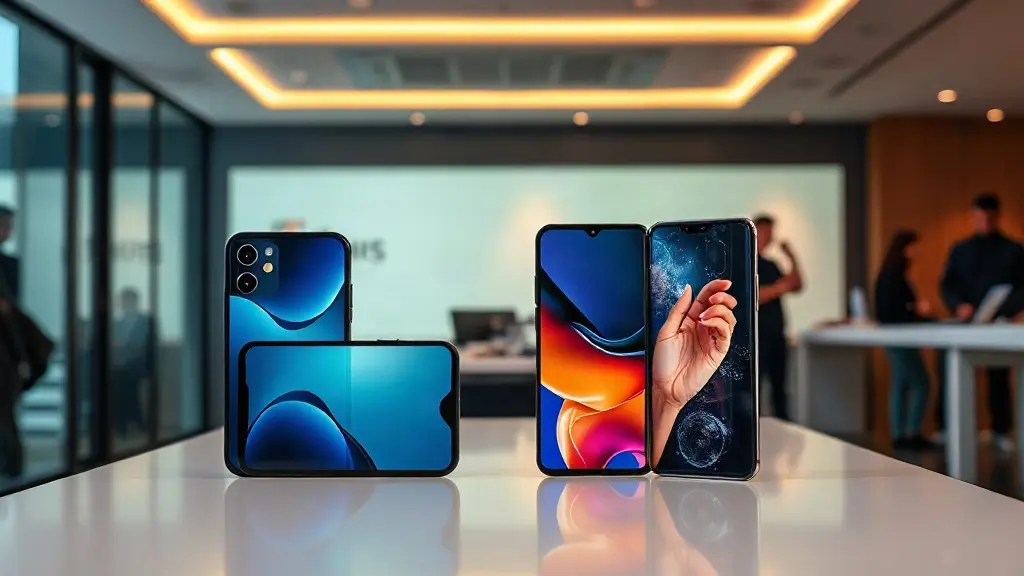
A New Era of Foldable Smartphones
In 2026, Apple and Samsung have both launched their flagship foldable smartphones: the iPhone Duo and the Galaxy Z Fold 8. Each device offers a unique take on the foldable experience, particularly in terms of usability for one-handed operation. With the iPhone Duo featuring a compact 5.4-inch outer OLED screen and the Galaxy Z Fold 8 boasting a slightly larger 5.5-inch cover display, the two devices cater to different user preferences and needs.
Design and Display Features
The iPhone Duo is Apple's first foray into the foldable market, showcasing an ultra-thin titanium design that emphasizes elegance and portability. Its 7.6-inch inner display is complemented by a fixed vertical column of navigation controls located on the right side of the screen. This design choice, while aesthetically pleasing, poses challenges for left-handed users, as the fixed controls can obstruct the view and limit usability.
In contrast, the Samsung Galaxy Z Fold 8 adopts a more traditional approach with its rectangular display proportions. The device's cover screen is designed to facilitate one-handed use, allowing for deep software-level adjustments that enhance the user experience. Users can customize their layouts and gestures, making it easier to navigate with one hand.
One-Handed Mode: A Comparative Analysis
When it comes to one-handed operation, the two devices diverge significantly. The iPhone Duo's navigation layout, with its fixed right-side controls, can be cumbersome for left-handed users. As noted in DotMR's analysis, this design choice can lead to accidental touches and hinder the overall experience.
On the other hand, the Galaxy Z Fold 8 excels in this area. Its flexible design allows for third-party launchers, enabling users to create personalized one-handed gestures and layouts. This adaptability makes the Fold 8 a more appealing option for users who prioritize ease of use in one-handed mode.
| Feature | iPhone Duo | Samsung Galaxy Z Fold 8 |
|---|---|---|
| Outer Display Size | 5.4 inches | 5.5 inches |
| Inner Display Size | 7.6 inches | 7.6 inches |
| Navigation Control Layout | Fixed right-side column | Customizable |
| User Experience for Left-Handed | Challenging | Flexible |
Camera Usability and Design Considerations
Camera placement is another critical aspect where the two devices differ. The Galaxy Z Fold 8 features a horizontal camera bar that runs along the top edge when unfolded in portrait mode. This design ensures that users' hands do not obstruct the camera lenses, reducing the likelihood of accidental smudging.
In contrast, the iPhone Duo's camera placement can lead to more frequent accidental touches, as users may inadvertently cover the lenses while holding the device. This design flaw could impact the overall photography experience, particularly for users who frequently capture images with their smartphones.
Performance and Processing Power
Under the hood, the Galaxy Z Fold 8 is powered by the Snapdragon 8 Elite Gen 5 processor, which offers robust performance for multitasking, gaming, and content consumption. The device's large working area and lightweight design make it an excellent choice for users who require a powerful smartphone for everyday tasks.
The iPhone Duo, while also featuring impressive specifications, may not match the Galaxy Z Fold 8 in terms of processing power and flexibility. Apple's focus on design and aesthetics may come at the cost of some functional aspects, particularly for users who prioritize performance.
Conclusion: Choosing the Right Foldable Smartphone
As the foldable smartphone market continues to evolve, the iPhone Duo and Samsung Galaxy Z Fold 8 represent two distinct approaches to design and usability. While the iPhone Duo offers a sleek and elegant design, its fixed navigation controls may deter left-handed users and those seeking a more customizable experience. Conversely, the Galaxy Z Fold 8's flexible layout and user-friendly one-handed mode make it a strong contender for users who prioritize functionality and adaptability.
Ultimately, the choice between these two flagship devices will depend on individual preferences and needs. As both Apple and Samsung continue to innovate in the foldable space, consumers can expect further advancements that enhance usability and performance in future models.