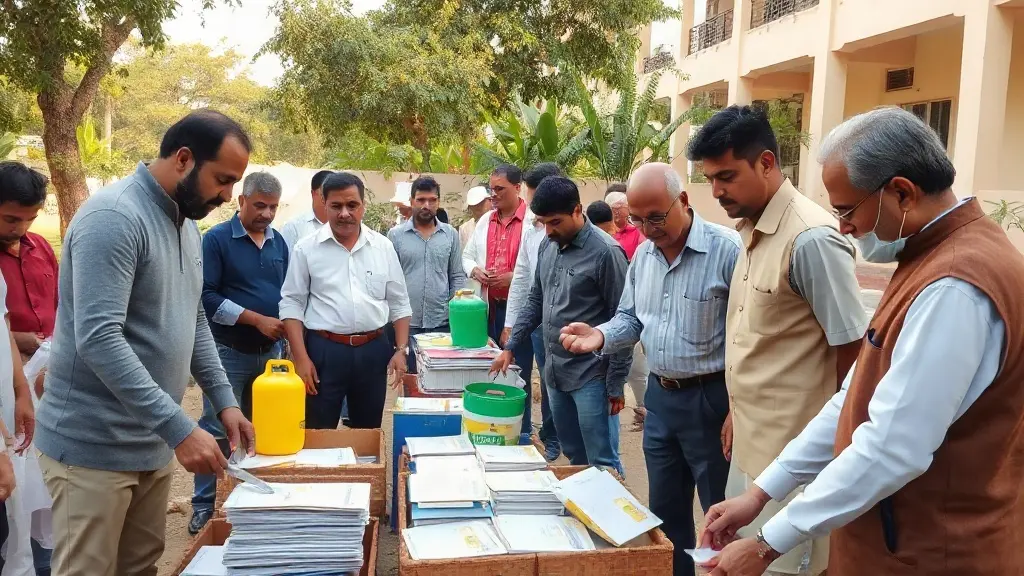
The Department of Agricultural Research and Education (DARE) and the Indian Council of Agricultural Research (ICAR) have successfully concluded their Special Campaign 6.0, a nationwide initiative aimed at enhancing cleanliness and improving office spaces across their establishments. This campaign, which spanned various locations, saw the cleaning of approximately 8,000 sites, resulting in significant environmental and organizational benefits.
Campaign Overview and Objectives
Launched as part of a broader initiative to promote cleanliness and responsible waste management, Special Campaign 6.0 focused on several key activities. These included record management, digitisation of files, plantation drives, and the implementation of environment-friendly practices. The campaign also prioritized citizen-centric practices, scrap disposal, and electronic waste management, all aimed at enhancing the overall functionality of office spaces.
According to official records reviewed by DotMR, the campaign successfully weeded out over 13,000 physical and electronic files, generating a revenue of more than ₹14 lakh. Additionally, it freed up over 4,000 square feet of office space, allowing for better utilization of resources and improved work environments.
Community Engagement and Awareness Initiatives
A significant aspect of Special Campaign 6.0 was the emphasis on community engagement. Officials across various institute campuses organized awareness camps to educate the public about the importance of cleanliness and responsible waste management. These camps served not only to inform but also to involve local communities in the cleanliness efforts.
In addition to awareness initiatives, free medical camps were held at several campuses, further enhancing the campaign's outreach and community impact. The ongoing practice of felicitating Safai Mitras, or cleanliness workers, highlighted the campaign's commitment to recognizing and appreciating the efforts of those involved in maintaining cleanliness.
Active Participation and Cleaning Drives
The success of Special Campaign 6.0 can be attributed to the active participation of officials at all levels within DARE and ICAR. Employees engaged in extensive cleaning drives, not only within office premises but also in the surrounding areas of their campuses. This comprehensive approach ensured that the campaign's impact extended beyond the confines of institutional buildings.
Particular attention was given to separating metal and plastic waste from general waste, which significantly improved the overall cleanliness of the campuses. This initiative aligns with the broader goals of promoting sustainable practices and reducing environmental impact.
Achievements and Future Implications
The achievements of Special Campaign 6.0 have exceeded the initial targets set by DARE and ICAR. The campaign not only improved the physical environment of the campuses but also fostered a culture of cleanliness and responsibility among employees and the surrounding communities. The revenue generated through the campaign can be reinvested into further initiatives aimed at enhancing agricultural research and education.
The digitization efforts, including the digital management of vehicle requisitions, represent a significant step towards modernizing the administrative processes within these institutions. By reducing reliance on physical documents, DARE and ICAR are not only streamlining operations but also contributing to environmental sustainability.
Conclusion: A Model for Future Campaigns
The successful execution of Special Campaign 6.0 serves as a model for future initiatives aimed at promoting cleanliness and responsible waste management across various sectors. The comprehensive approach taken by DARE and ICAR, which included community engagement, active participation, and a focus on sustainability, can be replicated in other governmental and non-governmental organizations.
As India continues to face challenges related to waste management and environmental sustainability, campaigns like Special Campaign 6.0 highlight the importance of collective action and the role of institutions in leading by example. The lessons learned from this campaign will undoubtedly inform future efforts to create cleaner, more sustainable environments across the country.
| Metric | Value |
|---|---|
| Sites Cleaned | 8,000 |
| Files Weed Out | 13,000 |
| Revenue Generated | ₹14 lakh |
| Space Freed | 4,000 sq. ft. |