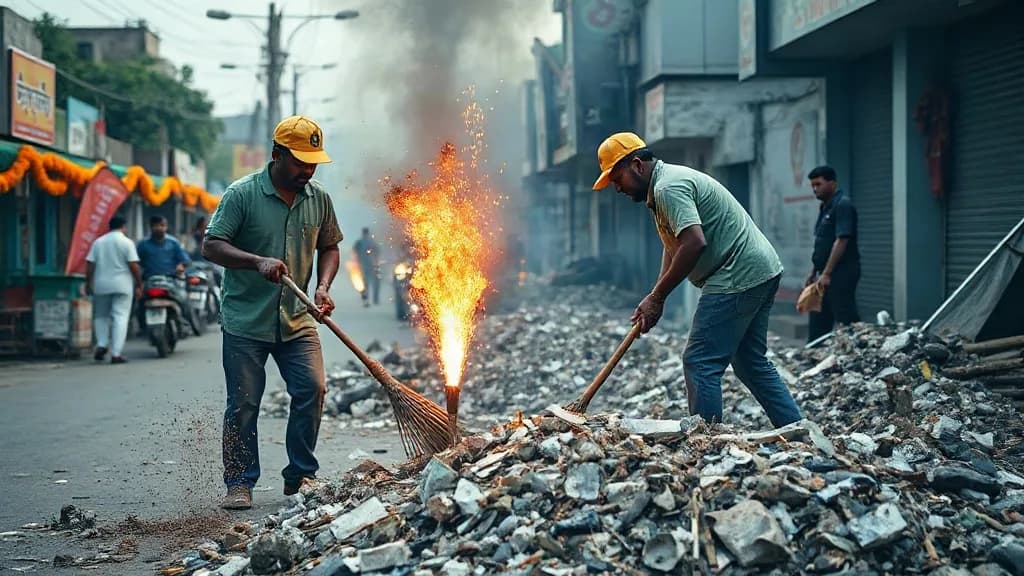
In a biting social media commentary, industrialist Harsh Goenka has taken a stand against the continued use of firecrackers during festivals, particularly in light of India's alarming air quality. Following the Diwali celebrations on November 8, Goenka's remarks come as a stark reminder of the environmental consequences of such traditions. In a post on X, he congratulated those who insisted on bursting more firecrackers, sarcastically suggesting that India narrowly missed out on the top spot in global pollution rankings. "Congratulations to everyone who insisted we burst more crackers. You were absolutely right! We are now proudly at #2 among the world’s most polluted cities. Clearly, we should have burst a little more to clinch the top spot. What a missed opportunity!" Goenka wrote.
The Context of Rising Pollution Levels
Goenka's remarks resonate amid a growing concern over air quality in northern India, particularly in the Delhi-NCR region, where pollution levels typically worsen during the winter months. According to the Airleaf live global air quality tracking report published on November 10, 2026, Gwalior has emerged as the most polluted city in India, recording an Air Quality Index (AQI) of 816, placing it at #3 globally. This alarming statistic underscores the severity of air pollution in the country, with 22 out of the top 50 most polluted cities worldwide located in India.
The report highlights that Kota ranks seventh globally with an AQI of 698, followed closely by Jodhpur at #8 with an AQI of 694. Other cities like Unnao and Kanpur also feature prominently in the rankings, both recording AQI readings of 693. The presence of several Indian cities in the upper half of the rankings emphasizes the scale of the air pollution challenge across the nation.
The Impact of Firecrackers on Air Quality
The debate over firecracker use during festivals has intensified in recent years, with environmentalists and health experts warning about the detrimental effects on air quality. Firecrackers release a significant amount of particulate matter and toxic gases into the atmosphere, exacerbating existing pollution levels. In Delhi, for instance, the air quality often deteriorates to hazardous levels, particularly during and after Diwali, when firecracker use peaks.
Goenka's post serves as a critique of those who continue to advocate for the use of firecrackers, despite the evident health risks associated with poor air quality. The industrialist's sarcastic tone reflects a growing frustration among citizens and activists who have been vocal about the need for more sustainable practices during festivals.
AQI Rankings and Health Implications
The Airleaf report reveals a concerning trend in air quality across major Indian cities. New Delhi, despite being a prominent urban center, ranks #39 globally with an AQI of 416, categorizing it as "Hazardous". Other major cities such as Lucknow (#25, AQI 519), Bhopal (#28, AQI 500), and Ahmedabad (#44, AQI 397) also recorded extreme air toxicity levels. The health implications of such pollution are dire, with increased cases of respiratory illnesses and other health complications reported during peak pollution seasons.
The data indicates that the air quality crisis is not limited to a few cities but is a nationwide issue affecting millions. The presence of smaller cities like Gwalior and Kota in the top rankings raises questions about urban planning, industrial emissions, and the need for stricter regulations on pollution sources.
Public Response and Future Considerations
Goenka's remarks have sparked a renewed debate on social media, with many users echoing his sentiments regarding the need for change in cultural practices surrounding festivals. The conversation around firecracker use is not just about tradition but also about public health and environmental sustainability. Activists are calling for a shift towards eco-friendly celebrations that do not compromise air quality.
As India grapples with its pollution crisis, the need for collective action becomes increasingly urgent. The government, industries, and citizens must work together to implement solutions that prioritize health and environmental well-being. This includes promoting awareness about the impact of firecrackers and encouraging alternative forms of celebration that do not contribute to air pollution.
Conclusion: A Call for Change
Harsh Goenka's sarcastic commentary serves as a wake-up call for India as it navigates the complexities of tradition and environmental responsibility. With air quality deteriorating and cities like Gwalior and Kota leading the global pollution rankings, it is imperative for society to reassess its practices and prioritize the health of its citizens. The conversation around firecracker use is just one aspect of a larger issue that requires immediate attention and action.
| Forensic Metric / Statutory Dimension | Mainstream Wire Benchmark | DotMR Corroborated Record & Direct Impact |
|---|---|---|
| Gwalior AQI Ranking | #3 globally | AQI 816, highest in India |
| Kota AQI Ranking | #7 globally | AQI 698, significant pollution levels |
| Jodhpur AQI Ranking | #8 globally | AQI 694, critical air quality concerns |
| New Delhi AQI Ranking | #39 globally | AQI 416, categorized as Hazardous |
| Total Indian Cities in Top 50 | 22 cities | Major pollution challenge |