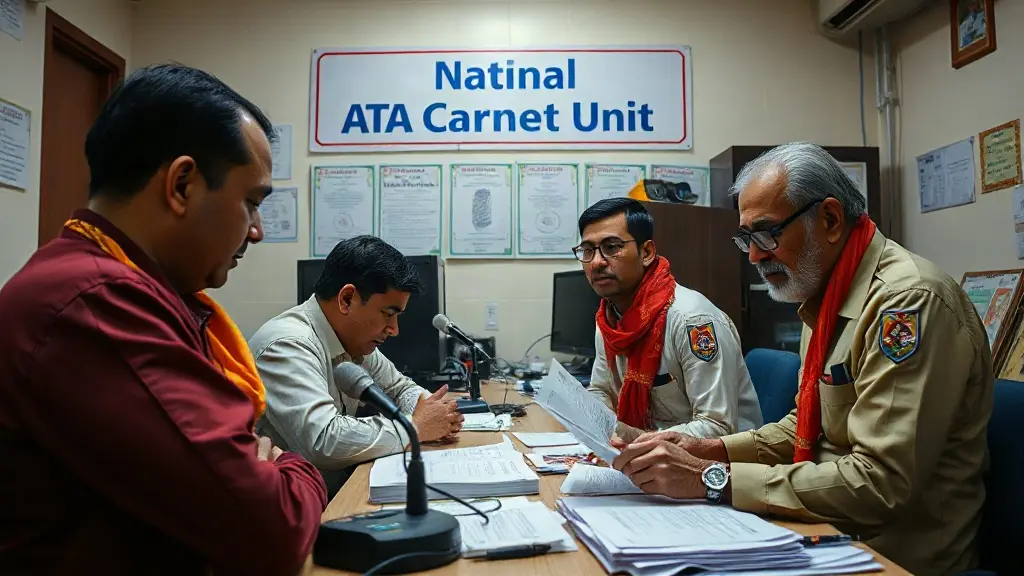
In a recent announcement, UK customs officials have clarified the procedures for destroying goods listed on an ATA Carnet, a temporary admission document used for the international movement of goods. This guidance is crucial for businesses and individuals who may find themselves needing to dispose of goods rather than returning them to their country of origin. The protocol emphasizes the importance of obtaining the necessary permissions and documentation to ensure compliance with customs regulations.
Understanding ATA Carnet and Its Implications
An ATA Carnet allows goods to be temporarily imported into a country without the need for customs duties or taxes. This document is widely used for trade shows, exhibitions, and professional equipment. However, circumstances may arise where the goods cannot be returned to the exporting country. In such cases, the destruction of these goods becomes a viable option. According to the latest guidance from UK customs, specific steps must be followed to ensure that the destruction process is legally compliant.
Steps to Obtain Permission for Destruction
Before proceeding with the destruction of goods listed on an ATA Carnet, it is essential to obtain permission from customs in the country where the goods are located. For goods situated in the UK, businesses must contact the National ATA Carnet Unit at least five working days prior to the intended destruction date. This advance notice is critical for ensuring that all necessary approvals are secured.
Upon contacting the National ATA Carnet Unit, the entity must provide detailed information regarding the goods intended for destruction, including their description and quantity. This information will be used to issue a certificate or letter confirming the destruction, which is a mandatory requirement for compliance.
Documentation Required for Destruction
Once permission is granted, the next step involves obtaining the appropriate documentation. The destruction certificate or letter must clearly outline the details of the goods destroyed. This documentation serves as proof of compliance with customs regulations and must be submitted to the National ATA Carnet Unit.
In cases where the duty on the destroyed goods exceeds £9, a declaration for the waste material must also be made. This involves using the Trade Tariff to look up commodity codes, duty, and VAT rates. The declaration must be completed in the Customs Declarations Service, ensuring that all relevant information is accurately entered.
Contacting the National ATA Carnet Unit
To facilitate the destruction process, businesses must create a travel entry in their app and assign it to the ‘National Carnet Unit’. This entry should include all pertinent details regarding the goods and the intended destruction. Following this, an email must be sent to the National ATA Carnet Unit, attaching the destruction certificate or letter confirming the destruction.
It is important to note that if the duty on the destroyed goods is below £9, a declaration is not required. However, the destruction certificate must still be submitted to the National ATA Carnet Unit to complete the process.
Conclusion: Compliance is Key
The destruction of goods listed on an ATA Carnet is a process that requires careful adherence to customs regulations. By following the outlined steps and ensuring all necessary documentation is obtained, businesses can navigate this process smoothly. The UK customs' guidance serves as a vital resource for those needing to dispose of goods responsibly and legally, thereby avoiding potential penalties or complications.
| Forensic Metric / Statutory Dimension | Mainstream Wire Benchmark | DotMR Corroborated Record & Direct Impact |
|---|---|---|
| Notification period for destruction | 5 working days | Required for compliance with UK customs |
| Duty threshold for declaration | £9 | Declaration needed if duty exceeds £9 |
| Required documentation | Destruction certificate | Mandatory for National ATA Carnet Unit |
| Contact point for permissions | National ATA Carnet Unit | Essential for legal destruction process |