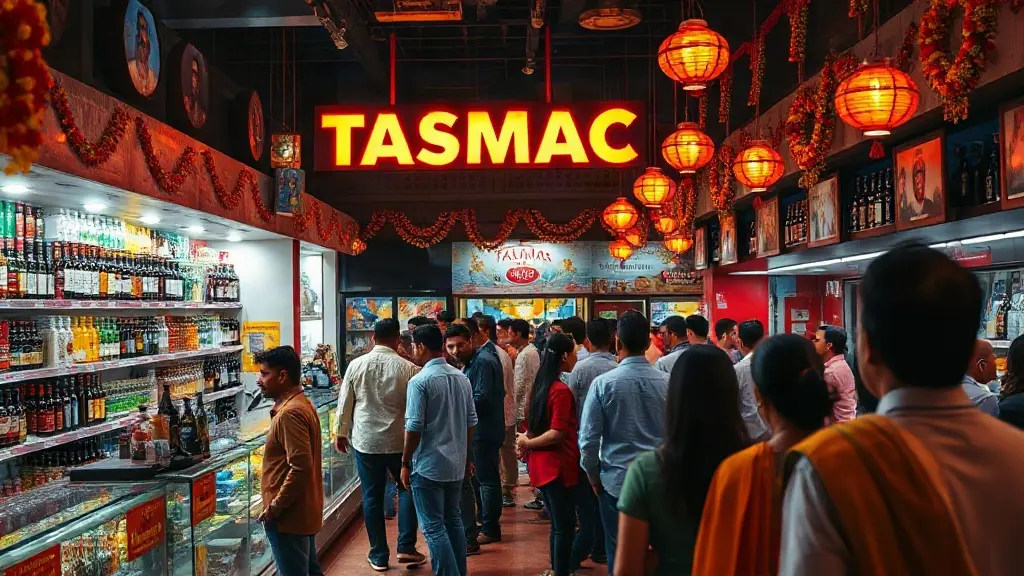
The Tamil Nadu State Marketing Corporation (Tasmac) has reported liquor sales of ₹441.38 crore during the Deepavali festival in 2026, marking a notable performance despite technical challenges. On the eve of Deepavali, Tasmac recorded sales exceeding ₹234.75 crore, while the festival day itself saw sales of ₹206.63 crore. This year’s figures indicate a slight dip in sales compared to previous years, raising questions about the underlying factors affecting consumer behavior.
Breakdown of Sales by Region
Chennai emerged as the top contributor to Tasmac's sales, with the city generating ₹95.85 crore. Following closely was the Tiruchi zone, which recorded ₹98.97 crore in sales. Other significant contributors included Madurai at ₹88.38 crore, Salem with ₹87.52 crore, and Coimbatore at ₹70.66 crore. The regional breakdown highlights the diverse consumption patterns across Tamil Nadu, with urban centers showing robust demand despite the overall decline.
| Region | Sales (₹ Crore) |
|---|---|
| Chennai | 95.85 |
| Tiruchi | 98.97 |
| Madurai | 88.38 |
| Salem | 87.52 |
| Coimbatore | 70.66 |
| Total | 441.38 |
Impact of POS Machine Glitches
Despite the impressive sales figures, Tasmac faced significant operational challenges due to glitches in its Point of Sale (POS) systems. Reports indicate that many customers experienced delays and transaction failures, which may have impacted overall sales performance. The glitches were particularly pronounced during peak hours leading up to the festival, causing frustration among consumers eager to purchase their festive liquor.
A Tasmac spokesperson acknowledged the issues, stating, "We are aware of the technical difficulties faced by our customers and are working diligently to resolve them. Our priority is to ensure a seamless shopping experience, especially during high-demand periods like Deepavali."
Year-on-Year Sales Comparison
While Tasmac's sales figures for Deepavali 2026 are substantial, they reflect a marginal decline compared to previous years. Analysts tracking the liquor market in Tamil Nadu suggest that various factors, including changing consumer preferences and economic conditions, may be contributing to this trend. The slight dip in sales has raised concerns among stakeholders about the sustainability of liquor consumption patterns in the state.
In previous years, Tasmac had reported sales exceeding ₹450 crore during the Deepavali period. The current year’s performance, although still impressive, highlights a potential shift in consumer behavior, possibly influenced by economic factors or changing social norms regarding alcohol consumption.
Consumer Sentiment and Market Trends
Consumer sentiment appears mixed as Tasmac navigates these challenges. Many patrons expressed dissatisfaction with the service disruptions caused by the POS issues, which may have deterred some from making purchases. "I wanted to buy a few bottles for the celebrations, but the long wait and failed transactions made me reconsider," said a Chennai resident.
Market analysts suggest that Tasmac may need to invest in upgrading its technology infrastructure to prevent similar issues in the future. Enhanced systems could improve customer experience and potentially boost sales during peak periods. Additionally, understanding the evolving preferences of consumers could help Tasmac tailor its offerings to better meet demand.
Future Outlook for Tasmac
Looking ahead, Tasmac is expected to focus on addressing the technical challenges that arose during this year’s Deepavali sales. The corporation is also likely to explore strategies to reinvigorate sales growth, including promotional campaigns and product diversification. As the liquor market in Tamil Nadu continues to evolve, Tasmac's ability to adapt to changing consumer preferences will be crucial.
Looking ahead,, while Tasmac's Deepavali sales of ₹441.38 crore reflect a strong performance, the underlying challenges and slight decline in sales raise important questions about the future of liquor consumption in Tamil Nadu. Stakeholders will be closely monitoring how Tasmac responds to these challenges in the coming months.