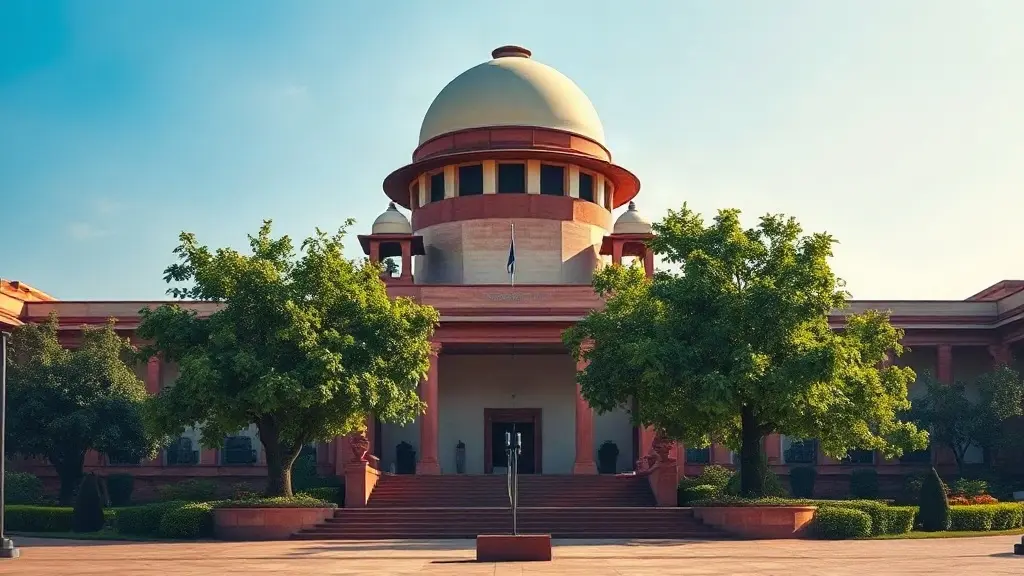
The Supreme Court of India has issued a critical directive mandating that Delhi and its neighboring states—Haryana, Punjab, and Uttar Pradesh—intensify their efforts to combat vehicular pollution. This urgent call to action comes in response to alarming pollution levels in the National Capital Region (NCR), which have reached hazardous levels, prompting the court to seek a comprehensive action plan from state officials. The court has scheduled a follow-up review for November 23, 2026, to assess progress on the implementation of these measures.
Supreme Court's Directive on Pollution Control Measures
In a hearing that underscored the growing environmental crisis, the Supreme Court highlighted the need for immediate action against vehicle emissions. The bench, led by Chief Justice of India, emphasized that the current measures in place are insufficient to address the escalating pollution crisis. The court has specifically directed officials to report on the implementation of laws governing aging and non-compliant vehicles, which are significant contributors to air pollution in the region.
The court's directive comes at a time when the air quality index (AQI) in Delhi has consistently hovered in the 'severe' category, with particulate matter levels exceeding safe limits. According to the Central Pollution Control Board (CPCB), the AQI in several parts of Delhi has crossed 400, indicating a serious health risk to residents. The Supreme Court's intervention aims to galvanize state governments into action, pushing for stricter enforcement of emission standards and the removal of older, polluting vehicles from the roads.
Inter-State Collaboration for Effective Pollution Management
Recognizing that pollution does not adhere to state boundaries, the Supreme Court has called for enhanced inter-state collaboration in managing vehicle emissions. The court noted that pollution levels in Delhi are significantly influenced by vehicular traffic from neighboring states. Therefore, a unified approach is essential for effective pollution control.
The court's emphasis on collaboration is particularly relevant given the complex nature of air pollution in the NCR, where emissions from industrial activities, construction dust, and vehicular emissions all contribute to deteriorating air quality. The Supreme Court has urged state governments to work together to develop a coordinated action plan that includes stricter enforcement of emission norms and the promotion of public transportation.
Legislative Framework and Compliance Challenges
The Supreme Court's directive also highlights the need for a robust legislative framework to address the challenges posed by aging and non-compliant vehicles. Currently, there are laws in place aimed at regulating vehicle emissions, but enforcement remains a significant challenge. Many vehicles on the road do not meet the required emission standards, and the lack of stringent checks has allowed non-compliant vehicles to proliferate.
According to data reviewed by DotMR, over 1.5 million vehicles in Delhi are over 15 years old, and many of these vehicles are not equipped with modern emission control technologies. The Supreme Court has mandated that state officials provide a detailed report on the status of these vehicles and the measures being taken to phase them out.
Health Implications of Rising Pollution Levels
The health implications of rising pollution levels in Delhi-NCR are dire. Studies have shown that prolonged exposure to high levels of air pollution can lead to serious health issues, including respiratory diseases, cardiovascular problems, and premature mortality. The Supreme Court's intervention is not just a legal mandate; it is a public health imperative.
Health experts have long warned that the deteriorating air quality in Delhi poses a significant risk to vulnerable populations, including children, the elderly, and those with pre-existing health conditions. The court's push for action is seen as a necessary step to protect public health and ensure that residents of the NCR can breathe clean air.
Next Steps and Future Review
As the Supreme Court prepares to review the progress of these measures on November 23, 2026, the pressure is on state governments to deliver concrete results. The court's directive serves as a wake-up call for authorities to prioritize environmental health and take decisive action against vehicular pollution.
In the coming weeks, stakeholders, including environmental activists, health experts, and government officials, will be closely monitoring the developments in this case. The Supreme Court's ruling has the potential to reshape the landscape of pollution control in the NCR, setting a precedent for how states manage vehicle emissions and protect public health.
| Metric | Current Status | Target Status | Deadline |
|---|---|---|---|
| AQI Level (Delhi) | 400+ (Severe) | Below 100 | Ongoing |
| Aging Vehicles (Delhi) | 1.5 million | Phased out | 2028 |
| Inter-State Collaboration | Limited | Enhanced | November 2026 |
| Emission Compliance Rate | Low | 100% Compliance | 2026 |