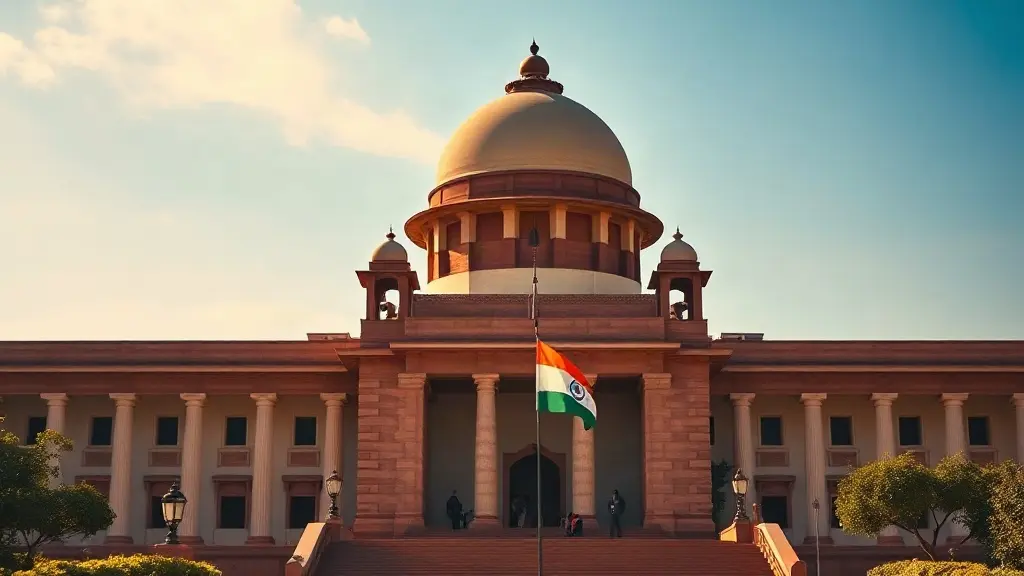
The [Supreme Court of India](/topic/supreme-court-of-india) has clarified that its March 11, 2026, judgment regarding the Other Backward Classes (OBC) creamy layer policy will not be applied retrospectively. This ruling, delivered on November 6, 2026, has significant implications for the service allocation of the 2025 batch of candidates. The Court's decision stems from the need to reassess the non-creamy layer status of OBC candidates based on a 1993 Office Memorandum, which excludes parental salary income and agricultural income from the income/wealth test.
Context of the March 2026 Judgment
The March 2026 judgment was a landmark ruling that aimed to redefine the criteria for determining the creamy layer status among OBC candidates. The Court emphasized the importance of excluding certain income types from the assessment to ensure that the benefits of reservation policies reach the genuinely underprivileged sections of society. The ruling was seen as a progressive step towards enhancing social justice and equity in public service allocations.
However, the Court's latest clarification indicates that this new criterion will only apply moving forward and will not affect candidates who have already been allocated services based on previous criteria. This decision has been met with mixed reactions, as it aims to uphold the integrity of the selection process while also recognizing the need for a more equitable framework.
Government's Plea for Time Denied
In its ruling, the Supreme Court also addressed the government's request for a two-year period to implement the new creamy layer criteria. The government argued that this time would allow for consultations with stakeholders and the establishment of a uniform policy for determining OBC creamy layer status. However, the Court did not find merit in this plea, emphasizing the need for immediate compliance with the March 2026 judgment.
This denial of the government's request places pressure on the administration to expedite the implementation of the new criteria, ensuring that future allocations are conducted fairly and transparently. The Court's firm stance reflects its commitment to upholding the principles of justice and equality in public service.
Implications for the 2025 Batch
The Supreme Court's clarification has direct implications for the 2025 batch of candidates who are currently awaiting service allocations. According to the Court, the service allocations for this batch will be conducted in compliance with the March 2026 judgment. This means that candidates will be evaluated based on the newly established criteria, which could potentially alter the landscape of OBC representation in various government services.
Candidates who fall within the non-creamy layer as per the new guidelines will benefit from the reservation policies, while those who do not meet the criteria will be excluded from these benefits. This decision is expected to create a more level playing field for candidates from economically weaker sections within the OBC category.
Reactions from Stakeholders
The clarification has prompted a range of reactions from various stakeholders, including political leaders, social activists, and educational institutions. Many advocates for social justice have welcomed the Court's decision, viewing it as a necessary step towards ensuring that the benefits of reservation reach those who truly need them. They argue that the exclusion of parental income and agricultural income from the assessment is a progressive move that aligns with the original intent of reservation policies.
Conversely, some critics have expressed concerns about the potential disruption this ruling may cause in the ongoing service allocation process. They argue that the lack of a retrospective application could lead to grievances among candidates who feel they were unfairly disadvantaged under the previous criteria. The government will need to navigate these concerns carefully to maintain public confidence in the reservation system.
Future Directions for OBC Policies
Looking ahead, the Supreme Court's ruling sets a precedent for how OBC creamy layer policies will be structured in India. The emphasis on immediate compliance with the new criteria suggests that the Court is keen on ensuring that the benefits of affirmative action are not diluted by bureaucratic delays.
As the government moves forward with implementing these changes, it will be crucial to engage with stakeholders to develop a comprehensive understanding of the implications of the new criteria. This engagement will be essential in fostering trust and transparency in the allocation process.
In conclusion, the Supreme Court's clarification on the OBC creamy layer policy marks a significant moment in India's ongoing efforts to ensure equitable representation in public services. As the government prepares to implement these changes, the focus will remain on maintaining fairness and transparency in the allocation process, ensuring that the benefits of reservation reach those who need them most.
| Date | Event Description | Impact on Candidates |
|---|---|---|
| March 11, 2026 | Supreme Court ruling on OBC creamy layer criteria | New criteria established |
| November 6, 2026 | Clarification on non-retrospective application | 2025 batch allocations defined |
| TBD | Government's implementation of new criteria | Future allocations affected |