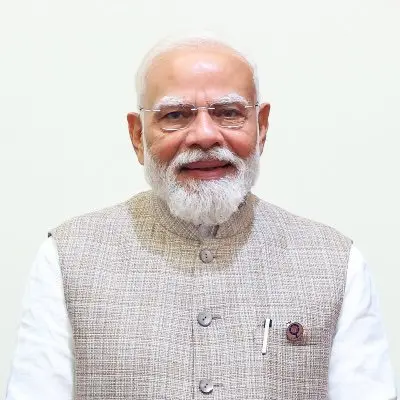
In a significant boost to urban infrastructure, Prime Minister [Narendra Modi](/topic/narendra-modi) inaugurated and laid the foundation stone for Pune Metro projects valued at approximately ₹21,800 crore. The event, conducted via video conferencing, marks a pivotal moment for Pune, a city recognized as a hub of innovation and economic activity. Modi emphasized that improved metro connectivity will catalyze the city's growth trajectory, enhancing the quality of life for its residents.
Pune's Role as an Economic Hub
During his address, Prime Minister Modi described Pune as a historic center of ideas that has consistently guided the nation and society. He highlighted that the city is now channeling the fresh energy of a 'Viksit Bharat' (Developed India) across various sectors, including IT, automobiles, pharmaceuticals, startups, and manufacturing. "In such a scenario, the strengthening metro connectivity here is going to give new momentum to the development of Pune city," Modi stated, underscoring the importance of modern infrastructure in fostering economic growth.
The Prime Minister's remarks reflect a broader vision for urban development, where cities are not merely residential spaces but vital centers of economic activity. He noted that the expansion of the Pune Metro aligns with the national goal of transforming urban centers into competitive and livable spaces.
Enhancing Connectivity and Economic Growth
The newly inaugurated Hinjawadi to Shivajinagar corridor is expected to significantly improve connectivity between major IT hubs and residential areas. Modi pointed out that saving commuting time through efficient metro networks enhances urban productivity, which in turn accelerates the national economy. "When the economy grows, both the poor and the middle class benefit from it," he asserted, emphasizing the inclusive nature of economic development.
According to official records reviewed by DotMR, Pune's metro network expansion is part of a larger initiative that has seen India's metro system grow to nearly 1,200 kilometers across 26 cities, serving over one crore daily commuters. Modi highlighted that this positions India's metro network among the top three globally, showcasing the country's commitment to modern urban infrastructure.
A Model of Proactive Governance
Prime Minister Modi characterized the inauguration as a prime example of pro-people and proactive governance. He noted that Maharashtra has mirrored the national transformation since 2014, when only 10 to 11 kilometers of metro lines were operational in the state. Currently, nearly 175 kilometers are in service, with construction underway on over 680 kilometers, representing an investment exceeding ₹2.5 lakh crore.
"This money is going into the pockets of laborers, this money is giving employment to engineers, and this money is creating employment in shops and in factories," Modi remarked, highlighting the economic ripple effects of infrastructure investments.
The Pune Metro projects are also notable for their implementation under the Public-Private Partnership (PPP) model, which Modi praised as a successful development framework. He stated, "This is such a model of development whose success gives further momentum to the progress of the country."
Future Vision for Urban Development
Looking ahead, Modi expressed optimism about the future of urban development in India. He stated that every citizen is working towards building a 'Viksit Bharat' with a nationwide spirit of 'We Will Do It.' Over the past 12 years, the government has focused on building rural roads, highways, expressways, new and electrified rail lines, long tunnels, and high bridges.
"Now in the coming years, along with this, the country is going to invest its energy in making its cities among the best cities in the world," he asserted, reinforcing the government's commitment to enhancing urban living standards.
Conclusion: A New Era for Pune
The inauguration of the Pune Metro projects represents a significant step forward in the city's infrastructure development, promising to enhance connectivity, boost economic growth, and improve the overall quality of life for its residents. As Pune continues to evolve as a major economic hub, the successful implementation of these projects will be crucial in realizing the vision of a developed India.
The Pune Metro projects not only signify a commitment to modern infrastructure but also reflect a broader vision of sustainable urban development that prioritizes the needs and aspirations of the youth and the community at large.
| Metric | Value |
|---|---|
| Total Investment | ₹21,800 Crore |
| Length of Operational Metro | 175 kilometers |
| Daily Commuters Served | Over 1 crore |
| Total Metro Network in India | Nearly 1,200 kilometers |
| Investment in Maharashtra | Exceeding ₹2.5 lakh crore |