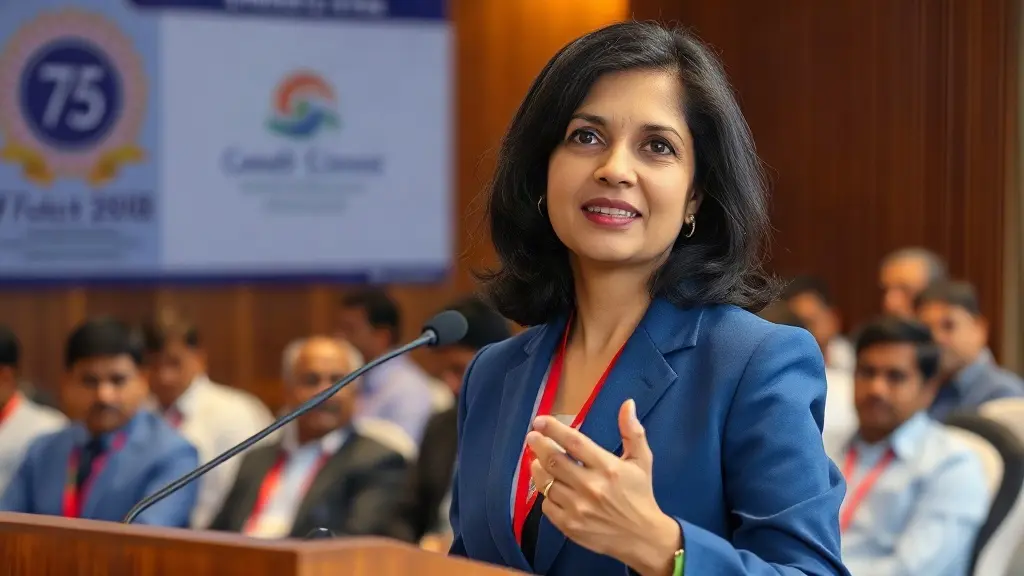
Mathematics forms the backbone of modern [artificial intelligence](/topic/artificial-intelligence) (AI), with advanced AI capabilities, predictive power, and logical reasoning deeply rooted in mathematical equations, frameworks, and data algorithms, said Reheena Nasrin of Bangladesh University of Engineering and Technology (BUET) in Dhaka, Bangladesh. Addressing the valedictory session of a three-day international conference on “Computation Science and Intelligent Engineering,” organised by the Department of Mathematics in Siddhartha Academy of Higher Education (Deemed-to-be-University), she emphasised that strong mathematical foundations would remain essential for the future advancement of digital intelligence.
The Role of Mathematics in AI Development
During her keynote address, Nasrin elaborated on how mathematical principles underpin the algorithms that drive AI systems. "Without mathematics, we cannot develop algorithms that learn from data, make predictions, or even understand natural language," she stated. This assertion aligns with the growing consensus among AI researchers that a robust understanding of mathematics is crucial for anyone looking to innovate in the field.
The conference attracted over 200 participants from various academic institutions across India, showcasing a wealth of research dedicated to the intersection of mathematics and intelligent engineering. The diverse topics presented ranged from theoretical frameworks to practical applications, highlighting the versatility of mathematics in solving complex problems.
Highlights from the Conference Sessions
The final-day technical sessions featured lectures by eminent experts. G. Sobhalatha of Sri Krishnadevaraya University, Anantapur, spoke on ‘Lexicographic Product Graph’, a topic that delves into the mathematical structures that can optimize network designs. This research is particularly relevant in the context of AI, where understanding graph theory can lead to more efficient algorithms for data processing.
Bukke Kiran Naik, a scientist from the National Institute of Technology (NIT), Rourkela, delivered a lecture on ‘Intelligent Thermodynamics’. His focus on data-driven systems optimisation and the energy-water nexus solutions highlighted the practical implications of mathematical models in addressing real-world challenges. Naik's work exemplifies how mathematical insights can lead to innovative solutions in energy management, a critical area for sustainable development.
Academic Contributions and Knowledge Exchange
Conference convener Charan announced that more than 200 research papers had been presented by academicians and researchers from reputed universities across India. This impressive turnout not only reflects the conference’s contribution to academic research but also underscores the importance of collaboration in advancing knowledge in the field of computation science.
Certificates of participation and excellence were distributed to the paper presenters by the dignitaries, acknowledging their hard work and dedication to pushing the boundaries of mathematical applications in technology. The event fostered an environment of knowledge exchange, encouraging participants to share insights and explore potential collaborations.
Future Directions in Mathematics and AI
As the conference concluded, Nasrin reiterated the need for educational institutions to strengthen their mathematics curricula to prepare the next generation of AI researchers. "We must ensure that students are equipped with the necessary mathematical tools to tackle future challenges in AI and beyond," she urged. This call to action resonates with the ongoing discussions about the skills gap in the tech industry, particularly in fields that heavily rely on mathematical knowledge.
The integration of mathematics into AI development is not merely an academic concern; it has profound implications for industries ranging from healthcare to finance. As AI continues to evolve, the demand for professionals who can bridge the gap between mathematics and technology will only increase.
In conclusion, the insights shared at the Computation Science and Intelligent Engineering conference highlight the pivotal role of mathematics in shaping the future of AI. As researchers and educators work together to enhance mathematical education, the potential for innovation in AI applications will expand, paving the way for advancements that can transform society.
| Topic | Speaker | Institution | Key Focus Areas |
|---|---|---|---|
| Lexicographic Product Graph | G. Sobhalatha | Sri Krishnadevaraya University, Anantapur | Network optimization, graph theory |
| Intelligent Thermodynamics | Bukke Kiran Naik | National Institute of Technology, Rourkela | Data-driven systems, energy management |