The Karnataka government has raised serious concerns regarding the ethanol content in petrol supplied by major oil marketing companies, specifically Indian Oil Corporation Limited (IOCL) and Hindustan Petroleum Corporation Limited (HPCL). Recent laboratory tests revealed that petrol samples from these companies contained ethanol levels significantly exceeding the prescribed limit of 20%, with IOCL recording levels as high as 31.2% and HPCL at 30.5%. This alarming discovery has prompted the state government to demand immediate action against these companies, citing potential risks to consumers and vehicles.
Ethanol Content Testing and Findings
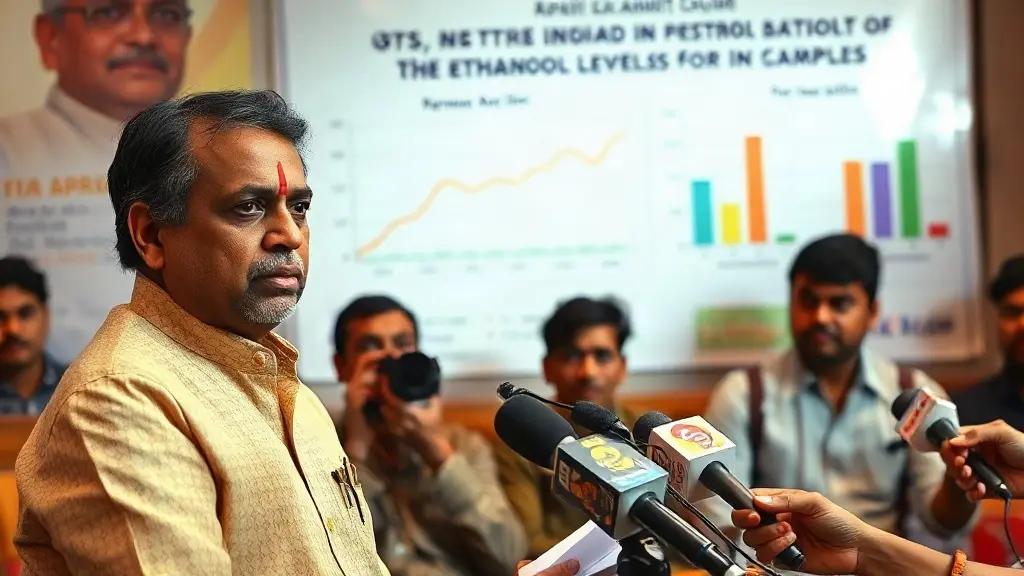
The allegations were made public during a press conference held by Rizwan Arshad, Karnataka's Minister for Food, Civil Supplies, Consumer Affairs, and Legal Metrology. The tests were conducted on petrol samples collected from various locations, including Bengaluru, Kolar, Chikkaballapura, and Mangaluru. The analysis was performed by the Shriram Research Institute, which is accredited by the National Accreditation Board for Testing and Calibration Laboratories and holds ISO certification.
The findings revealed a concerning trend in ethanol blending across multiple brands. Not only did IOCL and HPCL exceed the limit, but other companies also reported elevated ethanol levels. For instance, Bharat Petroleum Corporation Limited (BPCL) had samples showing ethanol content of 26.5%, while Nayara and Shell recorded 26.1% and 25.5%, respectively. A detailed breakdown of the ethanol content in various petrol samples is presented in the table below:
| Company | Ethanol Content (%) |
|---|---|
| IOCL | 31.2 |
| HPCL | 30.5 |
| BPCL | 26.5 |
| Nayara | 26.1 |
| Shell | 25.5 |
| BPCL | 24.2 |
| BPCL | 22.6 |
| HPCL | 22.4 |
| IOCL | 20.8 |
| Nayara | 20.6 |
| BPCL | 19.9 |
| MRPL | 19.2 |
| Shell | 13.5 |
Concerns Over Vehicle Compatibility
Minister Arshad expressed grave concerns regarding the compatibility of vehicles with higher ethanol blends. He noted that while E20 compliant vehicles have been manufactured since 2023, only a small fraction of the total vehicles on the road are designed to handle ethanol blends beyond 20%. "99 percent of vehicles cannot handle any fuel beyond E20," he stated, emphasizing the potential risks to consumers.
The minister further highlighted that many automobile manufacturers had initially indicated that their vehicles were not compatible with 20% ethanol blends. However, following intervention from the central government, these companies seemed to have changed their stance without clear communication to consumers. This lack of transparency raises questions about the safety and reliability of vehicles operating on higher ethanol blends.
Financial Burden on Consumers
The Karnataka government has also pointed out the financial implications for consumers due to the alleged over-blending of ethanol in petrol. The state claims that higher ethanol content can lead to reduced mileage and potential damage to vehicle components, including fuel pumps, injectors, and seals. This could result in increased maintenance costs for consumers, further exacerbating the financial burden.
According to the government, approximately 99% of India's 35 crore vehicles are not equipped to handle ethanol blends exceeding E20. This situation raises concerns about the long-term implications for vehicle performance and consumer safety.
Transparency Issues in Oil Marketing Companies
In a press release, Minister Arshad criticized the oil marketing companies for their lack of transparency regarding ethanol blending. He pointed out that initial tests conducted in-house by IOCL and BPCL did not disclose the ethanol content, despite it being a critical parameter. This omission raises serious questions about the integrity of the testing processes and the companies' commitment to consumer safety.
The Karnataka government is now calling for stricter regulations and oversight of ethanol blending practices in petrol. The state aims to ensure that consumers are not misled and that the fuel they purchase meets safety and quality standards.
Next Steps and Government Action
In light of these findings, the Karnataka government is expected to take decisive action against the oil marketing companies involved. This may include regulatory measures, public awareness campaigns, and potential legal action to protect consumers. The government is also likely to engage with automobile manufacturers to address compatibility issues and ensure that consumers are adequately informed about the fuel they are using.
As the situation unfolds, the implications of these allegations could have far-reaching effects on the oil and automotive industries in India. The Karnataka government's proactive stance may serve as a catalyst for broader discussions on fuel quality, environmental impact, and consumer rights in the country.