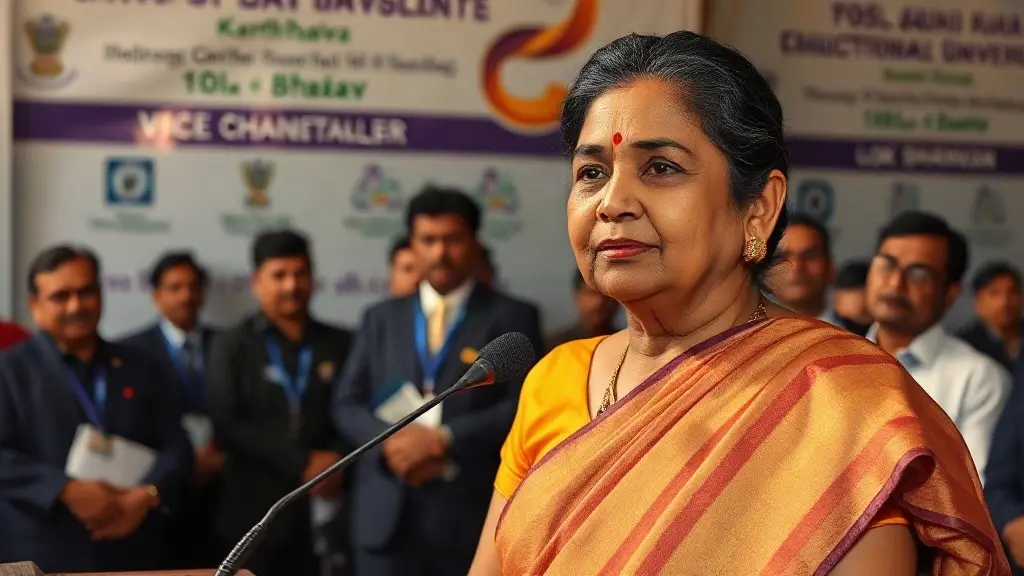
Governor's Directive for Comprehensive Review
On November 6, 2026, Sudha Yadav, the Governor of Karnataka and Chancellor of the state's universities, issued a directive requiring all public universities to conduct a thorough review of their operations. This initiative aims to identify areas needing improvement and to enhance the overall quality of higher education in Karnataka. During a meeting held at Lok Bhavan, the Governor instructed Vice-Chancellors to prepare and submit detailed reports covering the current status of their institutions, including key achievements, challenges, and proposed measures for improvement.
"This report should cover the current status of their respective universities, key achievements, challenges, shortcomings, and specific measures proposed for improvement," Governor Yadav stated. This comprehensive approach is designed to foster a culture of accountability and transparency within the state's higher education system.
Focus on National Education Policy Implementation
A significant aspect of the Governor's directive is the emphasis on the effective implementation of the National Education Policy (NEP) and the State Education Policy. The NEP, introduced in 2020, aims to overhaul the Indian education system by promoting holistic and multidisciplinary education, enhancing research and innovation, and improving employability among graduates.
Governor Yadav highlighted the necessity for universities to align their operations with these policies. She urged Vice-Chancellors to ensure that their institutions are not only meeting educational standards but also adapting to the evolving demands of the job market. "Emphasis must be placed on the effective implementation of the National Education Policy and the State Education Policy, strong coordination between industries and universities, as well as skill development, research, innovation, and employability," she emphasized.
Challenges Facing Karnataka's Public Universities
Karnataka is home to numerous public universities, each facing unique challenges. Issues such as inadequate infrastructure, outdated curricula, and insufficient industry collaboration have been persistent hurdles. The Governor's call for a status report aims to address these challenges head-on.
In recent years, several universities have reported difficulties in attracting quality faculty and securing funding for research initiatives. Additionally, the gap between academic institutions and industry needs has widened, leading to concerns about the employability of graduates. The comprehensive review mandated by the Governor seeks to identify these shortcomings and propose actionable solutions.
Collaboration Between Universities and Industry
One of the key points raised by Governor Yadav is the need for stronger collaboration between universities and industries. This partnership is crucial for ensuring that academic programs are aligned with the skills required in the workforce. By fostering relationships with local businesses and industries, universities can enhance their curriculum and provide students with practical experience.
"We need to create a robust framework for collaboration that benefits both students and industries," the Governor stated. This collaboration could take various forms, including internships, joint research projects, and guest lectures from industry professionals. Such initiatives are expected to bridge the gap between education and employment, ultimately benefiting the state's economy.
The Role of the Karnataka State Higher Education Council
The Karnataka State Higher Education Council plays a pivotal role in overseeing the implementation of educational policies and ensuring quality across universities. The Governor's directive also calls upon this council to work closely with Vice-Chancellors to facilitate the review process and support the universities in their efforts to improve.
The council is expected to provide guidance on best practices and help universities benchmark their performance against national standards. By fostering a collaborative environment, the council can assist in addressing the challenges identified in the status reports and promote a culture of continuous improvement in higher education.
Conclusion: A Step Towards Educational Reform
Governor Sudha Yadav's directive for a comprehensive review of public universities in Karnataka marks a significant step towards educational reform in the state. By focusing on accountability, transparency, and collaboration, this initiative aims to enhance the quality of higher education and ensure that graduates are well-equipped to meet the demands of the modern workforce.
As universities prepare their reports, the outcomes of this initiative will be closely monitored. The success of this endeavor could serve as a model for other states in India, highlighting the importance of proactive governance in the education sector.
| Metric | Current Status | Proposed Improvement Measures |
|---|---|---|
| Faculty Recruitment | Inadequate | Increase funding and incentives for faculty positions |
| Industry Collaboration | Limited | Establish partnerships for internships and projects |
| Curriculum Relevance | Outdated | Align curriculum with industry needs and NEP guidelines |
| Research Funding | Insufficient | Enhance funding opportunities for research initiatives |
| Student Employability | Low | Implement skill development programs and workshops |