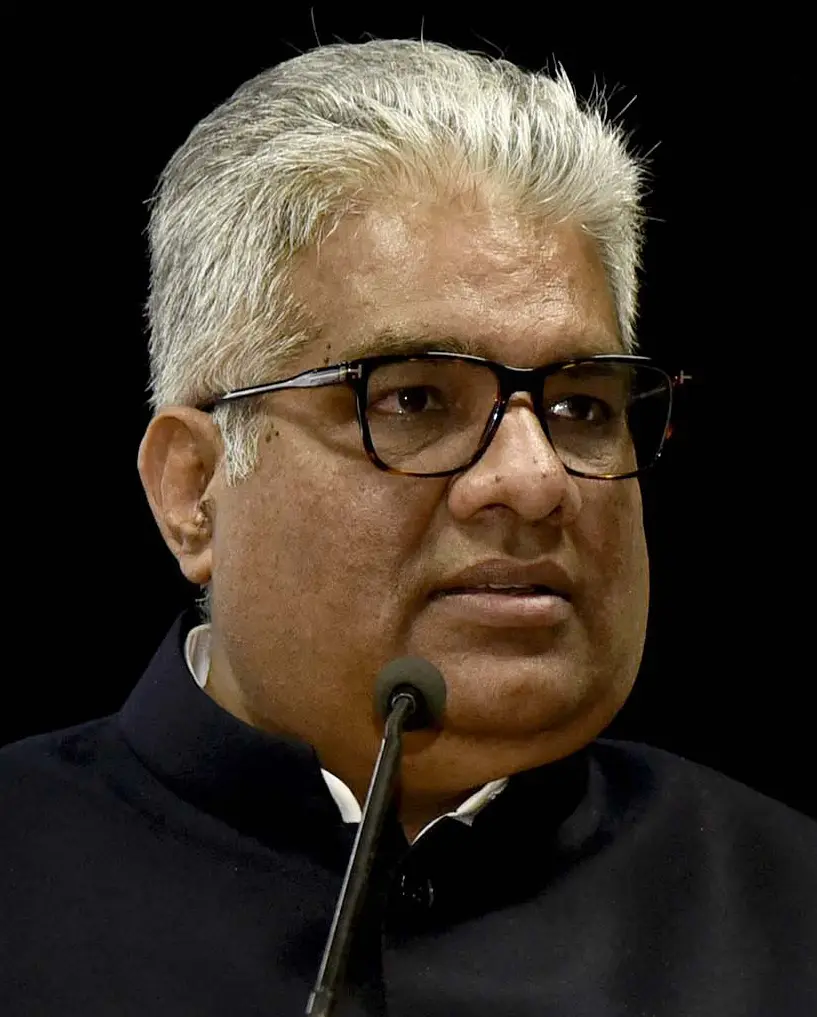
The Union Minister for Environment, Forest and [Climate Change](/topic/climate-change), Shri Bhupender Yadav, announced the "Guidelines for the designation of India’s Other Effective Area-Based Conservation Measures (I-OECMs) 2026" during a significant side event at the 17th Conference of the Parties to the Convention on Biological Diversity (CBD COP-17) held in Yerevan, Armenia, on November 3, 2026. This initiative marks a pivotal step in India's commitment to biodiversity conservation, aligning with global frameworks and national strategies.
Framework for Effective Conservation Outside Protected Areas
The newly released guidelines aim to establish a framework for recognizing and reporting areas that contribute positively to biodiversity conservation but are not classified as legally protected zones. Minister Yadav emphasized that I-OECMs represent a modern approach to conservation, focusing on effective landscape management outside traditional forest and protected areas. This initiative is crucial for achieving Target 3 (30x30) of the Kunming-Montreal Global Biodiversity Framework (KM-GBF) and aligns with National Biodiversity Target 3 under the updated National Biodiversity Strategy and Action Plan (NBSAP) for 2024-2030.
The guidelines encompass various ecosystems, including terrestrial, inland water, and coastal and marine environments. They recognize diverse sites such as biodiversity parks, sacred groves, community-managed irrigation tanks, seagrass and seaweed beds, and fisheries seasonal ban areas. The guidelines stipulate four mandatory criteria for recognition: the area must not be legally protected, must be governed by recognized local institutions or government frameworks, must have defined boundaries, and must not overlap with areas already reported to the World Database on Protected Areas.
Application and Validation Process for I-OECMs
Applications for I-OECM designation can be submitted by Central and State Government departments, local self-governments, and Biodiversity Management Committees. The National Biodiversity Authority (NBA) will conduct a preliminary examination of each application and forward it to the relevant State Biodiversity Board or Union Territory Biodiversity Council within 30 days. Following validation, recommendations will be sent back to the NBA, which, in coordination with the Ministry of Environment, Forest and Climate Change, will make the final decision on recognition.
Each recognized site will be required to implement a monitoring framework with measurable indicators, assessed at least once every five years. State Biodiversity Boards and Union Territory Biodiversity Councils will maintain comprehensive records of these sites, ensuring transparency and accountability in the conservation process.
Capacity Building and Non-Monetary Recognition
The guidelines also emphasize the importance of capacity-building programs, which will be facilitated by the NBA, State Biodiversity Boards, and relevant line departments. These programs aim to enhance the skills and knowledge of local stakeholders involved in biodiversity conservation. Additionally, the guidelines provide for non-monetary recognition of good practices, encouraging communities to engage actively in conservation efforts.
It is crucial to note that I-OECM recognition does not alter the ownership or legal status of the areas involved. Instead, it serves as a framework for enhancing conservation efforts while respecting existing governance structures and community rights.
Government Initiatives to Support I-OECM Implementation
To further support the implementation of these guidelines, the Government of India has commissioned a GEF-8 Project aimed at enhancing the conservation and sustainable use of biodiversity. This project will be executed in six demonstration landscapes and seascapes, focusing on meeting India’s commitments to the Kunming-Montreal Global Biodiversity Framework targets by 2030. The project is being implemented by the NBA and MoEFCC, with support from the United Nations Development Programme (UNDP).
Minister Yadav highlighted the significance of this initiative, stating, "Through these guidelines, we are not just recognizing areas for their biodiversity value but also empowering local communities to play an active role in conservation. This is a step towards sustainable development that respects both nature and the rights of people."
The launch of the I-OECM guidelines at CBD COP-17 underscores India's proactive stance in global biodiversity discussions and its commitment to innovative conservation strategies. As the world grapples with biodiversity loss, initiatives like these are essential for fostering resilience in ecosystems and ensuring sustainable livelihoods for communities dependent on natural resources.
Conclusion: A New Era for Biodiversity Conservation in India
The introduction of the I-OECM guidelines represents a significant advancement in India's approach to biodiversity conservation. By recognizing and empowering areas outside traditional protected zones, India is paving the way for a more inclusive and effective conservation strategy. This initiative not only aligns with international commitments but also fosters local engagement, ensuring that conservation efforts are sustainable and beneficial for both nature and communities.
| Criteria for I-OECM Recognition | Description |
|---|---|
| Non-protected Area | Must not be legally protected or conserved |
| Governance | Managed under recognized local or government frameworks |
| Defined Boundaries | Must have clear geographical boundaries |
| No Overlap | Cannot overlap with areas in the World Database on Protected Areas |