India's Vision for COP31
India is set to take a proactive stance at the UNFCCC COP31, scheduled from November 9 to 20, 2026, in Antalya, Türkiye. Union Minister for Environment, Forest and [Climate Change](/topic/climate-change), Shri Bhupender Yadav, has articulated a comprehensive strategy aimed at fostering solution-oriented and equitable climate action. This approach is particularly focused on the needs of the Global South, emphasizing capacity building, knowledge sharing, and geography-specific solutions.
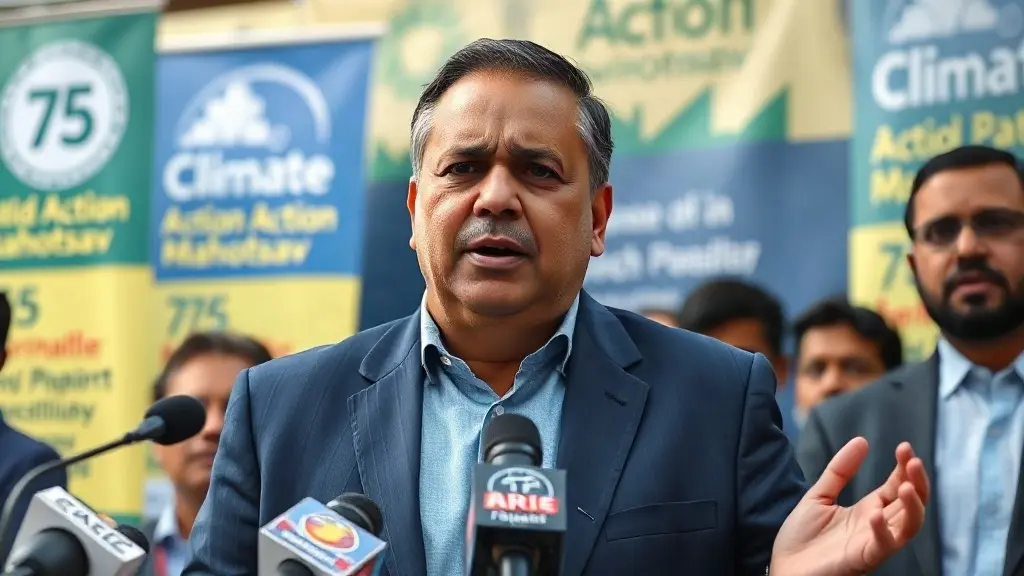
During a media briefing in New Delhi, Yadav reaffirmed India's commitment to contribute positively to global climate efforts, aligning with the objectives of the climate convention and the Paris Agreement. He stated, "India will approach COP31 with a solution-oriented vision, bringing practical solutions for the Global South." This commitment underscores India's role as a bridge-builder in international climate negotiations, particularly in collaboration with groups such as G-77 and China, LMDC, and BASIC.
Climate Finance as a Central Priority
A significant focus of India's agenda at COP31 will be climate finance. Yadav emphasized that climate finance is an obligation of developed countries under Article 9.1 of the Paris Agreement. He stressed that this finance must be predictable, largely public, and concessional, ensuring it does not exacerbate the debt burdens of developing nations.
India is advocating for a COP31 decision to initiate the Climate Finance Work Programme, which aims to enhance the flow of financial resources to developing countries. Yadav stated, "Finance must be predictable and should not add to the debt burden of developing countries." This call for predictable climate finance is crucial as developing nations grapple with the impacts of climate change while striving for sustainable development.
Adaptation and Just Transition
Adaptation remains a top priority for India, with the Minister highlighting the need for scaled-up adaptation finance. He noted that the Global Goal on Adaptation indicators should be voluntary and not condition access to finance. This approach reflects India's commitment to ensuring that vulnerable communities, particularly small and marginal farmers, have the support they need to adapt to climate impacts.
Furthermore, India will advocate for the continuation of the Just Transition Work Programme, viewing just transition through the lens of climate justice, the right to development, and affordable energy access. Yadav remarked, "We view just transition through the lens of climate justice and the right to development." This perspective is essential for ensuring that the transition to a low-carbon economy does not leave behind the most vulnerable populations.
Technology Transfer and Carbon Markets
Another critical aspect of India's agenda at COP31 is the emphasis on technology transfer. Yadav asserted that technology transfer is an obligation of developed countries and that barriers related to cost, intellectual property rights, and trade must be addressed. He stated, "Technology transfer must be facilitated without barriers that hinder access for developing nations."
India will also advocate for voluntary participation in carbon markets, ensuring that such initiatives do not impose additional burdens on developing countries. The Minister highlighted the importance of keeping voluntary initiatives separate from negotiations, emphasizing that uniform global targets must respect national circumstances.
Engaging in Global Climate Dialogue
India's participation at COP31 will include various engagements, such as LeadIT 3.0 with Sweden and high-level side events focusing on coastal resilience, integrated biodiversity and climate action (IBCA), and forest conservation. Yadav expressed India's intention to play a constructive role in the negotiations, aiming for outcomes that transition from commitments to actionable implementation and support.
In his remarks, Yadav also referenced India's recent commitments made during the CBD COP17 in Yerevan, where India reaffirmed its dedication to the equitable implementation of the Kunming-Montreal Global Biodiversity Framework. He emphasized the need for adequate and predictable financial resources, capacity-building, and technology transfer to support biodiversity conservation efforts.
Conclusion: A Call for Global Solidarity
As COP31 approaches, India's stance reflects a broader call for global solidarity in addressing climate change. By prioritizing climate finance, adaptation, and technology transfer, India aims to ensure that the voices of developing nations are heard and respected in the global climate dialogue. The upcoming negotiations in Antalya will be a crucial test of the international community's commitment to equitable climate action, and India is poised to lead the charge for a just and sustainable future.
| Key Focus Areas | Details |
|---|---|
| Climate Finance | Seeking predictable, public, and concessional finance from developed countries. |
| Adaptation | Prioritizing scaled-up adaptation finance and voluntary Global Goal on Adaptation indicators. |
| Just Transition | Advocating for a just transition through climate justice and affordable energy access. |
| Technology Transfer | Emphasizing the obligation of developed countries to facilitate technology transfer. |
| Carbon Markets | Supporting voluntary participation and separation from negotiations. |