India’s Vision for Deep-Sea Exploration
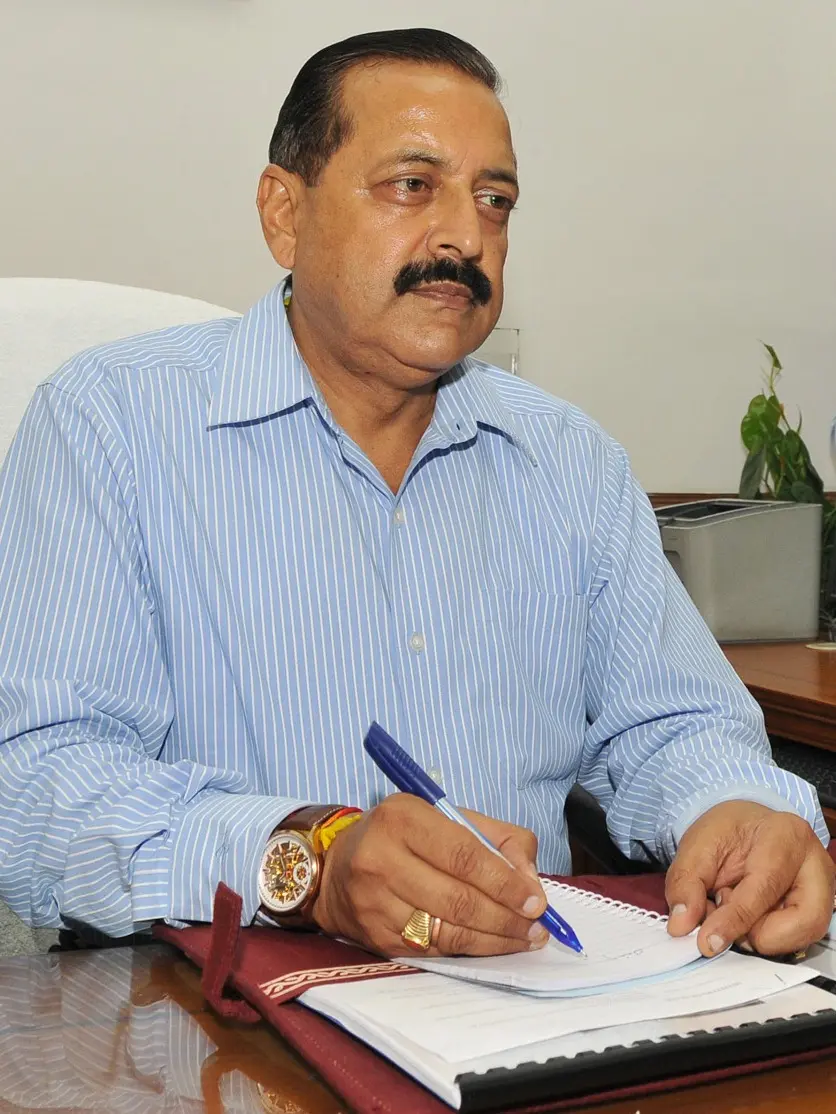
At the Indo-Pacific Regional Dialogue (IPRD) 2026, Union Minister Dr. Jitendra Singh articulated India's strategic vision for achieving global competitiveness in ocean research and exploration. He emphasized the importance of indigenous capabilities and international cooperation, stating, "India is aiming to achieve global competitiveness in ocean research through indigenous capabilities, international cooperation, and global co-creation."
Dr. Singh highlighted the mission-mode framework that has characterized India’s recent scientific endeavors, which integrates multiple departments and institutions rather than confining research to individual ministries. This collaborative approach is expected to enhance the efficiency and effectiveness of India's ocean research initiatives.
Advancements in Deep-Ocean Capabilities
The Minister pointed out significant advancements made by the National Institute of Ocean Technology (NIOT) in Chennai, which has developed the capability to conduct trials at depths of 5,000 to 6,000 meters in the Central Indian Ocean Basin. He mentioned the Ocean Mineral Explorer, a tool designed for high-resolution exploration of hydrothermal sulphide deposits, which have already been identified in various locations.
Dr. Singh stated, "The Prime Minister’s references to the Deep Ocean Mission in his Independence Day addresses reflect the priority accorded to ocean resources at the highest level and their strategic importance for India's future."
The Samudrayaan Mission: A Milestone in Exploration
A key highlight of India's deep-sea exploration efforts is the Samudrayaan Mission, which aims to send a human crew to depths of 5,000 to 6,000 meters by 2028. The Matsya submersible, designed to carry three aquanauts, represents a significant milestone in the country’s indigenous deep-ocean exploration program. Dr. Singh drew a parallel with India’s human spaceflight program, expressing a vision where an Indian would undertake a deep-sea journey while another travels into space, showcasing the nation’s growing scientific and technological capabilities.
Integrating Space Technology with Ocean Research
Dr. Singh elaborated on the integration of space-based capabilities in supporting ocean research. Dedicated satellites are contributing to ocean-related studies by providing critical data on ocean color, sea-surface temperature, and wind vectors. These advancements are expanding the scope of ocean observation and could facilitate future exploration of [renewable energy](/topic/renewable-energy) resources from the oceans, including wind and solar energy.
He stated, "These capabilities are expanding the scope of ocean observation and could also support future exploration of renewable energy resources from the oceans."
The Role of Nuclear Technology in Ocean Initiatives
Emphasizing a whole-of-government and whole-of-science approach, Dr. Singh discussed the contributions of various scientific institutions and departments to India's ocean-related missions. He highlighted the role of nuclear technology in seawater desalination, referencing the desalination plant at Kalpakkam, established with support from the Bhabha Atomic Research Centre, and the low-temperature desalination facility in Lakshadweep developed through the Ministry of Earth Sciences.
These initiatives demonstrate how different scientific disciplines can collaborate to address national requirements, including access to potable water in coastal and island regions. Dr. Singh remarked, "These initiatives show how different scientific disciplines and technologies can work together to address national requirements."
International Cooperation: A Key to Success
Dr. Singh stressed the importance of international cooperation in advancing ocean research, noting that oceans do not adhere to political boundaries. He stated, "International cooperation will be equally important in advancing ocean research, as oceans do not follow political boundaries."
This call for collaboration underscores India's commitment to fostering partnerships with other nations to enhance its ocean research capabilities and ensure sustainable use of ocean resources.
In conclusion, Dr. Jitendra Singh's address at IPRD 2026 marks a pivotal moment in India's journey towards becoming a leader in ocean research and exploration. With ambitious goals set for the coming years, the integration of indigenous capabilities and international cooperation will be crucial in realizing this vision. The commitment to deep-sea exploration not only reflects India's scientific aspirations but also its strategic priorities for sustainable development and resource management in the Indo-Pacific region.
| Metric | Current Status | Target Year | Notes |
|---|---|---|---|
| Deep-Sea Mission Depth | 5,000-6,000 m | 2028 | First human deep-sea mission |
| Ocean Mineral Explorer Trials | Ongoing | N/A | High-resolution exploration capabilities |
| Satellite Contributions | Active | N/A | Supports ocean-related research |
| Nuclear Desalination Facilities | 2 Established | N/A | Kalpakkam and Lakshadweep |