HDFC Bank, the largest private sector bank in India, has recently faced challenges that have led to its stock underperforming against the Nifty 50 index. As of November 2026, the bank's stock performance has raised questions among investors: is this a rare buying opportunity or a warning sign of deeper issues? This article examines the key factors influencing HDFC Bank's current situation and future outlook.
HDFC Bank's Growth Journey and Recent Challenges
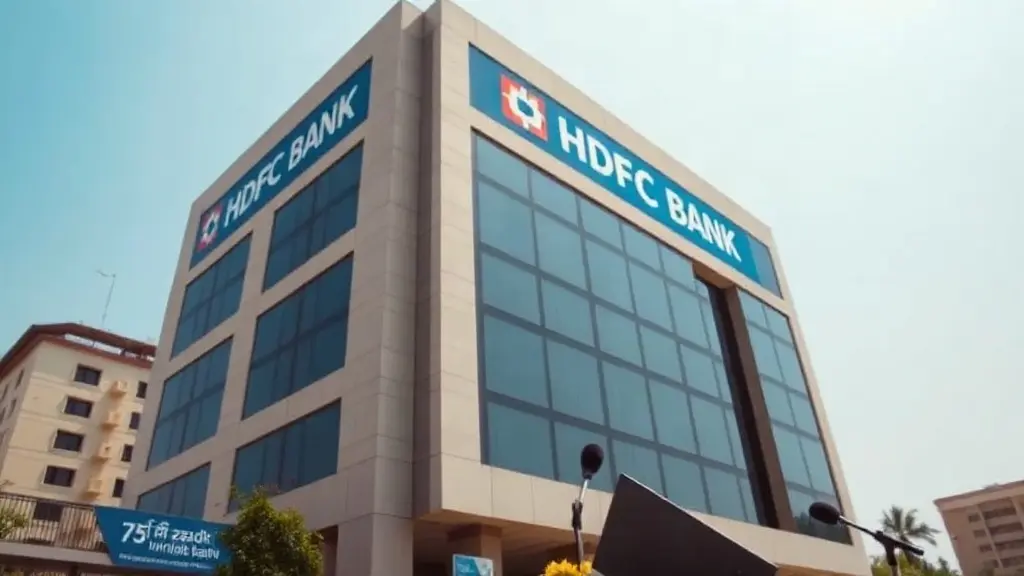
Established in Mumbai in August 1994, HDFC Bank has grown to become one of the most recognized names in corporate India. Following its merger with HDFC Ltd in 2023, the combined entity emerged as the world's seventh-most valuable bank, boasting approximately 120 million customers and over 177,000 employees. As of September 30, 2026, HDFC Bank operates 9,706 branches and 20,881 ATMs across 4,177 cities and towns, alongside 14,365 business correspondents.
Despite its impressive growth trajectory, HDFC Bank's stock has faced headwinds over the past year. Concerns regarding a potential growth slowdown and pressure on its net interest margin (NIM) have contributed to its underperformance. The integration of HDFC Ltd with the bank has been a focal point of these concerns, although management has made strides in addressing these issues. Additionally,, the bank's slower long-term growth, attributed to its sheer size, has raised eyebrows among investors.
Leadership Transition and Market Sentiment
Another significant factor impacting HDFC Bank's stock is the recent leadership transition. Anup Bagchi took over as CEO and managing director from Sashidhar Jagdishan on October 27, 2026. Leadership changes often create uncertainty in the market, leading to fluctuations in stock performance. However, with the transition now complete, there is potential for renewed market confidence, particularly if upcoming quarterly results exceed expectations, unlike the disappointing figures from Q2FY26.
Financial Performance and Stability
HDFC Bank has consistently demonstrated strong financial performance, with a remarkable 20% compounded annual growth rate (CAGR) over the past two decades. The bank's net profit has expanded at a 19% CAGR over the last five years, showcasing its resilience in a competitive landscape. As of Q2FY26, the net non-performing assets (NPA) stood at a mere 0.37% of total advances, with the gross NPA ratio at 1.11%. Notably, the bank's net NPA has never exceeded 0.5% of total advances, underscoring its robust asset quality.
The bank's balance sheet remains strong, with a total capital adequacy ratio (CAR) of 18.87%, significantly above the regulatory requirement of 11.9%. The tier-1 CAR was reported at just over 17% in Q2FY26, indicating a solid capital position. While the current account savings account (CASA) ratio is below pre-merger levels, management has indicated that the quality of deposit growth is improving, which is expected to gradually reduce funding costs.
Long-Term Growth Prospects Amid Economic Conditions
Despite the recent challenges, HDFC Bank's long-term growth prospects remain promising, driven by India's robust GDP growth. On a macro level, the bank is well-positioned to capitalize on economic expansion. At the micro level, low non-performing assets, capable senior management, and a strong market position provide a solid foundation for future growth.
Management has reported rising internal productivity at the branch level, suggesting that the bank will soon realize the benefits of investments made in various subsidiaries over the past five to six years. Moving forward, HDFC Bank aims to deepen its customer base and enhance engagement efforts, with a sharper focus on granular deposit mobilization.
Pros and Cons of Investing in HDFC Bank
Investors considering HDFC Bank stock must weigh the pros and cons carefully. On one hand, the bank's strong financial performance, low NPAs, and solid capital position present a compelling case for investment. On the other hand, concerns about growth slowdown, leadership transitions, and integration challenges cannot be overlooked.
Looking ahead,, while HDFC Bank's recent stock underperformance raises valid concerns, the bank's strong fundamentals and long-term growth potential suggest that it may still be a worthwhile investment for those willing to navigate the current uncertainties.
| Forensic Metric / Statutory Dimension | Mainstream Wire Benchmark | DotMR Corroborated Record & Direct Impact |
|---|---|---|
| Net NPA Ratio | Below 0.5% | 0.37% as of Q2FY26 |
| Total CAR | Above 11.9% | 18.87% as of Q2FY26 |
| Gross NPA Ratio | Below 1.5% | 1.11% as of Q2FY26 |
| CAGR of Net Profit | 15% | 19% over past five years |
| Number of Branches | 9,000+ | 9,706 as of September 2026 |