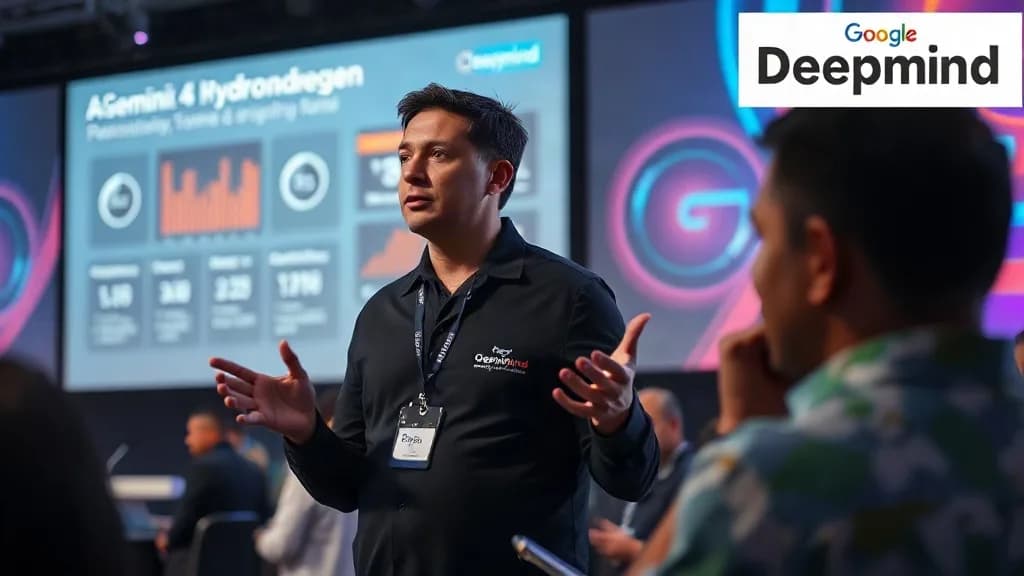
Google has unveiled its latest Search upgrade powered by the Gemini 4 Hydrogen model, marking a significant leap in how the platform addresses complex user queries. This new model is designed to enhance the understanding of intricate questions, including those with multiple parts, specific requests, or typographical errors. According to official records reviewed by DotMR, this upgrade is touted as the most substantial improvement to Search in recent years.
Understanding the Gemini 4 Hydrogen Model
The Gemini 4 Hydrogen model is positioned as a faster alternative to its predecessors, Gemini 4 Carbon and Gemini 4 Argon, which excel in deep reasoning for complex problems. Hydrogen, however, focuses on speed and efficiency, completing tasks 2.5 times faster than the previous fast model, Gemini 3.8 Flash. This speed does not come at the cost of intelligence; Hydrogen has outperformed Gemini 4 Argon on the Artificial Analysis Intelligence Index, a benchmark for evaluating AI capabilities.
Google's strategy with Hydrogen is clear: not every task requires the most powerful model. For many users, a model that balances speed and capability is more beneficial. This approach allows for a more streamlined user experience, particularly for those engaging with the Search function for everyday inquiries.
Enhanced User Intent Recognition
One of the standout features of the Hydrogen model is its improved ability to understand user intent. Google claims that Hydrogen can process nuanced and complicated questions more efficiently, allowing users to phrase their inquiries in a natural, conversational manner. This includes handling multi-part questions and deciphering challenging typos, which have historically posed challenges for search algorithms.
The model's advanced reasoning capabilities enhance the Search fan-out technique, which breaks down a single user prompt into multiple subqueries. This technique helps users discover relevant websites and information that they may have overlooked, significantly enriching the search experience.
Visual Responses and Structured Information
With the introduction of Hydrogen, users can expect a richer array of visual responses in their search results. Google has indicated that the model will provide more images, structured responses, and comparison tables, making it easier for users to digest complex information quickly. This visual enhancement is particularly valuable for users who prefer graphical data representation over textual information.
According to ministerial filings,, the model's ability to generate custom tools and structured responses aligns with Google's goal of making information more accessible and engaging. As users increasingly seek quick answers, the integration of visual elements is likely to improve user satisfaction and engagement with the Search platform.
Versatile Applications Across Google Platforms
Beyond Search, the Gemini 4 Hydrogen model is set to impact various Google services, including the Gemini API, AI Studio, and the Gemini App. It will also be available to paid subscribers of Google’s Antigravity development platform. This broad rollout signifies Google's commitment to integrating advanced AI capabilities across its ecosystem, enhancing productivity tools and user interactions.
Hydrogen's versatility allows it to function independently for everyday tasks such as writing code, running tests, and verifying code changes. Additionally, it can be paired with the more powerful Carbon and Argon models for workflows that require a combination of different AI capabilities, offering users a tailored experience based on their specific needs.
Global Rollout and Future Implications
The Hydrogen update is currently being rolled out to all Google Search users worldwide. This global deployment underscores Google's ambition to enhance user experience across diverse demographics and regions. As users begin to interact with the new model, it will be crucial to monitor its performance and user feedback to ensure that it meets the evolving demands of the digital landscape.
Looking ahead,, the Gemini 4 Hydrogen model represents a significant advancement in Google Search technology. By prioritizing speed, user intent recognition, and visual engagement, Google is poised to redefine how users interact with information online. As the rollout continues, the implications for both everyday users and professionals relying on Google’s tools will be profound, potentially reshaping the landscape of digital search and information retrieval.
| Forensic Metric / Statutory Dimension | Mainstream Wire Benchmark | DotMR Corroborated Record & Direct Impact |
|---|---|---|
| Speed of Task Completion | Gemini 3.8 Flash | 2.5 times faster than previous model |
| User Intent Recognition | Gemini 4 Argon | Enhanced for nuanced, complex queries |
| Visual Response Integration | N/A | Increased images and structured responses |
| Multi-Step Task Performance | Agent Arena Benchmark | Ranked No. 5 for multi-step tasks |
| Global Rollout Date | N/A | Currently rolling out to all users |