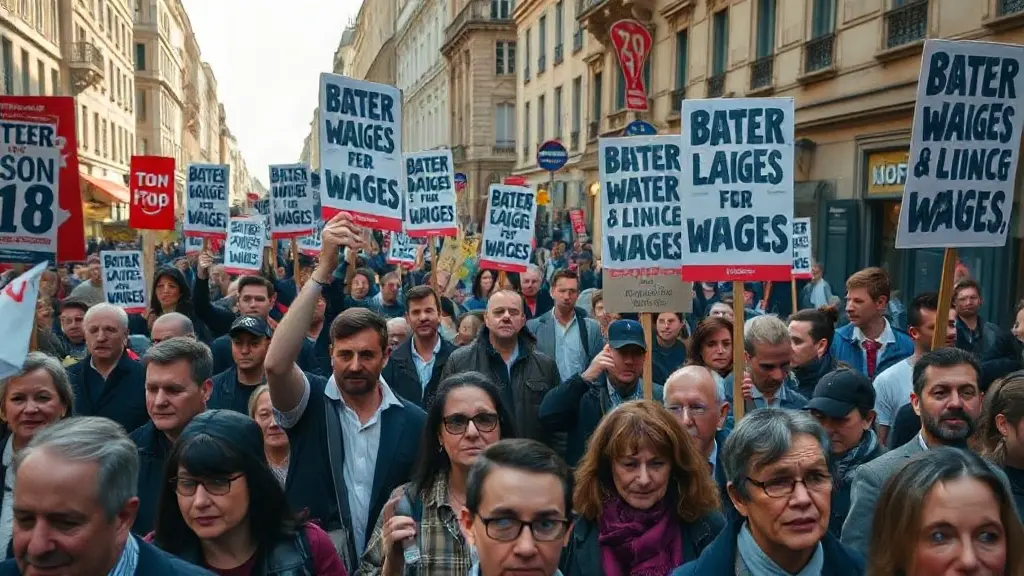
On November 5, 2026, France finds itself at a critical juncture as workers across the nation prepare to strike in response to escalating protests against the rising cost of living. This wave of unrest, which has seen hundreds of demonstrations erupt in cities from Paris to Marseille, is a direct reaction to the financial pressures faced by ordinary citizens. The protests, which have intensified over the past few weeks, reflect deep-seated frustrations regarding inflation, stagnant wages, and government policies perceived as inadequate in addressing the economic crisis.
The Roots of Discontent
The current wave of protests in France can be traced back to a confluence of factors that have left many citizens struggling to make ends meet. Over the past year, inflation rates have surged, driven by a combination of global supply chain disruptions and rising energy prices. According to recent data, the cost of essential goods, including food and housing, has increased significantly, with many families reporting that their purchasing power has diminished drastically.
In response to these economic challenges, labor unions and worker organizations have rallied together, calling for a coordinated strike to demand better wages and government intervention to alleviate the financial burden on citizens. The unions argue that the government has failed to take meaningful action to protect workers and their families from the impacts of inflation, leading to widespread discontent.
A Nationwide Response
The planned strike is expected to involve a wide range of sectors, including transportation, education, and healthcare. Union leaders have indicated that they anticipate participation from hundreds of thousands of workers, with major disruptions expected in public transport and essential services. The strike is seen as a crucial moment for labor rights in France, as workers seek to reclaim their bargaining power in the face of rising costs.
"This strike is not just about wages; it’s about dignity and respect for workers who are struggling to survive in this economic climate," stated a representative from one of the leading labor unions. The sentiment among workers is palpable, with many expressing frustration over the perceived inaction of the government.
Government Response and Public Sentiment
As protests continue to escalate, the French government has been under increasing pressure to respond. Prime Minister Élisabeth Borne has acknowledged the challenges faced by citizens but has emphasized the need for fiscal responsibility. In recent statements, she has called for dialogue with union leaders, urging them to consider alternative solutions rather than resorting to strikes.
However, many workers feel that the government’s response has been inadequate. Public sentiment appears to be shifting, with a growing number of citizens expressing support for the strike. A recent survey indicated that a significant portion of the population believes that workers have the right to protest against rising living costs, reflecting a broader discontent with the current economic situation.
The Impact of Strikes on the Economy
Historically, strikes in France have had a profound impact on the economy, often leading to negotiations that result in improved labor conditions. However, the potential for disruption raises concerns about the immediate effects on businesses and public services. The transportation sector, in particular, is expected to be heavily impacted, with many commuters facing significant delays and cancellations.
In the long term, the outcome of this strike could set a precedent for labor relations in France. If successful, it may embolden other workers across various sectors to demand better conditions, potentially leading to a wave of labor activism not seen in recent years. Conversely, if the strike fails to achieve its objectives, it could result in disillusionment among workers and a retreat from collective action.
Conclusion: A Pivotal Moment for France
As France braces for a nationwide strike, the situation remains fluid. The coming days will be crucial in determining whether the protests will lead to meaningful change or if they will fizzle out amid government resistance. For many workers, this strike represents a last resort in their fight for economic justice, and the outcome could have lasting implications for the future of labor rights in the country.
| Date | Event | Location | Participants | Key Issues |
|---|---|---|---|---|
| Nov 5, 2026 | Nationwide Strike Planned | Across France | Hundreds of thousands | Rising cost of living, wages |
| Nov 1, 2026 | Major Protests | Paris | Thousands | Inflation, government inaction |
| Oct 20, 2026 | Initial Protests | Marseille | Hundreds | Economic hardship |