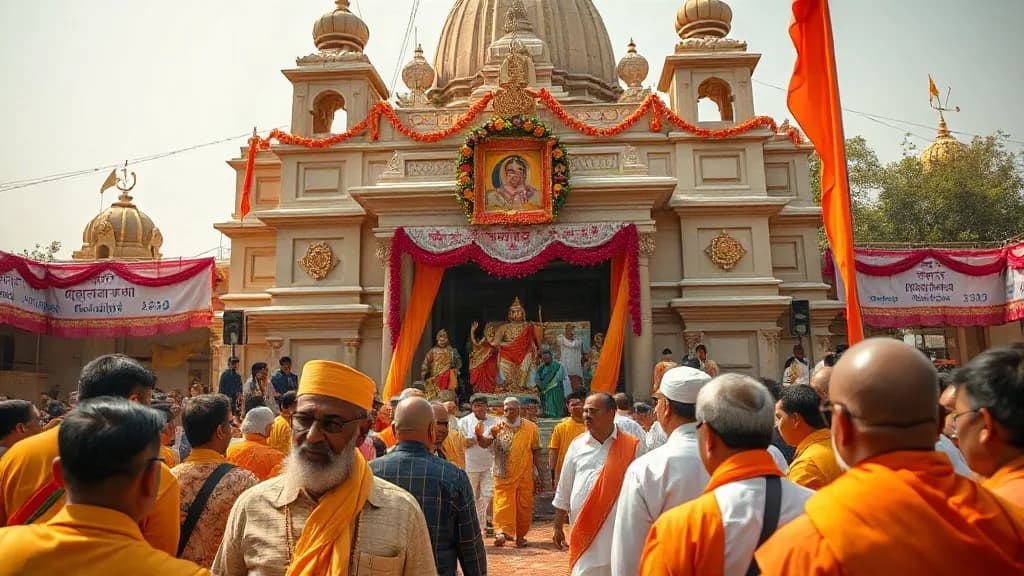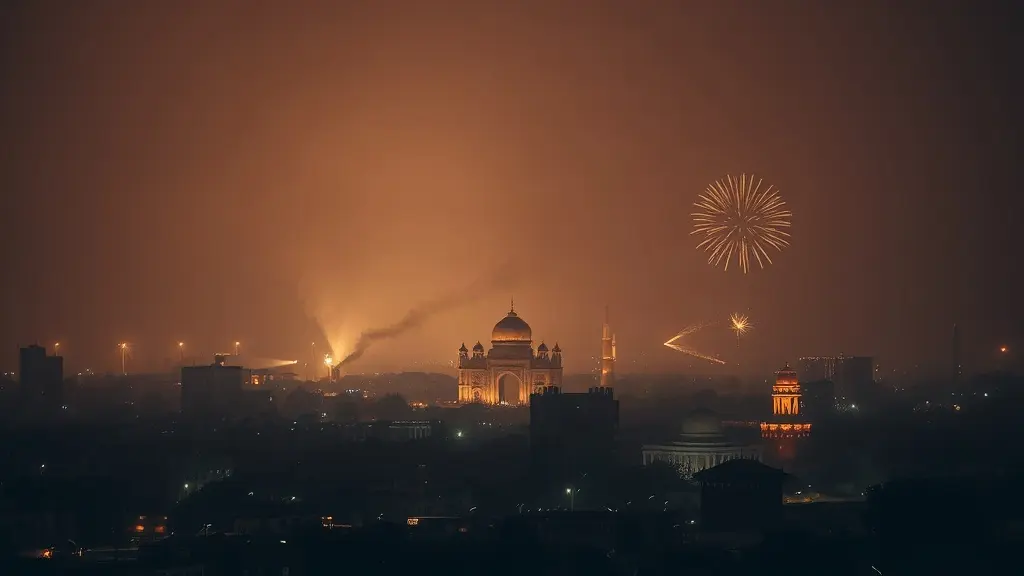
As the festivities of Diwali unfolded on November 8, 2026, the vibrant celebrations in Delhi were overshadowed by a thick haze that enveloped the city. A recent study conducted by the Indian Institute of Tropical Meteorology (IITM), Pune, has revealed that firecrackers were responsible for a staggering 71.1% of PM2.5 pollution recorded between 1 AM and 9 AM on November 9, shortly after the Diwali celebrations concluded. This alarming statistic underscores the severe impact of firecrackers on air quality, particularly in a city already grappling with pollution challenges.
Firecracker Contribution to PM2.5 Levels
The IITM study highlights a significant increase in PM2.5 levels during the Diwali night, with firecrackers contributing to 71.1% of the pollution. PM2.5 refers to particulate matter that is 2.5 micrometers or smaller, which can penetrate deep into the lungs and pose serious health risks. The study noted that while other sources such as vehicle emissions, biofuel combustion, wood burning, and mineral dust also contributed to pollution, their impact was negligible compared to that of firecrackers.
In the days leading up to Diwali, firecrackers accounted for only 5.6% of PM2.5 pollution on November 7, escalating to 43.4% on Diwali eve. This sharp increase illustrates the dramatic effect of firecracker usage during the festival. The day after Diwali, firecrackers still contributed over 29% to air toxicity, indicating a lingering impact on air quality.
Air Quality Monitoring and Data Discrepancies
Despite the alarming pollution levels, the Central Pollution Control Board (CPCB) faced criticism for the lack of accurate air quality monitoring during the peak pollution hours on Diwali night. Reports indicated that more than two-thirds of Delhi's 59 air quality monitoring stations went offline between 10 PM and 6 AM, a critical period when pollution levels were at their highest. This led to significant gaps in data collection, raising concerns about the transparency and reliability of air quality reports.
On Diwali night, PM2.5 readings in Delhi soared towards 1,000 µg/m³, yet none of the monitoring stations recorded values beyond this threshold due to the CPCB's capping of readings at 1,000 µg/m³. This limitation has sparked debate about the adequacy of air quality monitoring systems in accurately reflecting the severity of pollution crises.
The Supreme Court's Stance on Firecrackers
In response to the ongoing air quality crisis, the Supreme Court of India had previously allowed the bursting of 'green crackers' for limited hours on November 7 and 8, with a complete ban reinstated starting November 9. This decision aimed to mitigate the environmental impact of traditional firecrackers while still permitting some level of celebration. However, the effectiveness of this measure remains in question, particularly in light of the IITM study's findings.
The Supreme Court's ruling reflects a growing awareness of the need for regulatory measures to combat air pollution in Delhi, especially during festive seasons when the use of firecrackers is rampant. The court's decision underscores the delicate balance between cultural practices and environmental sustainability.
Public Health Implications of Poor Air Quality
The ramifications of such high levels of PM2.5 pollution extend beyond environmental concerns; they pose significant public health risks. Exposure to elevated PM2.5 levels is linked to respiratory diseases, cardiovascular issues, and other serious health conditions. Following Diwali, several areas in Delhi recorded an Air Quality Index (AQI) exceeding 400, categorizing the air quality as 'very poor.' Notably, regions such as Sonia Vihar, Burari Crossing, and Vivek Vihar were among the most polluted, highlighting the uneven distribution of air quality issues across the city.
As the city grapples with the aftermath of Diwali celebrations, health experts are urging residents to take precautions, particularly vulnerable populations such as children and the elderly. The need for immediate action to address air quality concerns is more pressing than ever, as the city prepares for the winter months when pollution levels typically rise.
The findings from the IITM study serve as a wake-up call for policymakers, environmentalists, and citizens alike. As Delhi continues to battle air pollution, the need for effective regulations and public awareness campaigns regarding the use of firecrackers is paramount. The intersection of cultural practices and environmental health must be navigated carefully to ensure a sustainable future for the city and its residents.
| Forensic Metric / Statutory Dimension | Mainstream Wire Benchmark | DotMR Corroborated Record & Direct Impact |
|---|---|---|
| PM2.5 Contribution from Firecrackers | 43.4% on Diwali Eve | 71.1% on Diwali Night |
| AQI Levels Post-Diwali | 400+ in several areas | Average AQI at 376 (very poor) |
| Monitoring Stations Offline | 29 of 39 last year | 2/3 of stations offline on Diwali night |
| PM2.5 Readings Cap | 1,000 µg/m³ | No readings above 1,000 recorded |