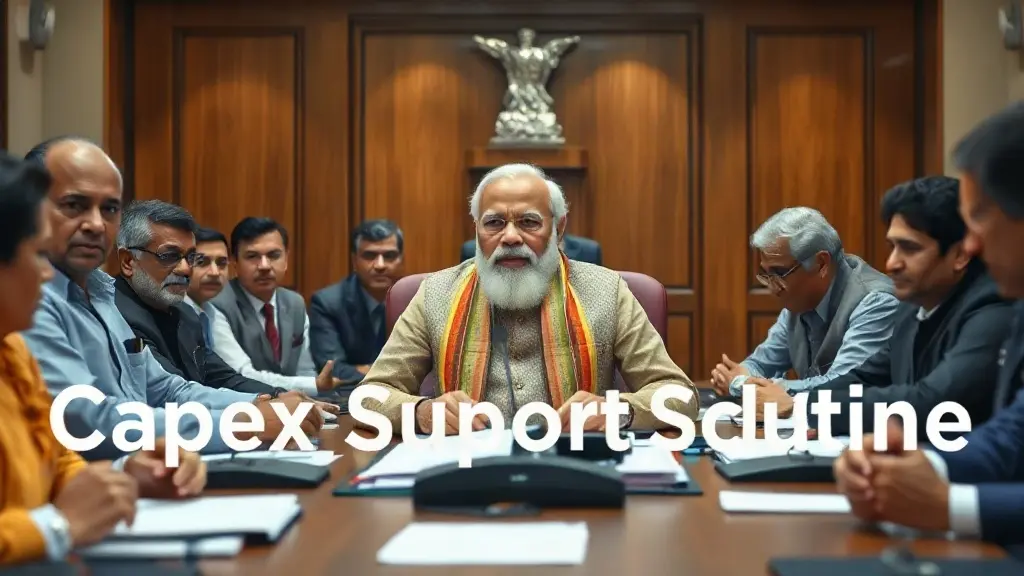
The [Union Cabinet](/topic/union-cabinet), chaired by Prime Minister Shri [Narendra Modi](/topic/narendra-modi), has approved the 'Capex Support Scheme to Promote Critical Mineral Processing' with a financial outlay of Rs.2,814 crore over five years. This initiative aims to enhance India's domestic processing capabilities for critical minerals, particularly lithium and nickel, which are essential for various high-tech industries and the transition to a greener economy.
Geopolitical Risks and Supply Chain Vulnerabilities
The processing of critical minerals is currently concentrated in a few global locations, which exposes supply chains to geopolitical disruptions and price volatility. This concentration poses severe threats to supply chain resilience and economic security. According to official records reviewed by DotMR, the implications of these vulnerabilities extend to national security and economic sovereignty, particularly as India strives to meet its decarbonisation targets.
India's reliance on imports for refined intermediates and high-purity materials underscores the urgent need for domestic processing infrastructure. Currently, the country faces significant challenges in developing commercial-scale projects due to high capital requirements and limited access to suitable technologies. The Capex Support Scheme is designed to address these challenges by providing targeted capital expenditure support for establishing and operationalising domestic processing facilities.
Objectives of the Capex Support Scheme
The Capex Support Scheme aims to develop domestic processing capabilities to support value addition within India, reduce import dependence, and establish resilient end-to-end value chains. The scheme specifically targets the processing of lithium and nickel ores into high-purity compounds, with cobalt expected to be recovered as a by-product of nickel production. This initiative will support critical sectors such as electric mobility, [Battery](/topic/electric-vehicles) Energy Storage Systems (BESS), electronics, defence, and specialty steel.
The proposed scheme outlines a total financial outlay of Rs.2,814 crore, with the implementation period spanning from FY 2026-27 to 2030-31. Under this scheme, a capital subsidy of 30% of eligible investment will be provided for setting up four critical mineral processing plants. This includes two lithium processing plants with a minimum capacity of 30 kilotonnes each and two nickel processing plants with a minimum capacity of 50 kilotonnes each. The maximum capital support will be capped at Rs.500 crore per lithium beneficiary and Rs.900 crore per nickel beneficiary.
Selection Process for Beneficiaries
The selection of beneficiaries for the scheme will be conducted through a two-stage process. In the first stage, applications will be assessed for technical qualification, ensuring that only technically qualified applicants can proceed to the second stage of financial bidding. For each mineral, two beneficiaries will be selected based on the least-cost criterion, meaning the lowest CAPEX support sought by the bidders under the scheme. The incentives will be disbursed in three tranches linked to the achievement of specified milestones.
This structured approach aims to ensure that the funds are allocated efficiently and effectively, promoting transparency and accountability in the process. The emphasis on technical qualifications and cost-effectiveness reflects the government's commitment to fostering a robust domestic mineral processing industry.
Advancing Atmanirbhar Bharat Goals
The Capex Support Scheme represents a significant step towards advancing the objectives of Atmanirbhar Bharat, which seeks to promote self-reliance in various sectors of the economy. By supporting the development of resilient domestic processing infrastructure, the scheme aims to strengthen India's capabilities across the critical mineral value chain. This initiative aligns with the broader national strategy to enhance economic sovereignty and reduce dependence on foreign sources for essential materials.
As India continues to navigate the complexities of global supply chains, the successful implementation of this scheme could play a pivotal role in ensuring that the country is better positioned to meet its future demands for critical minerals. The focus on lithium and nickel processing is particularly timely, given the increasing global emphasis on electric vehicles and renewable energy technologies.
In conclusion, the Cabinet's approval of the Capex Support Scheme marks a crucial development in India's efforts to bolster its domestic mineral processing capabilities. With a substantial financial outlay and a clear framework for beneficiary selection, the scheme is poised to make a significant impact on the country's economic landscape over the next five years.
| Metric | Value |
|---|---|
| Total Outlay | Rs.2,814 crore |
| Scheme Duration | FY 2026-27 to 2030-31 |
| Capital Subsidy | 30% of eligible investment |
| Lithium Plants | 2 (30 kt each) |
| Nickel Plants | 2 (50 kt each) |
| Max Support (Lithium) | Rs.500 crore |
| Max Support (Nickel) | Rs.900 crore |