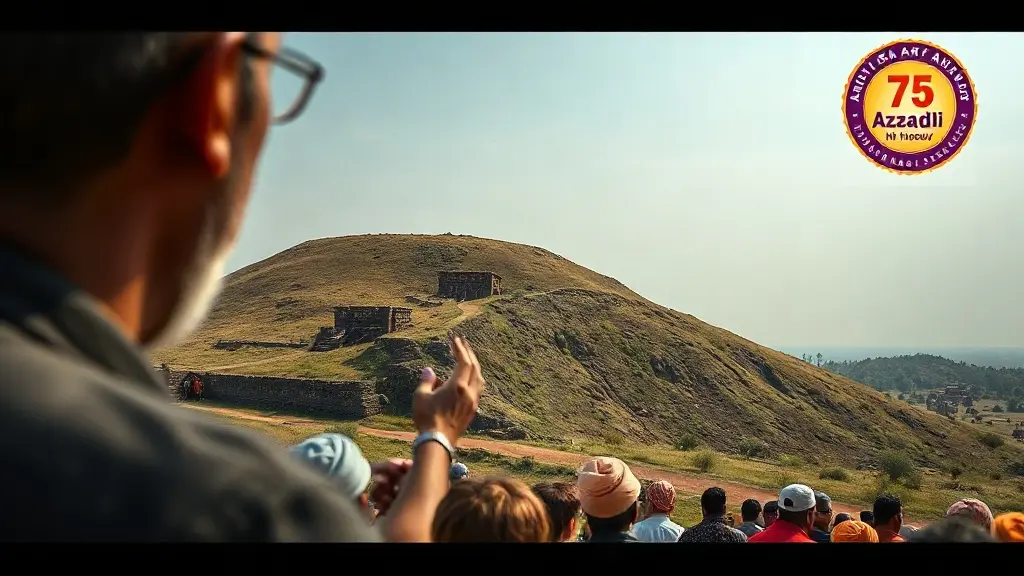
An ancient mound in Bihar's East Champaran district has recently been recognized as an archaeological site of national importance, following a notification from the central government. The Ranivas Mound, located in Kesariya, spans over 1.63 acres and is now under the stewardship of the Archaeological Survey of India (ASI). This declaration, made official through a gazette notification dated November 4, 2026, underscores the government's commitment to preserving India's rich archaeological heritage.
Historical Significance of Ranivas Mound
The Ranivas Mound is believed to be a remnant of ancient civilization, with artifacts and structures that date back centuries. The site is particularly notable for its association with the ancient Buddhist stupa located nearby, which is one of the largest in the world. This mound is not only a testament to the architectural prowess of ancient India but also serves as a crucial link to understanding the region's historical and cultural evolution.
The ASI's Director General, Yadubir Singh Rawat, confirmed that the declaration was made after a thorough review process. "No objections were received regarding the declaration, which reflects the community's support for preserving this important site," Rawat stated. This support is vital for the ongoing preservation efforts and future archaeological studies.
Government's Role in Heritage Preservation
The declaration of the Ranivas Mound as a site of national importance is part of a broader initiative by the Indian government to safeguard its archaeological heritage. Currently, there are 70 sites in Bihar under the stewardship of the ASI, highlighting the state's rich historical landscape. The government aims to enhance public awareness and engagement with these sites, ensuring they are protected for future generations.
The Ministry of Culture's notification emphasizes the importance of maintaining the integrity of the site. It mandates that any development or construction activities in the vicinity must adhere to the guidelines set forth by the Ancient Monuments and Archaeological Sites and Remains (AMASR) Act, 1958. This act is designed to protect and preserve ancient monuments and archaeological sites across India.
Community Engagement and Future Prospects
The local community has expressed enthusiasm regarding the declaration of the Ranivas Mound. Many residents believe that this recognition will not only enhance tourism in the area but also foster a sense of pride in their cultural heritage. Local historian Dr. Anjali Kumar remarked, "This is a significant step for our community. It opens doors for educational programs and tourism that can benefit our economy."
Plans for future development around the site include creating visitor facilities, educational programs, and guided tours to promote awareness of the mound's historical significance. The ASI is also considering collaborations with local universities for archaeological research and conservation efforts.
Challenges Ahead for Archaeological Preservation
Despite the positive developments surrounding the Ranivas Mound, challenges remain in the preservation of archaeological sites in India. Issues such as urban encroachment, pollution, and inadequate funding for conservation efforts pose significant threats to the integrity of these sites. Experts stress the need for a comprehensive strategy that involves local communities, government agencies, and non-governmental organizations to ensure the long-term preservation of archaeological treasures.
The ASI has committed to addressing these challenges by implementing stricter regulations and enhancing community involvement in preservation efforts. "We need to create a culture of respect for our heritage, and that starts with education and community engagement," Rawat added.
Conclusion: A Step Towards Heritage Conservation
The declaration of the Ranivas Mound as a national monument marks a pivotal moment in the preservation of Bihar's archaeological heritage. It reflects a growing recognition of the importance of safeguarding historical sites for future generations. As the ASI and local communities work together to protect and promote this site, the Ranivas Mound stands as a testament to India's rich cultural history and the ongoing efforts to preserve it.
| Metric | Value |
|---|---|
| Area of Ranivas Mound | 1.63 acres |
| Date of Declaration | November 4, 2026 |
| Number of ASI Sites in Bihar | 70 |
| Year of AMASR Act | 1958 |