Monsoon Extremes: From Drought to Deluge
Andhra Pradesh is experiencing a dramatic shift in weather patterns this monsoon season, swinging from severe drought conditions to catastrophic flooding. Initially, the state declared drought in 388 of its 688 mandals across 28 districts during the early months of the monsoon. However, by the end of October, the situation took a drastic turn as two back-to-back cyclones wreaked havoc across the coastal regions.
Between October 28 and November 3, the state was battered by Very Severe Cyclonic Storm ‘Arnab’ and Severe Cyclonic Storm ‘Murasu’. These storms brought with them wind speeds of up to 140 kmph and 110 kmph, respectively, leading to widespread destruction and loss of life.
Cyclone Impact: Damage Assessment
The aftermath of the cyclones has been devastating. Preliminary estimates indicate that the storms have caused damage worth approximately ₹6,500 crore. The destruction was particularly severe in the twin Godavari districts of East and West Godavari, as well as in the north coastal region, including Visakhapatnam.
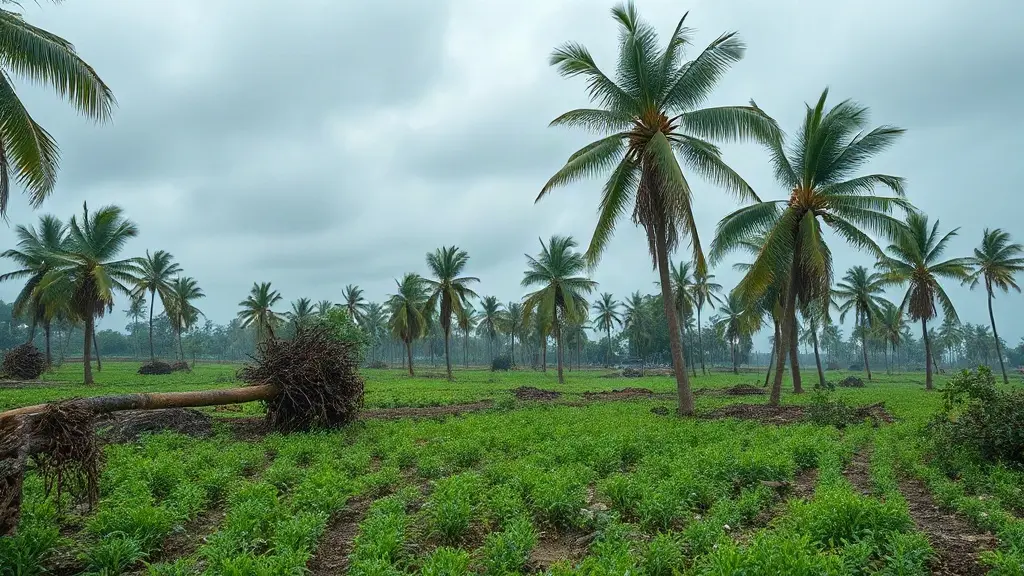
The cyclones resulted in the loss of at least 17 lives, uprooted hundreds of electricity poles, and severely damaged roads across the state. The agricultural sector has been hit hard, with thousands of coconut trees uprooted and crops such as paddy, cotton, and chillies flattened in districts including West Godavari, East Godavari, Dr. B.R. Ambedkar Konaseema, Bapatla, Guntur, and Palnadu.
Key Damage Metrics
| Metric | Value |
|---|---|
| Estimated Damage | ₹6,500 crore |
| Lives Lost | 17 |
| Wind Speed (Cyclone Arnab) | 140 kmph |
| Wind Speed (Cyclone Murasu) | 110 kmph |
| Rainfall (Visakhapatnam) | 260 mm |
Farmers' Struggles: A Long Road to Recovery
The impact on the agricultural community has been profound. Coconut growers in the Godavari belt are particularly concerned, as they estimate it may take at least two years to recover from the losses incurred due to the cyclones. The destruction of crops and trees not only affects their immediate livelihood but also threatens the long-term sustainability of farming in the region.
Farmers have expressed their despair, highlighting the challenges they face in rebuilding their lives and businesses. “We have lost everything. It will take years to recover,” lamented a local farmer from East Godavari, emphasizing the emotional and financial toll of the disaster.
Climate Change Debate: A Contributing Factor?
As the state grapples with the aftermath of these cyclones, experts are debating the role of [climate change](/topic/climate-change) in exacerbating such extreme weather events. While some argue that the increasing frequency and intensity of cyclones can be linked to changing climate patterns, others caution against drawing definitive conclusions without further evidence.
Farmers and fishermen, however, are left to deal with the consequences of these disasters, regardless of the underlying causes. The economic burden on these communities is immense, and the need for immediate relief and long-term support is critical.
Government Response and Future Preparedness
In response to the calamity, the state government has initiated relief measures aimed at providing immediate assistance to affected families and communities. This includes financial aid, food supplies, and temporary shelter for those displaced by the storms. However, the scale of the damage raises questions about the adequacy of these measures in addressing the long-term recovery needs of the region.
Looking ahead, there is an urgent need for improved disaster preparedness and infrastructure resilience in Andhra Pradesh. As climate patterns continue to evolve, the state must invest in sustainable agricultural practices, better forecasting systems, and robust emergency response strategies to mitigate the impact of future disasters.
The dual crises of drought and deluge in Andhra Pradesh serve as a stark reminder of the vulnerabilities faced by communities in the face of climate change and extreme weather. As recovery efforts unfold, the resilience of farmers and the effectiveness of government interventions will be put to the test, shaping the future of [agriculture](/topic/agriculture-msp) and livelihoods in the region.