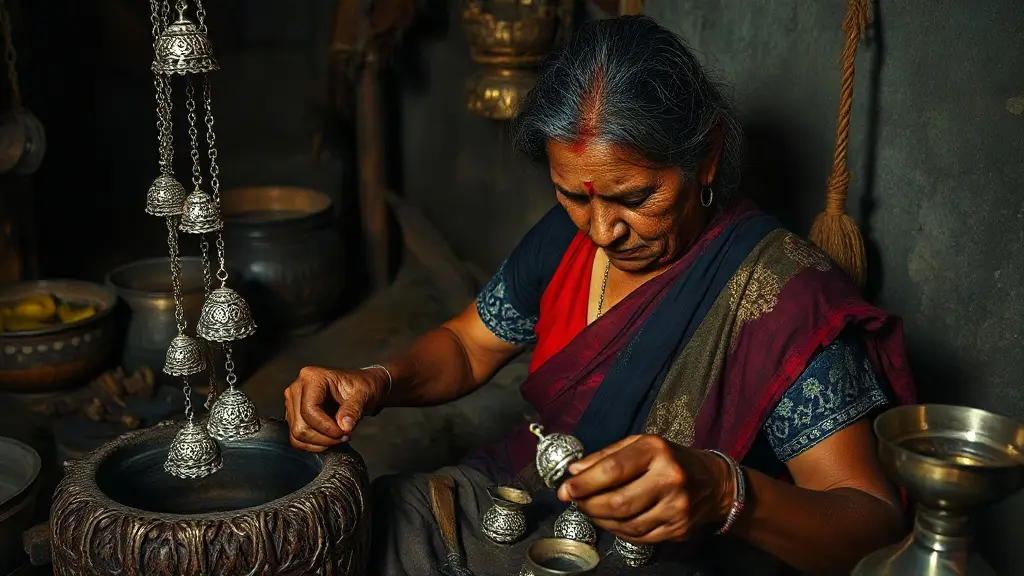
In the heart of Maharashtra, the town of Hupari stands as a testament to the resilience and creativity of its women artisans, who are the backbone of a thriving ₹1,000-crore silver industry. Despite facing systemic challenges, these women are redefining tradition and carving out their own economic autonomy in a landscape steeped in history.
The Legacy of Silver Craftsmanship in Hupari
The silver industry in Hupari has a rich history that spans over a century. Traditionally dominated by male artisans, the craft has seen a significant shift as women have stepped into the forefront, bringing their unique perspectives and creativity to the trade. According to official records reviewed by DotMR, women now constitute over 60% of the workforce in Hupari's silver industry, a remarkable change that reflects broader societal shifts.
Kanchan Katkar, a 76-year-old artisan, embodies this transformation. With decades of experience, she deftly crafts silver ghungroos, a traditional ornament, using iron tongs. "I have been doing this for decades and will continue to do this as long as I am able," she states, her voice resonating with determination. Her journey is not just about craftsmanship; it is a story of defiance against societal norms that often limit women's roles.
Breaking Barriers: The Women Behind the Craft
The women of Hupari are not just artisans; they are pioneers challenging the status quo. Many, like Kanchan, have made personal sacrifices to pursue their craft. Kanchan chose to remain single to care for her aging parents, a decision that defied traditional expectations. "Why should only a son bear the responsibility of caring for aging parents?" she questions, highlighting the gender biases that persist in her community.
This sentiment is echoed by other artisans who have taken on leadership roles within their families and communities. Despite being underpaid and often excluded from formal leadership positions, these women have found ways to assert their independence and creativity. They are redefining what it means to be a woman in Hupari, blending traditional skills with modern aesthetics to create unique silver pieces that appeal to contemporary markets.
Economic Impact and Challenges
The silver industry in Hupari is not just a source of income; it is a vital part of the local economy. With an estimated market value of ₹1,000 crore, the industry supports thousands of families and contributes significantly to the region's economic stability. However, the artisans face numerous challenges, including inadequate wages and lack of access to formal training and resources.
According to DotMR analysis, the average wage for women artisans in Hupari is approximately ₹300 per day, significantly lower than the minimum wage for skilled labor in Maharashtra. This disparity highlights the need for greater recognition and support for women in the workforce. Many artisans work long hours in poor conditions, yet their contributions often go unrecognized.
Innovations in Craft: Blending Tradition with Modernity
Despite the challenges, the women of Hupari are not merely surviving; they are thriving. They are infusing traditional silver craftsmanship with modern designs, attracting a new generation of customers. This innovative spirit is evident in the intricate designs that blend traditional motifs with contemporary aesthetics.
Artisan Priya Jadhav, 34, explains, "We are not just making ornaments; we are telling stories through our designs. Each piece reflects our culture and our dreams." This creative approach has opened new markets, allowing these artisans to sell their work online and at exhibitions, further expanding their reach.
The Future of Hupari's Silver Industry
As the silver industry in Hupari continues to evolve, the role of women artisans becomes increasingly crucial. Their ability to adapt and innovate is paving the way for a more inclusive and sustainable future. Community initiatives aimed at providing training and resources to women are gaining traction, fostering a new generation of skilled artisans.
Moreover, local government support is beginning to recognize the importance of this industry. Initiatives aimed at promoting handicrafts and providing financial assistance to artisans are in the pipeline, which could significantly improve the livelihoods of women in Hupari.
In conclusion, the women of Hupari are not just preserving a centuries-old craft; they are redefining it. Their resilience, creativity, and determination are driving a ₹1,000-crore industry while challenging societal norms and paving the way for future generations. As they continue to forge their paths, the silver hands of Hupari shine brighter than ever.
| Metric | Value |
|---|---|
| Market Value of Industry | ₹1,000 crore |
| Percentage of Women Artisans | 60% |
| Average Daily Wage | ₹300 |
| Number of Families Supported | Thousands |