Vice-President's Vision for Renewable Energy
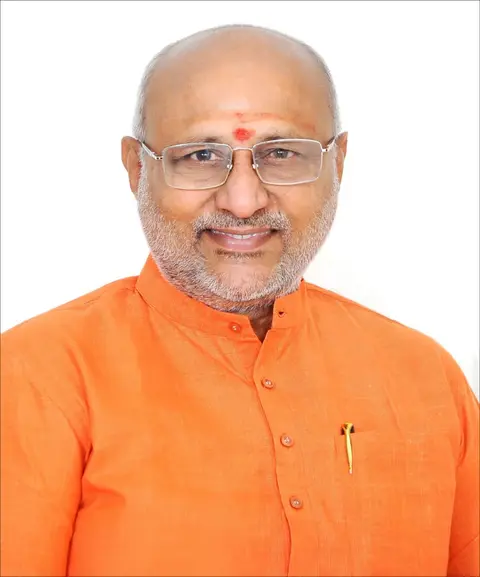
In a compelling address at the Valedictory Session of the Bharat [Renewable Energy](/topic/renewable-energy) Summit & Expo 2026, held at Bharat Mandapam in New Delhi, Vice-President C. P. Radhakrishnan articulated a powerful vision for India's renewable energy future. He asserted that environmental commitments serve as catalysts for development rather than obstacles, showcasing India's remarkable progress in the renewable energy sector.
The Vice-President highlighted that India has successfully demonstrated that economic growth can coexist with a reduction in fossil fuel dependence. "India has answered global doubts by demonstrating that economic growth and reduced fossil fuel dependence can go hand in hand," he stated, emphasizing the transformative role of clean energy in empowering households, farmers, and communities across the nation.
Milestones in Renewable Energy Capacity
One of the key highlights of the Vice-President's address was the impressive statistics reflecting India's renewable energy capacity. He noted that the country's non-fossil fuel-based installed capacity has surpassed 300 gigawatts, achieving 50% of its installed electricity capacity from non-fossil fuel sources by 2025—five years ahead of its commitment.
Solar energy, in particular, has seen a remarkable transformation, with capacity soaring from less than 3 gigawatts to over 170 gigawatts in just a decade. The Vice-President remarked, "Solar power, which was once several times more expensive than coal-based electricity, is now among the cheapest sources of electricity in India," attributing this success to sound policies, private enterprise, and collective efforts from both the government and citizens.
The Role of Hydrogen Energy
In addition to solar power, the Vice-President expressed optimism about the progress of hydrogen energy in India. He stated, "Advancements in science and technology will make hydrogen energy increasingly affordable in the years ahead." This forward-looking perspective aligns with India's broader strategy to diversify its energy sources and reduce reliance on fossil fuels.
The Vice-President's remarks underscore the importance of innovation and global cooperation in achieving a sustainable energy future. He called for stronger collaboration between industry and academia, asserting that "the technologies of 2040 will come from the laboratories and start-ups of today."
Empowering Communities Through Clean Energy
A significant aspect of the Vice-President's address was the emphasis on community empowerment through renewable energy initiatives. He highlighted the impact of the PM Surya Ghar Muft Bijli Yojana, which has enabled over 65 lakh households to access affordable clean energy. This initiative not only provides electricity but also fosters economic opportunities for families.
Moreover, nearly 30 lakh farmers have benefited from the PM-KUSUM scheme, which supports solar pumps that help farmers save on diesel costs and generate additional income. The Vice-President referred to these farmers as "Urjadatas," or givers of energy as well as food, showcasing the dual role of renewable energy in enhancing agricultural productivity and household prosperity.
Expanding Access to Remote Areas
The Vice-President also addressed the importance of extending electricity access to remote tribal areas through initiatives like PM-JANMAN and the Dharti Aaba Janjatiya Gram Utkarsh Abhiyan. These programs aim to provide electricity where conventional grid connectivity may not be feasible, ensuring that even the most marginalized communities benefit from India's renewable energy transformation.
In conclusion, Vice-President C. P. Radhakrishnan's address at the Bharat Renewable Energy Summit & Expo 2026 not only highlighted India's achievements in renewable energy but also set a roadmap for future advancements. His vision emphasizes that environmental commitments can drive economic growth, foster innovation, and empower communities, making India a model for the Global South.
| Metric | Value |
|---|---|
| Non-fossil fuel capacity | Over 300 gigawatts |
| Installed capacity from non-fossil sources | 50% by 2025 (5 years ahead) |
| Solar power capacity growth | From <3 GW to >170 GW |
| Households under PM Surya Ghar | Over 65 lakh |
| Farmers benefiting from PM-KUSUM | Nearly 30 lakh |